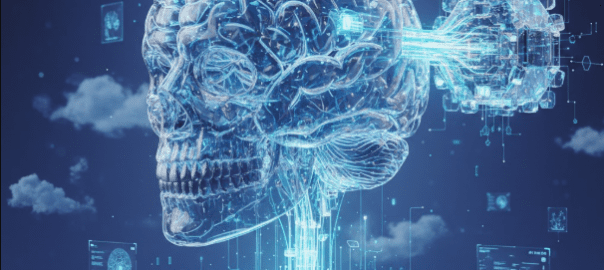
Tag Archives: Cognition

30Oct/26

Why Bad Dashboards Stress Your Brain

Core Architectural Framework and Operational Design

Thu, July 29 2026 /Mpelembe Media/ — Modern legal tracking platforms represent a fundamental transition from static, paper-based administrative records to unified digital command centers that orchestrate multi-jurisdictional case flows and high-stakes legal operations in real time. To handle the divergent demands of legal practice, enterprise judicial systems deploy a dual-storage architecture that pairs normalized relational schemas with append-only, event-sourcing streams. The relational data tier maintains strict structural integrity across core entities—such as cases, parties, variable legal roles, hearings, and financial ledgers—preventing data redundancy and conflict across matters. Concurrently, immutable, timestamped event-sourcing logs capture dynamic procedural milestones, hearing results, and docket modifications, enabling high-performance rendering of chronological court timelines and automated calculation of statutory deadlines. Continue reading →
23Oct/26

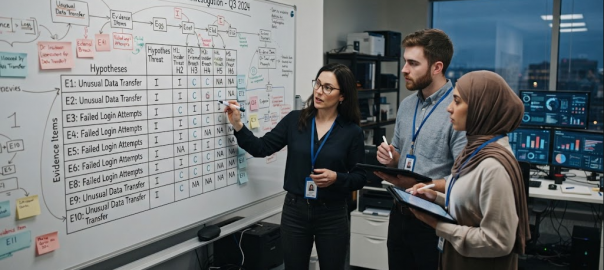
Why the CIA Intelligence Matrix Fails

From Upstream Scoping to Disproof Architectures: Mastering the Art of Adult Research

Fri Oct. 23, 2026 /Mpelembe Media/ — Developing a high-rigor independent research capability requires replacing unstructured curiosity with deliberate structural frameworks designed for time-constrained professionals. Unstructured exploration routinely collapses under its own cognitive weight due to an expanding volume of information, making upstream scoping and strict bounding essential. Effective inquiry begins by tapping into an intrinsic curiosity engine and reframing broad topics into narrow, diagnostic queries that define what data is relevant and what can be safely ignored. Proposed research projects must pass a “So What?” significance filter to evaluate their intellectual yield, while adjacent curiosities are deferred to a dedicated backlog so execution momentum remains intact. Research depth is ultimately governed by a pre-defined deliverable, establishing a clear stopping mechanism and preventing open-ended documentation. Continue reading →

22Oct/26

Why Your Brain Fights Stillness

Altering the Relationship to Thought: How Zen and ACT Deconstruct the Narrative Self Without Thought Suppression

Thu Oct. 22, 2026 /Mpelembe Media/ — Non-conceptual awareness practices in Sōtō Zen Buddhism and Acceptance and Commitment Therapy (ACT) share the core premise that human psychological distress often stems from over-identifying with discursive thought and rigid cognitive labeling. In Sōtō Zen, formalized by Dōgen Zenji, this state of unfiltered perception is embodied in the principle of hishiryō (“non-thinking” or “beyond thinking”), representing a non-dual posture where thoughts and sensations arise and pass naturally without cognitive interference, measurement, or judgment. ACT, a third-wave cognitive behavioral therapy developed by Steven C. Hayes, operationalizes non-conceptual awareness through cognitive defusion and self-as-context. Cognitive defusion teaches individuals to view thoughts as transient verbal events rather than literal truths or mandatory instructions, while self-as-context accesses an observing self—frequently illustrated by the metaphor of a spacious sky holding passing weather patterns—that remains distinct and enduring from running self-narratives. Continue reading →

11Sep/26

Why People Mourn Their AI Partners

The Architectural Boundaries of AI: Syntax, Semantics, and the Chinese Room

Thu Sep 10 2026 /Mpelembe Media/ — The philosophical foundation of artificial intelligence reveals a fundamental divide between syntactic computation and genuine mental understanding. John Searle’s Chinese Room thought experiment demonstrates that an agent manipulating uninterpreted symbols according to formal, programmatic rules can produce outputs indistinguishable from a native speaker without grasping their semantic meaning. Contemporary large language models function as scalable manifestations of this thought experiment, relying on complex mathematical and probabilistic statistical patterns across vast datasets to generate persuasive text. Although these models achieve high linguistic fluency, they lack subjective conscious experience, intentionality, and qualia, operating entirely within symbol manipulation while human users actively supply the meaning. Consequently, machine expressions of care or comprehension remain structural simulations rather than authentic internal states. Continue reading →

09Jul/26

The Trap of Intelligent Stupidity

The Scientific Taxonomy of Mind: Intelligence vs. Stupidity

Thur, July 09 2026 /Mpelembe Media/ —  According to complex systems theorist David C. Krakauer, the common assumption that stupidity is merely a passive vacancy of thought is fundamentally incorrect. Standard psychometrics, such as IQ tests, attempt to reduce cognitive value to a single price-like metric, which is as reductionist as trying to understand the artistic value of a Picasso masterpiece solely by its auction price. Continue reading →

27Mar/26

The Neuroscience of Doing Nothing: How Strategic Stillness Fuels Creative Genius

March 26, 2026 /Mpelembe Media/ — The Illusion of Busyness vs. The Power of Deep Work The modern workplace is plagued by “productivity theater” or “fauxductivity,” where employees prioritize visible activity over meaningful output. Research identifies this as “Dramaturgical Work Behavior” (DWB), where workers consciously perform tasks to look busy—such as sending late-night emails or constantly rearranging files—merely to signal compliance and protect their status. This is driven by organizations that reward “passive face time” and speed rather than actual results. To combat this, experts advocate for Deep Work: distraction-free concentration that pushes cognitive capabilities to their limit and produces true value. Transitioning away from shallow, performative tasks requires setting strict boundaries, implementing a “strategic no,” and embracing “career minimalism” or “slow business” to prioritize sustainable, high-quality output over frantic activity. Continue reading →

28Feb/26

Velocity vs. Comprehension: The Rise of Cognitive Debt in AI-Assisted Software Development

The Fragile Expert: Why AI-Native Development is a Race Toward Cognitive Atrophy

28 Feb. 2026 /Mpelembe Media/ — We have discovered the “fast forward” button for digital production. Whether it is “vibe coding” a full-stack feature into existence or using an agentic swarm to refactor a legacy module, the experience is intoxicating. High-quality functional artifacts—code that executes, patterns that seem idiomatic—now appear with a keystroke.However, this skyrocketing velocity masks a burgeoning systemic risk. We are witnessing a decoupling of near-instantaneous algorithmic generation from the inherently slower human process of mental model construction. This is the “comprehension lag”: a state where our production speed outpaces our cognitive capacity to internalize the systems we build. By trading deep comprehension for “functional artifacts” we no longer cognitively own, we are accumulating an invisible and unsustainable liability. Continue reading →

26Jan/26

The Biological Mind vs. The Digital Machine: Cracking the Code for Thought

Jan. 26, 2026 /Mpelembe Media/ — This theory explores the philosophical and scientific debate regarding whether the human mind functions like a digital computer. While neuroscience traditionally views the brain as a computational machine, the text highlights significant biological differences, such as the complex, fluid nature of neurons compared to rigid logic gates. Distinguished experts, including Roger Penrose and Max Tegmark, examine if consciousness and perception can be truly captured through mathematical models or if living thought is fundamentally unique. Ultimately, the discussion questions whether artificial intelligence reflects the true essence of the cosmos or if it remains a limited imitation of organic sophistication. This inquiry serves as a centerpiece for the Institute of Art and Ideas, bringing together elite thinkers to bridge the gap between physics and philosophy. Continue reading →

07Feb/24

Creative Works London Showcases AI Prowess with Guns N’ Roses’ Latest Music Video “The General”

Creative Works London, a cutting-edge design studio known for its innovative approach to visual storytelling, has once again pushed the boundaries of creativity and technology. In collaboration with the legendary rock band Guns N’ Roses, Creative Works has produced a visually stunning music video for the band’s latest single, “The General,” utilizing the latest in artificial intelligence (AI) technology.Continue reading

02Feb/24

Playing a musical instrument or singing in a choir may boost your brain – new study

Michael Hornberger, University of East Anglia

Generations of parents have told their children to practice their musical instruments. Parents have good reason to keep on top of their children’s musical education, since learning an instrument is not only associated with better educational attainment but also cognition (thinking) and even intelligence scores in children. But does this musicality translate to better cognition later in life?

Continue reading →