

Tag Archives: Neuroscience

09Jul/26

Why your biology needs other people

The Stoic Philosophy of Friendship: Autonomy from Fullness

Thur, July 09 2026 /Mpelembe Media/ — Seneca’s moral essays resolve the apparent contradiction between radical mental self-sufficiency (autarkeia) and the human yearning for companionship. In Letter 9, Seneca distinguishes between “needing” others to patch over an internal void (which breeds fragile, “fair-weather” utility friendships) and “desiring” friends to share a life that is already complete. The Stoic sage possesses the ultimate psychological autonomy—relying on internal virtue rather than external Fortune. Yet, because humans are naturally social cosmopolitans, we seek friendship for its own sake. True friendship is an active theater for projecting virtue and kindness, beautifully summarized by Hecato’s timeless formula: “If you would be loved, love”. Practically, Seneca’s Letter 3 sets out a strict temporal blueprint for relationships: exercise rigorous, analytical judgment before admitting someone to your life, but once they are chosen, trust them unconditionally, removing all defensive barriers. This framing invites us to connect from fullness, rather than lack.

Continue reading

26Jan/26

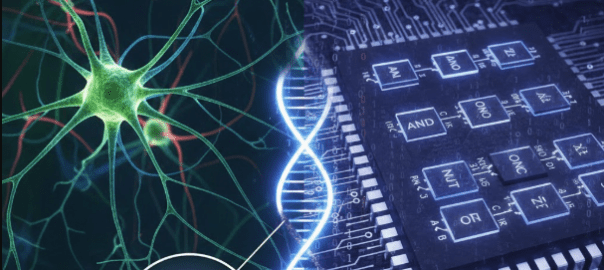
The Biological Mind vs. The Digital Machine: Cracking the Code for Thought

Jan. 26, 2026 /Mpelembe Media/ — This theory explores the philosophical and scientific debate regarding whether the human mind functions like a digital computer. While neuroscience traditionally views the brain as a computational machine, the text highlights significant biological differences, such as the complex, fluid nature of neurons compared to rigid logic gates. Distinguished experts, including Roger Penrose and Max Tegmark, examine if consciousness and perception can be truly captured through mathematical models or if living thought is fundamentally unique. Ultimately, the discussion questions whether artificial intelligence reflects the true essence of the cosmos or if it remains a limited imitation of organic sophistication. This inquiry serves as a centerpiece for the Institute of Art and Ideas, bringing together elite thinkers to bridge the gap between physics and philosophy. Continue reading

14May/23

Hackers are just like anyone else

May 14, 2023 /Developers/ — There is no evidence to suggest that high IQ people are more likely to be dangerous or to have mental issues. In fact, studies have shown that people with high IQs are actually less likely to commit crimes or to have mental health problems. Continue reading