Tag Archives: Botswana

24Aug/26

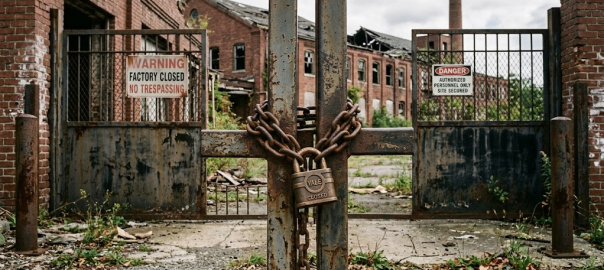
Why joblessness and diamonds fuel civil war

The Dual Private Sector Dilemma: Why IMF Market-Led Growth Models Fail to Create Jobs in Fragmented African Economies

Mon, Aug 24 2026 /Mpelembe Media/ — The economic relationship between sub-Saharan Africa and the International Monetary Fund (IMF) has its roots in the 1944 Bretton Woods Conference, where the few developing nations present failed to secure explicit references to their development financing needs in the Articles of Agreement. From its inception, the IMF maintained a rigid, short-term balance-of-payments focus, famously denying Ethiopia’s first request for financial assistance on the grounds that its needs were neither immediate nor temporary. By the 1980s and 1990s, this short-term framework was formalized into neoliberal Structural Adjustment Programs (SAPs), which mandated strict conditionalities such as market deregulation, extensive privatization of state-owned enterprises, and rapid trade opening. Although promoted as pathways to long-term macroeconomic stability, these interventions frequently triggered severe adverse social consequences, including declining real wages, heightened poverty, and the systematic deterioration of basic health and social welfare systems. In response to widespread critique in the late 1990s, the IMF purported to shift its operational model, replacing traditional SAPs with the Enhanced Structural Adjustment Facility (ESAF) and, subsequently, various credit facilities under the Poverty Reduction and Growth Trust (PRGT). However, empirical evidence indicates that these contemporary programs represent “SAPs in disguise,” with loan conditionalities and stringency steadily rising, and core prescriptions of fiscal consolidation and state retrenchment remaining largely unchanged. Continue reading

20Aug/26

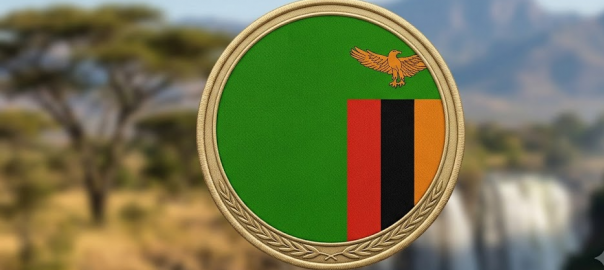
Military raids and treason in Zambia

Democracy in Peril: Military Raid, High-Profile Arrests, and Disputed Ballots Shackle Zambia’s Post-Election Landscape

Thu, Aug 20 2026 /Mpelembe Media/ — Zambia’s general election, held on August 13, 2026, resulted in the re-election of incumbent President Hakainde Hichilema for a second five-year term. According to the Electoral Commission of Zambia (ECZ), Hichilema secured 60.49% of the vote, defeating his primary challenger, Brian Mundubile of the National Reconciliation Party for Unity and Prosperity (NRPUP), who received 37.87%. While Hichilema expressed gratitude to voters and committed his second term to national unity, economic expansion, and debt recovery, the electoral process was instantly marred by major disruptions. On August 14, the ECZ temporarily suspended vote counting and results tabulation nationwide, citing localized violence against polling staff and the theft of marked ballots. Although the suspension was lifted the same day, international observer groups, including the European Union and the Southern African Development Community (SADC), voiced concerns over an uneven playing field, late constitutional and legal reforms, extended pauses in results tabulation, and reports of political intimidation. Continue reading

17May/26

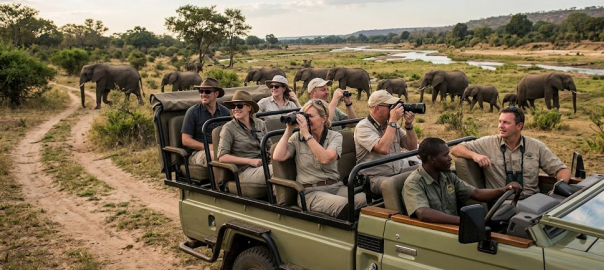
Zambia’s pivot from copper to conservation

Zambia’s Tourism Renaissance: Record Arrivals, Open Borders, and Economic Revival

Sun, May 17 2026 /Mpelembe Media/ — Booming Tourism and Economic Growth Zambia is experiencing a tourism renaissance, recording a historic 2.19 million international arrivals in 2024—a 35.3% increase from the previous year. The government has strategically positioned tourism as a primary engine for economic diversification away from copper mining, increasing the sector’s budgetary allocation by 281% since 2021. Continue reading

14May/26

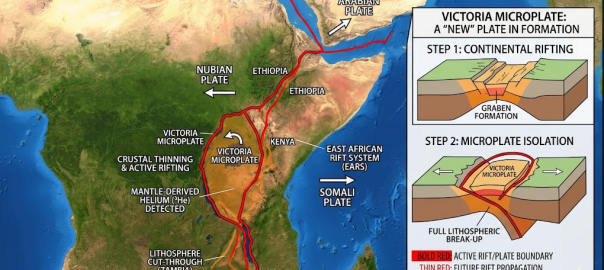
Continental Rifting and Tectonic Plate Formation in Zambia

A Continent Divided: How Zambia’s Hot Springs Point to the Birth of a New Ocean

Thur, May 14 2026 /Mpelembe Media/ — Geologists have discovered unambiguous evidence that the Earth’s crust is actively splitting apart in Zambia’s Kafue Rift, a segment of the 2,500-kilometer-long Southwest African Rift System (SWARS). By analyzing the gases bubbling up from geothermal springs, researchers found unusually high ratios of Helium-3 to Helium-4, along with carbon dioxide signatures that match the mantle. This unique chemical fingerprint proves that these gases are escaping directly from the semi-molten mantle—located between 40 and 160 kilometers below ground—indicating that the faults have successfully fractured the entire crust. Continue reading

11Feb/26

Mining Indaba 2026: Project Vault, Policy Reform, and the Push for African Industrialization

The Billion-Dollar Handshake: Why the World’s Diamond Giants are Finally Teaming Up

10 Feb. 2026 /Mpelembe Media  — The 2026 Investing in African Mining Indaba is currently underway in Cape Town, South Africa, operating under the theme “Stronger Together: Progress Through Partnerships”. The event has attracted record attendance, including 58 government ministers and two heads of state, amidst an intensifying geopolitical race for critical minerals. Continue reading

22Dec/25

2025 Africa Cup of Nations

Dec. 22, 2025 /Mpelembe Media/ — The 2025 Africa Cup of Nations, a premier football tournament hosted by Morocco will span from 21 December 2025 to 18 January 2026, the competition features 24 national teams divided into six distinct groups. The document lists specific match dates, kick-off times, and various stadium locations across the country, starting with the opening group stages and concluding with the final in Rabat.
Continue reading

16Jan/24

Zambia and Gambia explained

Jan. 16, 2024 /Human Interest/ — Zambia and Gambia, despite their similar-sounding names, are quite different countries in Southern and West Africa, respectively. Here’s a breakdown of their key differences: Continue reading

15Apr/23

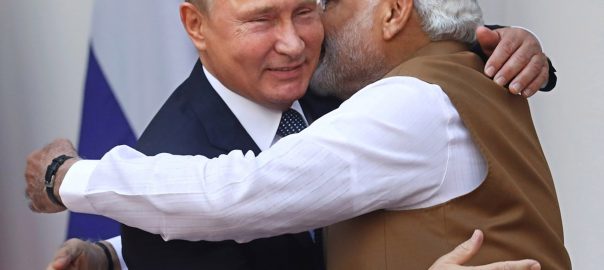
Why democratic countries around the world are not prepared to support Ukraine – and some are shifting closer to Russia

Jose Caballero, International Institute for Management Development (IMD)

After over a year of the Ukraine war, efforts at building a global consensus against Russia seem to have stalled, with many countries opting for neutrality.

The number of countries condemning Russia has declined, according to some sources. Botswana has edged towards Russia from its original pro-Ukraine stance, South Africa is moving from neutral to Russia-leaning and Colombia from condemning Russia to a neutral stance. At the same time, a large number of countries have been reluctant to support Ukraine.

Continue reading

15Dec/22

Why I’m righting the wrongs of my early research and sharing my scientific data with local communities

Sallie Burrough, University of Oxford

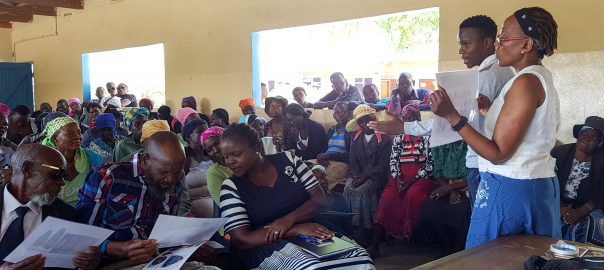
“You know what’s wrong with scientific power? It’s a form of inherited wealth. And you know what assholes congenitally rich people are.” That’s how filmmaker Michael Crichton put it in Jurassic Park nearly 30 years ago. The problem of scientific colonialism has not, however, gone away.

Continue reading