Tag Archives: Burkina Faso

24Oct/26

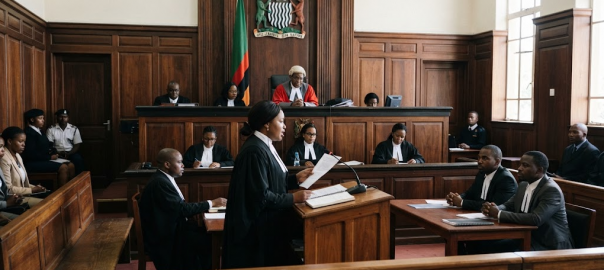
Zambia’s Rule of Law Paradox

Beyond the Composite Score: Bridging the Implementation Gap in Zambia’s Legal System

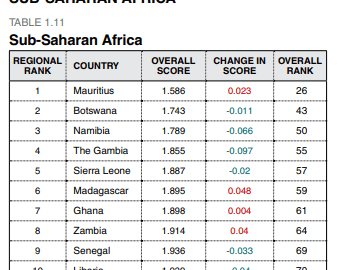
Sat Oct. 24, 2026 /Mpelembe Media/ — In the 2026 World Justice Project (WJP) Rule of Law Index, Zambia registers an overall composite score of 0.44 on a scale from 0.00 to 1.00, placing it 108th globally out of 143 surveyed countries. This performance marks a single-position drop in global standing and a minor 0.01 score contraction from the 0.45 baseline maintained between 2022 and 2025. Regionally, Zambia ranks 19th out of 34 Sub-Saharan African states, placing its score slightly below the regional benchmark of 0.45 and well beneath the global average of 0.55. Despite this global deficit, Zambia maintains a solid standing within its lower-middle-income cohort, outperforming regional neighbors such as Nigeria (120th) and Zimbabwe (122nd). Historically, Zambia reached a decade-high score of 0.48 in 2016 before political polarization eroded it to 0.44 in 2021; while the peaceful transfer of power in late 2021 stabilized scores at 0.45 through 2025, administrative bottlenecks led to the slight 2026 contraction. Continue reading →
17Oct/26

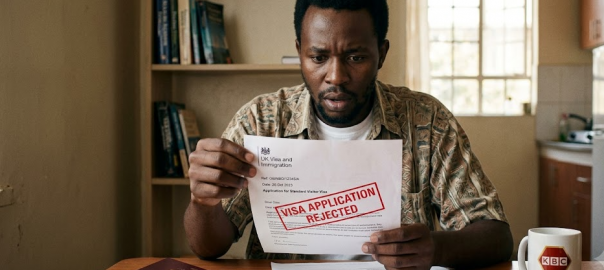
U.S. immigration: National Interest Waivers, and Consular Strategies for Zambian Travelers

Navigating Proclamation 10998: What the 2026 U.S. Travel Restrictions Mean for Zambian Passport Holders

Sat Oct. 16, 2026 /Mpelembe Media/ — Effective January 1, 2026, Presidential Proclamation 10998 placed Zambia into a partial suspension tier that restricts entry and visa issuance for its passport holders. Under this executive directive, Zambian nationals who were outside the United States without a valid visa on the effective date are barred from obtaining immigrant visas as well as B-1/B-2 visitor visas, F academic student visas, M vocational student visas, and J exchange visitor visas. The United States government justified Zambia’s inclusion by citing Department of Homeland Security metrics showing a 10.73 percent overstay rate for B-1/B-2 visitor visas and a 21.02 percent overstay rate for student and exchange visitor categories. For nonimmigrant visa classifications that remain open, such as employment-based H-1B, L-1, and O-1 visas, consular officers are instructed to shorten validity periods, typically limiting approved visas to three months with single-entry authorization. The proclamation explicitly preserves existing valid visas issued prior to January 1, 2026, and provides categorical exemptions for U.S. lawful permanent residents, dual nationals traveling on an unrestricted passport, qualifying diplomatic personnel, and athletes participating in major international sporting events. Continue reading →

10Sep/26

How African Filmmakers Reclaimed the Screen

Beyond the Colonial Shadow: The Financial Risk and Cultural Triumph of Love Brewed in the African Pot

From Objects to Authors: The Evolution of African Cinema

1. The Paternalistic Era: Cinema as a Colonial Tool (1900–1950s)

The history of cinema in Africa began not as an indigenous art form, but as a colonial novelty. In 1900, a French circus group projected the Lumière brothers’  L’arroseur arrosé  in a Dakar marketplace, a moment that marked the arrival of a medium that would be used for decades to document Europe’s “Other.” Early European cinema focused on newsreels and ethnographic studies that prioritized colonial solidarity, often erasing indigenous tensions to present a sanitized view of the continent.To control the African “gaze,” colonial administrations established dedicated film units. While their methods overlapped, their underlying motivations were distinct: Continue reading →

20May/26

Zambia Tames Its Deadly Gold Rush

From Copper to Gold: Zambia’s State-Led Blueprint for Formalizing Artisanal Mining

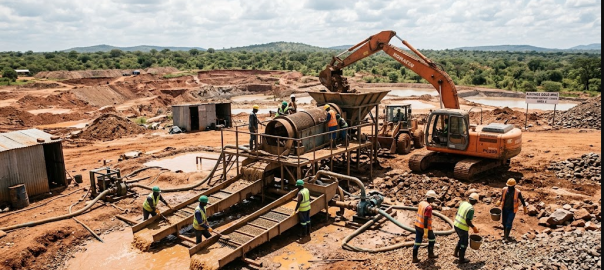
Wed, May 20 2026 /Mpelembe Media/ — Zambia is actively diversifying its mining economy beyond its traditional reliance on copper by executing a structural overhaul of its artisanal and small-scale gold mining (ASGM) sector. The primary catalyst for this shift was a massive, unregulated gold rush in the Kikonge area of Mufumbwe in mid-2025. The sudden influx of thousands of informal miners led to catastrophic safety failures, the emergence of illicit smuggling markets, and deadly clashes with state security forces. Recognizing that military intervention was an unsustainable fix for an economic problem, the Zambian government shifted toward a commercial integration strategy. Continue reading →

22Dec/25

2025 Africa Cup of Nations

Dec. 22, 2025 /Mpelembe Media/ — The 2025 Africa Cup of Nations, a premier football tournament hosted by Morocco will span from 21 December 2025 to 18 January 2026, the competition features 24 national teams divided into six distinct groups. The document lists specific match dates, kick-off times, and various stadium locations across the country, starting with the opening group stages and concluding with the final in Rabat.
Continue reading →

21Nov/25

The Global Peace Index: How did African Countries Perform in 2025?

Nov. 21, 2025 /Mpelembe Media/ — Africa, particularly the Sub-Saharan Africa (SSA) and Middle East and North Africa (MENA) regions, features prominently in the report’s analysis of global instability and conflict, often ranking among the world’s least peaceful and most conflict-affected areas.

The overall trend shows a continuous decline in peacefulness for both regions, marked by severe conflicts, rising geopolitical competition, and acute economic stressors. Continue reading →

13Jan/24

The Africa Cup of Nations (AFCON) 2024 analysis

Jan. 9, 2024 /Sports/ –The Africa Cup of Nations (AFCON) kicks off today, 13th January 2024! Here’s the breakdown: Continue reading →

05Sep/23

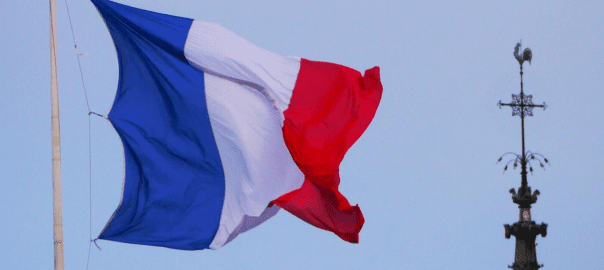
France is becoming a pariah in Africa

05 September 2023 /Politics/ —  France’s history of interference in Africa is a complex and controversial issue. There is no doubt that France has been involved in a number of coups and regime change operations, and that these actions have had a negative impact on many African countries. The bombing of Libya in 2011 is just one example of this. Continue reading →

29Apr/23

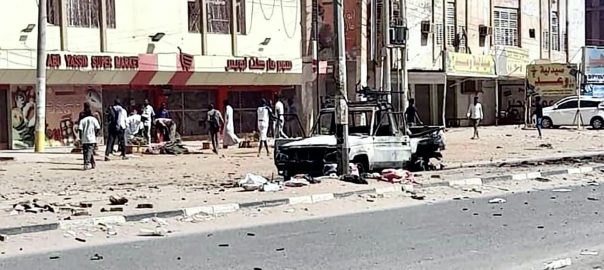
Sudan: questions about Wagner Group involvement as another African country falls prey to Russian mercenaries

Kristian Gustafson, Brunel University London; Dan Lomas, Brunel University London; Neveen S Abdalla, Brunel University London, and Steven Wagner, Brunel University London

After more than a week of intense fighting between Sudanese government troops and paramilitary forces in Khartoum, many western countries – including the US and UK – are evacuating their nationals from the strife-torn city.

While the conflict has been billed as a clash between rival warlords, there are questions about the role played by the private Russian mercenary company, the Wagner Group. This group, allegedly associated with Russian president Vladimir Putin’s ally Yevgeny Prigozhin – although he has denied any involvement – is heavily engaged in several African countries, exacerbating regional instability.

Continue reading →