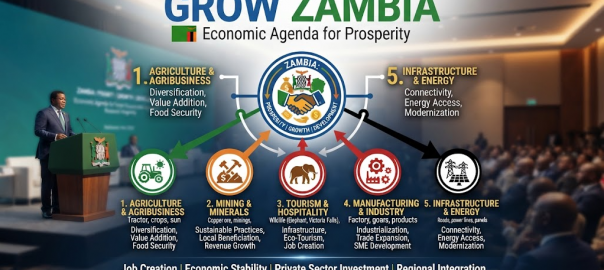
Zambia’s Closed-Loop Monetary Strategy: Balancing Retail De-Dollarization with Sovereign Copper Finance
Fri , Aug 0& 2026 /Mpelembe Media/ — Sub-Saharan Africa is undergoing a profound structural transformation as sovereign nations systematically seek to reduce their historic reliance on the United States dollar for reserves, trade invoicing, and domestic transactions. For decades, the US dollar served as the undisputed financial anchor across the continent, but this deep integration has exposed emerging economies to extreme macro-financial vulnerabilities, particularly during cycles of US Federal Reserve monetary tightening. When interest rates rise in Washington, global capital retreats to dollar-denominated assets, triggering sharp depreciations of local African currencies that inflate the cost of imported goods and escalate the servicing costs of dollar-denominated sovereign debt. This systemic vulnerability was starkly demonstrated in November 2020 when Zambia defaulted on a $42.5 million Eurobond payment, with the concurrent strength of the US dollar significantly exacerbating the domestic financial fallout. Furthermore, the geopolitical landscape of the mid-2020s has accelerated the search for alternative payments due to the perceived weaponization of Western-dominated dollar-clearing systems, prompting African policymakers to seek bilateral trade architectures and payment systems backed by the BRICS+ alliance to protect their economic sovereignty. Continue reading →