Tag Archives: Machiavelli

22Oct/26

Why Machiavelli Believed Rulers Need Dirty Hands

Power, Virtù, and Human Nature: A Multidisciplinary Synthesis of Machiavellian Pragmatism

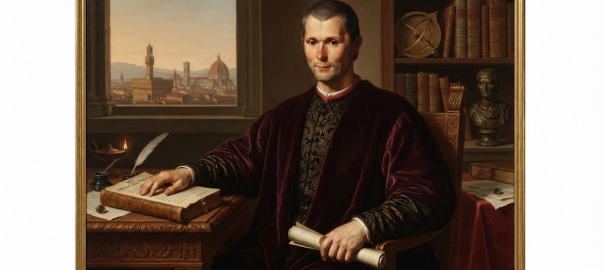
Thu Oct. 22, 2026 /Mpelembe Media/ — Niccolò Machiavelli’s foundational political thought, articulated in The Prince (1513) and the Discourses on Livy (1517), marks a radical shift from classical teleological ethics and medieval Christian scholasticism toward empirical political realism. Rejecting idealized imaginary republics, Machiavelli sought the “effectual truth” of human behavior, asserting that effective governance must be guided by strategic necessity (necessità) and the preservation of state stability (ragione di stato) rather than abstract moral pieties. He redefined virtù not as moral goodness, but as the dynamic capability, drive, and tactical agility—symbolized by combining the courage of the lion with the cunning of the fox—required to master unpredictable circumstances (fortuna). Although critics historically viewed The Prince as an autocratic handbook and the Discourses as a defence of republican liberty, scholars emphasize that these works are complementary: princely authority is often necessary to establish order in a corrupted state, whereas a mixed republican constitution preserves long-term security, popular freedom, and civic vitality. Continue reading →

24Mar/26

The Anatomy of Disintegration: Madness, Blindness, and Nihilism in King Lear

Historical Context and Sources
March 24, 2026 /Mpelembe Media/ — Shakespeare adapted King Lear from a variety of historical and literary texts, most notably Geoffrey of Monmouth’s 12th-century Historia Regum Britanniae, Raphael Holinshed’s Chronicles, and an anonymous 1605 play titled The True Chronicle History of King Leir. While these earlier legends traditionally featured a happy ending where the king is restored to power by his loyal daughter, Shakespeare radically altered the narrative by introducing a bleak, catastrophic conclusion. This shift allowed Shakespeare to explore the political anxieties of Jacobean England, specifically the fears surrounding succession, the division of kingdoms, and the “Divine Right of Kings” following the death of Queen Elizabeth I. 

Continue reading →

11Nov/23

Internet of Things: tech firms have become our digital landlords – but people are starting to fight back

Hodoimg

Guido Noto La Diega, University of Stirling

From smart toasters to fitness collars for dogs, we live in a world where everything around us is gradually being connected to the internet and fitted with sensors so that we can interact with them online.

Continue reading →