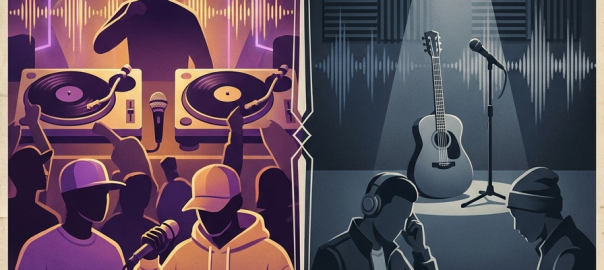
Tue, Jun 02 2026 /Mpelembe Media/ — The legacy of Diamond Chain Media is fundamentally tied to the pioneering two-decade career of its founder, Chisenga Katongo (historically known as C.R.I.S.I.S. or Crisis Mr. Swagger), who established the foundation of Zambian hip-hop by producing the country’s first-ever hip-hop album in 2005. This legacy is defined by a commitment to quality, authenticity, and elevating African narratives for an international audience. By challenging the historical marginalization of African media, the organization represents a deliberate convergence of artistic integrity and professional business structures. Continue reading
Tag Archives: African-American music
Breaking Boundaries: How Beat Street and Breakin’ Exported Street Culture
The Phoenix of the Bronx: From 1970s Block Parties to the Olympic Games and Broadway
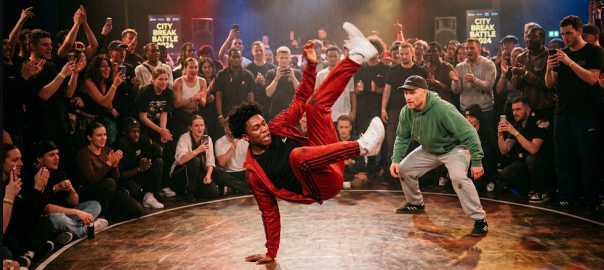
Sat, May 30 2026 /Mpelembe Media/ — The Origins of Street Dance Hip-hop dance originated in the 1970s as a powerful form of self-expression and community building for marginalized youth. In the South Bronx, African American and Puerto Rican teenagers developed breaking (b-boying/b-girling) as a creative outlet and a peaceful alternative to territorial gang violence. Concurrently, West Coast dancers in California independently invented “funk styles,” such as popping and locking, which were originally danced to funk music rather than hip-hop. Continue reading
Snoop Dogg: 30 Years of Gin and Juice
Hallowed Ground or Open Doors? A Theological Review of Secular-to-Sacred Transitions in the Contemporary Black Church
1. Introduction: The Prodigal’s Return to the G-Funk Gospel
The historical relationship between the Black Church and secular music has long been characterized by a permeable yet rigorously policed boundary, a tension that reached a watershed moment with the “return home” of G-Funk pioneers. This transition, epitomized by Snoop Dogg, represents a profound subversion of traditional ecclesiastical hierarchies and a renegotiation of sacred space. In the field of liturgical musicology, this pivot is significant not merely as a celebrity conversion, but as an reclamation of a foundational identity. Snoop Dogg himself provides the sociological justification for this narrative, noting that “95 percent of the gangster rappers were born and raised in a church.” For these artists, the sanctuary provided the primary pedagogical environment for reading, acting, and performance—skills later utilized to navigate the profane world.In evaluating the intent behind his sacred projects, particularly the 2018 Bible of Love , one must engage with Snoop’s pneumatological claim: he asserts the album is a “spirit-driven” rather than a “money-driven” endeavor. His core theological argument—an ecclesiology of radical inclusion—can be distilled as follows: Continue reading
The Jazz Illusion Matching Your Budget to the Right Vibe
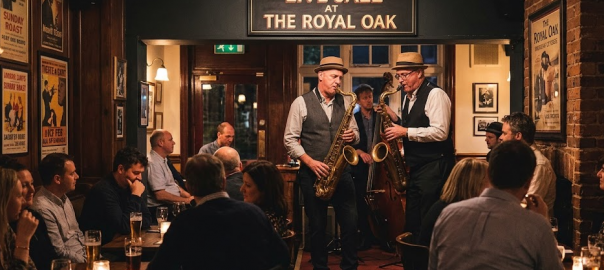
April 26, 2026 /Mpelembe Media/ — These sources provide a comprehensive look at the historical and contemporary jazz landscape across various global regions, with a primary focus on the United Kingdom and the United States. A detailed historical account documents the evolution of the jazz scene in Kingston-upon-Thames, tracing its roots from the 1950s through the rise of rhythm and blues. Modern event calendars highlight the active career of harpist Ben Creighton Griffiths, detailing his international performances and workshops through 2027. Additionally, the texts promote major American festivals like the Hampton Jazz & Music Festival in Virginia and the Hamptons JazzFest on Long Island. Venue-specific information also identifies local pubs and clubs in Middlesex that continue to host live jam sessions and resident artists. Together, these documents serve as both an archival record of jazz heritage and a practical guide for upcoming musical events. Continue reading
Simmi Samma Record Label
April 9, 2026 /Mpelembe Media/ — Simmi Samma, a jazz artist and lifelong hip-hop enthusiast, has outlined a specific creative vision for his upcoming musical project. This production blueprint draws heavy inspiration from classic nineties boom-bap and the intricate sampling techniques of artists like A Tribe Called Quest. The desired track must blend soulful vocal manipulation, specifically alternating between high-pitched female samples and natural choruses. To accommodate potential collaborators, the composition requires extended instrumental loops of at least eight bars. Ultimately, the artist aims to synthesize his jazz background with the rhythmic sensibilities of his favorite golden-era and contemporary rap influences.
How Radio DJs Built Community Before Algorithms
The Soul Frontier: Robbie Vincent, the ‘Soul Mafia,’ and the Integration of British Broadcasting (1970–1985)
Chisenga Katongo: The Global Voice of Zambian Hip Hop
Feb 11, 2026 /Mpelembe media/ — Chisenga Katongo is a Zambian-born Australian hip hop artist known for blending African sounds with socially conscious lyrics. Based in Perth, he addresses issues like peace and justice. A multi-instrumentalist and artist, he won the Australian Peace Prize in 2009. Continue reading
Hip Hop movies that made impact
Here are some of the hip hop movies that have had the most impact: Continue reading
PEPSI MAX® ANNOUNCES B.I.G COLLABORATION TO CELEBRATE THE 50TH ANNIVERSARY OF HIP HOP AND THE LEGACY OF THE NOTORIOUS B.I.G
This year, the world will celebrate the 50th Anniversary of Hip Hop – the music genre and cultural movement that changed the world. To celebrate this milestone and pay tribute to Hip Hop’s everlasting cultural impact, Pepsi MAX® is announcing a partnership and international campaign that honours and amplifies the legacy of one of the genre’s most iconic artists: The Notorious B.I.G. Continue reading
We intend to cause havoc
May 16, 2023 /Technology/ — Zamrock is a genre of rock music that emerged in Zambia in the early 1970s. It is characterized by its fusion of traditional African music with Western rock influences, such as psychedelic rock, funk, and heavy metal. The genre was heavily influenced by the political and social climate of Zambia at the time, which was experiencing a period of rapid modernization and economic growth. Zamrock bands often used their music to express their hopes and dreams for the future, as well as to address social and political issues. Continue reading