
Tag Archives: Branches of philosophy

21Sep/26

Ancient blueprints for living well

Beyond Consumerism: Ancient Blueprints for Tranquility in a Restless World

Mon 21 Sept 2026 /Mpelembe Media/ — Epicurus constructed a comprehensive, materialistic philosophy rooted in atomism to liberate humanity from psychological anxiety. By asserting that the universe consists solely of indestructible atoms moving and randomly swerving through empty space, he replaced mythological explanations with mechanistic natural laws. This physical worldview served a direct therapeutic purpose by demonstrating that divine beings do not interfere in human affairs or inflict punishment, and that the human soul—composed of fine physical particles—disperses entirely upon bodily death. Because consciousness ends permanently at death, Epicurus reasoned that death is nothing to us, freeing individuals from the existential dread that fuels irrational ambitions. Continue reading →

19Sep/26

Agrippa the Skeptic and the concept of the Muse

Because each modern theory must choose which of Agrippa’s three “horns” to address or reframe, philosopher Victor Brochard described Agrippa’s formulation as one of the most radical and irresistible statements of philosophical skepticism ever devised

Sat 19 Sept 2026 /Mpelembe Media/ —In this interdisciplinary synthesis, Agrippa’s logical tropes and the artist’s muse serve the same fundamental purpose: creative and cognitive breakthroughs require the willingness to destabilize absolute certainty. Rather than offering an artist neat answers or passive ideals, the muse acts as a skeptical catalyst who disrupts dogmatic habits, forces an aesthetic impasse, and opens the space necessary for radical artistic transformation. Continue reading →

12Sep/26

The Evolving Taxonomy of Moral Agency

The Architecture of Agency: A Comparative Report on Moral Subjectivity and Responsibility

1. Introduction: The Evolving Taxonomy of Moral Agency

As autonomous systems, complex corporate structures, and new insights into animal ethology challenge our traditional ethical boundaries, the strategic importance of defining “moral agency” has never been greater. For centuries, the domain of moral participation was reserved almost exclusively for the human rational agent. However, as non-human entities increasingly occupy roles of significant social and ethical consequence—ranging from AI-driven healthcare diagnostics to the legal personhood of corporations—we must move beyond a species-centric model. To maintain a functional moral community, we must examine the specific functional requirements that allow an entity to participate in moral life, regardless of its biological or structural origin.The “Orthodox View” of moral agency traditionally rests on three pillars: the capacity to distinguish right from wrong, the ability to make autonomous choices, and the liability to be held accountable for those actions. Under this framework, an agent is not merely an object of concern (a moral patient) but a participant capable of being praised or blamed. As we shall see, this benchmark remains the foundation upon which all other comparative frameworks are built, though the boundaries are increasingly porous. Continue reading →

11Sep/26

Why People Mourn Their AI Partners

The Architectural Boundaries of AI: Syntax, Semantics, and the Chinese Room

Thu Sep 10 2026 /Mpelembe Media/ — The philosophical foundation of artificial intelligence reveals a fundamental divide between syntactic computation and genuine mental understanding. John Searle’s Chinese Room thought experiment demonstrates that an agent manipulating uninterpreted symbols according to formal, programmatic rules can produce outputs indistinguishable from a native speaker without grasping their semantic meaning. Contemporary large language models function as scalable manifestations of this thought experiment, relying on complex mathematical and probabilistic statistical patterns across vast datasets to generate persuasive text. Although these models achieve high linguistic fluency, they lack subjective conscious experience, intentionality, and qualia, operating entirely within symbol manipulation while human users actively supply the meaning. Consequently, machine expressions of care or comprehension remain structural simulations rather than authentic internal states. Continue reading →

24May/26

The UBUNK Paradigm: Navigating Truth, Myth, and Endurance

Beyond Fact-Checking: How AI and Gamification are Creating a Resilient Digital Citizen

Sun, May 24 2026 /Mpelembe Media/ — The modern digital landscape is overwhelmed by a flood of algorithmic misinformation, historical hoaxes, and sensationalism designed to exploit human biases and emotional reactions. Because traditional, passive fact-checking is often too slow and tedious to compete with viral lies, researchers and technologists are pivoting toward active, gamified behavioral conditioning to build societal resistance against fake news. Continue reading →

07Jun/23

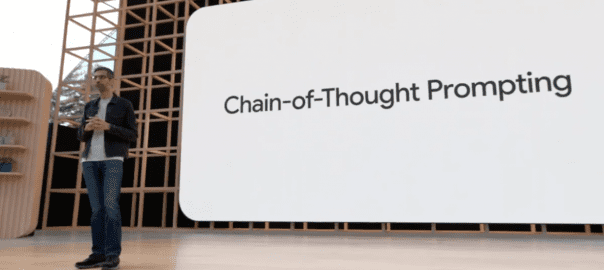
What is Chain-of-Thought Prompting?

June 7, 2023 /Technology/ — Chain-of-thought (CoT) prompting is a method for improving the performance of large language models (LLMs) on reasoning tasks. CoT prompts encourage LLMs to explain their reasoning process by providing them with a few examples of how to do so.

CoT prompting was first introduced in the paper “Chain-of-Thought Prompting Elicits Reasoning in Large Language Models” by Wei et al. (2022). In this paper, the authors showed that CoT prompting can significantly improve the performance of LLMs on a range of reasoning tasks, including arithmetic, commonsense, and symbolic reasoning. Continue reading →

15May/23

The alcoholic said that he wanted to stop drinking

The phrase “some people cannot stop nothing” is a colloquialism that means that some people are unable to control or prevent things from happening. It is often used to describe people who are impulsive, reckless, or irresponsible. For example, someone might say “some people cannot stop nothing” to describe a person who is always getting into trouble or who is unable to keep their commitments. Continue reading →

29Apr/23

Why critical thinking is an important skill in the age of AI.

April 29, 2023 /Business/ — It will require critical thinking and systems thinking to get the most out of AI tools. Being a Prompt Engineer will become a great skill to have in your toolbox. Prompt engineers simply need a decent level of language and grammar skills, data analysis, and critical thinking.

Prompted Critical thinking is the key. AI generators are not designed to assess the veracity of text they input and output. Nor are they intended to use any sort of critical thinking, which is why jobs that require critical thinking are not about to be replaced by Generative AI.

You don’t need to memorize – it’s time to focus on real-life skills, critical thinking, and emotional intelligence. The critical thinking required to enter a prompt and use AI tools effectively is worth training for – not the memorization of information. Continue reading →

31Jan/23

Unlike with academics and reporters, you can’t check when ChatGPT’s telling the truth

Blayne Haggart, Brock University

Of all the reactions elicited by ChatGPT, the chatbot from the American for-profit company OpenAI that produces grammatically correct responses to natural-language queries, few have matched those of educators and academics.

Continue reading →

07Oct/22

Do we have free will – and do we want it? Thomas the Tank Engine offers clues

Matyáš Moravec, University of St Andrews

Are we free or are our actions determined by the laws of physics? And how much free will do we actually want? These questions have troubled philosophers for millennia – and there are still no perfect answers.

Continue reading →