
23 Feb. 2026 /Mpelembe Media — Researchers have identified a burgeoning psychological crisis labeled AI replacement dysfunction (AIRD), which stems from the pervasive fear of professional obsolescence. This condition manifests as a specific cluster of symptoms including insomnia, paranoia, and a loss of identity triggered by the constant threat of automated labor. While not yet an official medical diagnosis, experts argue that the existential anxiety caused by industry leaders predicting massive job losses constitutes an “invisible disaster.” Evidence suggests that high-profile layoffs at major tech firms are already validating these fears and negatively impacting employee mental health. To address this, the authors advocate for specialized clinical screening to distinguish technology-related distress from traditional psychiatric disorders. Ultimately, the source emphasizes that the societal shift toward AI requires new community and medical frameworks to support a vulnerable workforce. Continue reading
Tag Archives: Artificial general intelligence
The “Agentic” Era: How AI, Biometrics, and Shifting Demographics Are Rewriting the Global Travel Map by 2050
The Future of the Stay: A Student’s Primer on AI & IoT in Hospitality
Feb 18, 2026 /Mpelembe media/ — The travel industry is undergoing a structural metamorphosis driven by the transition from generative to “Agentic AI,” the rise of the Asia-Pacific (APAC) region as the dominant market, and a shift toward hyper-personalized, “zero-touch” experiences. While technology promises to erase logistical friction, it introduces new challenges regarding algorithmic bias, data privacy, and the “complexity tax” of managing massive scale. Continue reading
The Fluid Future: A Learner’s Guide to Adaptive and Liquid AI Architectures
Mastering Global Trends: How AI Hosts and Visual Research Tools Transform Data into Strategic Insights
01, Feb. 2026 /Mpelembe Media/ — NotebookLM acts as a “super-smart research assistant” and learning companion that helps users navigate and understand complex information across various mediums. By grounding all its responses in user-provided sources—including documents, YouTube transcripts, and websites—it ensures that insights are accurate, reliable, and supported by precise citations. Continue reading
From Sketching to Simulation: How Genie 3 and AI Power Virtual Worlds
01, Feb. 2026 /Mpelembe Media/ — Artificial Intelligence acts as a catalyst for the metaverse, enhancing immersion through realistic 3D modeling and avatars. It provides personalized content, automates tasks, and improves security. Tech leaders use AI to foster accessibility and global collaboration. Artificial intelligence (AI) serves as a critical catalyst for the metaverse by enhancing realism through sophisticated world-building, lifelike interactions, and high-level personalization. Continue reading
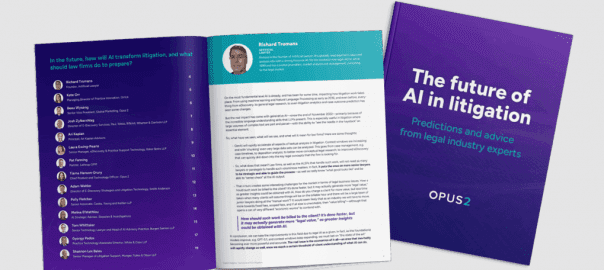
The Future of AI in Litigation
Jan. 6, 2026 /Mpelembe Media/ — This publication gathers expert opinions on how artificial intelligence will revolutionize the legal sector by 2026, focusing on its role in litigation, court preparation, and law firm strategy. While the text highlights that AI will become a strategic asset, it maintains that human legal expertise remains irreplaceable for ethical and defensible outcomes. Artificial intelligence is set to evolve from a simple efficiency tool into a strategic asset, fundamentally altering the entire litigation lifecycle. Continue reading
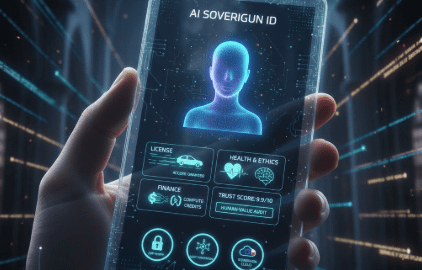
Understanding the AI Economy and Digital ID
Jan. 1, 2026 /Mpelembe Media/ — The “Fifth Industrial Revolution” (5IR), is a shift from tools that we control to environments that control themselves. It frames the future not as a collection of gadgets, but as a totalizing system—the “Cathedral”—where the infrastructure itself makes moral and economic decisions. The Dark Industrial Cathedral is built on surveillance, extraction, and algorithmic control. The primary task for 5IR leaders is “engineering ethics into infrastructure” by embedding human values directly into the code. Continue reading
Beyond Automation: AI as the Operating System of Human Civilisation
Dec. 31, 2025 /Mpelembe Media/ — As of 2025, the global economy is projected to reach approximately $115 trillion, even as it faces a staggering $338 trillion in total debt. Within this landscape, artificial intelligence has emerged as the foundational infrastructure of a Fifth Industrial Revolution, with the AI economy expected to contribute over $15.7 trillion to global GDP by 2030. This technological shift is characterized by the rise of AI sovereignty, where control over data and models defines geopolitical power. While automation and AI agents enhance productivity and business valuations, they also present significant risks regarding cybersecurity and the potential erosion of human identity. Ultimately, society faces a critical choice between using these tools to foster human dignity or allowing them to create a future defined by algorithmic surveillance and control. Continue reading
The AI Displacement Dilemma: Nearly Half of Workplace Skills Face Obsolescence by 2025
Dec. 29, 2025 /Mpelembe Media/ — This edX and Workplace Intelligence report examines how artificial intelligence is fundamentally transforming the modern professional landscape. The findings reveal a significant skill gap, as executives anticipate that nearly half of current workforce capabilities will be obsolete by 2025. While leadership believes many roles—including executive positions—could be automated, entry-level staff are particularly vulnerable to displacement. Despite a strong desire among staff to gain AI proficiency, many organisations currently lack the robust training and development frameworks necessary to support this transition. Ultimately, the research suggests that companies must prioritise internal upskilling to retain talent and remain competitive in an increasingly automated economy. Continue reading
AI Has Altered Entry-Level Technology Hiring
Dec. 25, 2025 /Mpelembe Media/ — Recent graduates from Stanford’s computer science programme are finding it increasingly difficult to secure employment as artificial intelligence transforms the tech industry. Research indicates a significant reduction in entry-level hiring, as companies now prefer using automated tools alongside a small number of experienced developers instead of larger teams of junior staff. This shift has led many students to extend their education in hopes of gaining a competitive edge while waiting for a more favourable market. Beyond workforce displacement, the rise of AI presents environmental challenges due to the immense electricity and water required to power massive data centres. To adapt, experts suggest that universities update their curricula and students focus on complex system design and oversight skills that automation cannot yet replicate. Industry advocates also call for government intervention through retraining programmes to support workers affected by these rapid technological changes. Continue reading