Tag Archives: Lusaka

24Oct/26

How Foreign Investors Trade in Zambia

Investing in the Lusaka Securities Exchange: Comparative Pathways, Settlement Mechanics, and Treaty Tax Relief for UK Residents

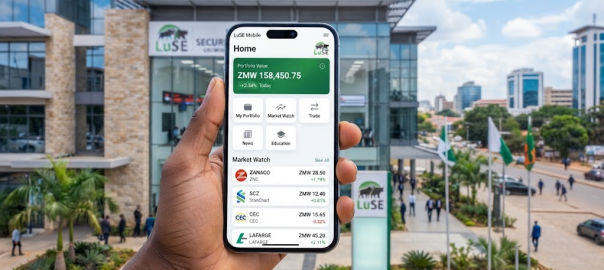
Sat Oct. 24, 2026 /Mpelembe Media/ — The Lusaka Securities Exchange (LuSE) operates under the regulatory supervision of the Securities and Exchange Commission (SEC) of Zambia pursuant to the Securities Act No. 41 of 2016, providing a centralized capital market with an equity market capitalization of approximately USD 2.30 billion. To prevent off-market fragmentation, Zambian law mandates that all public companies with 50 or more shareholders must register with the SEC and trade exclusively on a recognized stock exchange, effectively prohibiting Over-The-Counter (OTC) equity markets. The exchange functions across a two-tier market structure comprising the Main Board (Official List) for established public enterprises and the Quoted Tier for growth-phase entities. Zambia maintains a fully liberalized foreign exchange regime with no exchange controls, permitting up to 100% foreign ownership in private and listed assets—with narrow statutory exceptions, such as domestic cellular network operators required to float 10% of their shares on the exchange—and guaranteeing the repatriation of investment capital, dividends, and profits through the Bank of Zambia. Continue reading →
24Oct/26

Why AI Detectors Flag African Writers

Flawed Metrics and Market Tropes: The Paradox Facing Black Writers in the AI Era

Sat Oct. 24, 2026 /Mpelembe Media/ — The controversy surrounding Zimbabwean author Simbarashe Steyn Kundizeza’s 2026 Caine Prize win has ignited an international debate over artificial intelligence, literary authenticity, and algorithmic bias in publishing. On October 6, 2026, Kundizeza was awarded the £10,000 Caine Prize for African Writing for his short story “The Blue Fighter”. Five days later, journalist Vauhini Vara reported in The Atlantic that the commercial AI detection tool Pangram had flagged virtually the entire story as machine-generated text. Kundizeza forcefully rejected the accusation, asserting that the story drew directly from his personal life, lived experience, and a writing residency in Ghana. In response, the Caine Prize Foundation launched a human-centred review—interviewing the author and judges and examining manuscript draft histories rather than relying on automated software scores as dispositive proof of misconduct. Continue reading →

21Oct/26

A Strategic Guide to Diaspora Investment, Incentives, and Land Acquisition in Zambia

Bridging Homeland and Diaspora: Civic Engagement, Traditional Gastronomy, and Travel Formalities for Zambians in the UK

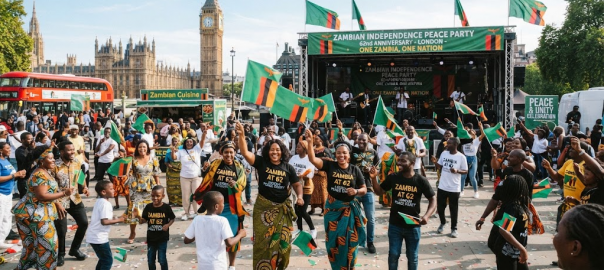
Wed Oct. 21, 2026 /Mpelembe Media/ — The transnational migration corridor connecting Zambia’s Copperbelt region to suburban centers across Greater London reflects a vital flow of skilled professionals, students, and families who maintain deep socio-economic, civic, and cultural ties. To support local community integration in the United Kingdom while driving social and economic development in Zambia, an extensive organizational ecosystem operates across multiple tiers. Grassroots groups like the London Association of Zambians (LazUK) deliver civic networking and localized peer support, while commercial promotion platforms such as UK Zambian Events Ltd host business expos and cultural festivals to celebrate heritage and facilitate cross-border trade. On a broader national scale, registered charities including the Zambia Society Trust (ZST) and the Scotland Zambia Partnership (SCOZAP) coordinate grassroots development—funding healthcare delivery at St Francis Mission Hospital, nurse sponsorships, community schooling through Kwasha Mukwenu, and poverty alleviation projects. Institutional engagement is anchored by the Ministry of Foreign Affairs and International Cooperation through its dedicated Diaspora Web Portal, which officially recognizes overseas citizens as the nation’s “Eleventh Province” and encourages active involvement in domestic land acquisition, agriculture, and climate resilience. Furthermore, international advocacy organizations like the Organization of Zambians Abroad (OZA) and professional bodies like the British Association of Social Workers (BASW) Diaspora Special Interest Group provide constitutional advocacy, trade joint ventures, and structured induction standards for overseas-qualified social workers and professionals. Continue reading →

19Oct/26

Why Zambia National Budget Needs Local Accounting

You Can’t Share Poverty: Reconciling Fiscal Discipline with Local Empowerment in Emerging Economies

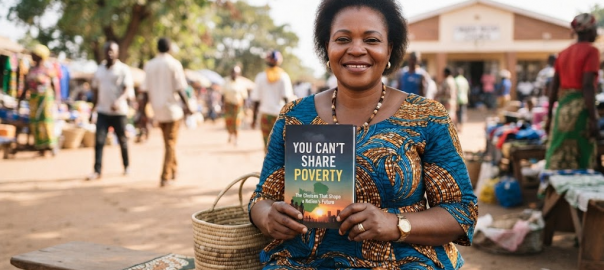
Mon Oct. 19, 2026 /Mpelembe Media/ — Hakainde Hichilema’s political memoir and reform playbook, You Can’t Share Poverty: The Choices That Shape a Nation’s Future, sets forth a structural growth doctrine that redefines the social contract in developing nations. The foundational premise argues that state-driven wealth redistribution in low-income or heavily indebted economies serves merely to socialize scarcity and dilute existing capital without building productive capacity. Sustainable poverty reduction and employment creation cannot be achieved through consumption subsidies or state patronage, but require expanding national output (GDP) by attracting foreign direct investment, expanding the industrial tax base, and establishing predictable regulatory frameworks where the state acts as a facilitator rather than a controller of commercial enterprise.
Continue reading →

18Oct/26

How Zambian Music Became the New Parliament

Sun Oct. 18, 2026 /Mpelembe Media/ — Maiko Zulu has used conscious reggae music, public demonstrations, institutional leadership, and independent political campaigns to challenge political authority and demand structural justice in Zambia. Continue reading →

17Oct/26

Lily Mutamz Takes On the Zambian Government

From Munali to the UK Diaspora: The Evolution of Lillian Mutambo’s Transnational Advocacy

Sat Oct. 16, 2026 /Mpelembe Media/ — Lillian Mutambo’s political career began with direct community-level organizing in Zambia ahead of the 2021 General Election. After returning from the UK, she sought the UPND nomination for the Munali Constituency under the campaign slogan “Shape You Munali,” engaging in local economic empowerment initiatives such as distributing eggs to help youth and women start small businesses. Following intra-party selection disputes and friction within the UPND, Mutambo broke away to contest the seat as an Independent candidate in 2021, marking her formal entry into parliamentary politics. Continue reading →

27Sep/26

Can Hichilema Run Zambia Like a Startup

Decoding the 10-10-5-3-3-1-1-1 Formula: Zambia’s Quantifiable Economic Transformation

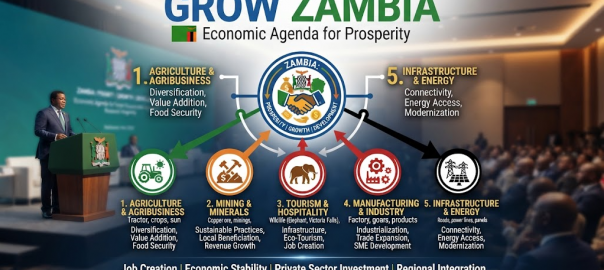
Sun 27 Sept 2026 /Mpelembe Media/ — The GROW ZAMBIA Agenda represents President Hakainde Hichilema’s strategic economic framework designed to transition the country from post-debt-restructuring macroeconomic stabilization toward rapid, production-led growth. Designed to translate national fiscal gains into visible, household-level economic improvements, the strategy sets out to double national GDP and triple the overall size of the Zambian economy over his second term. This shift moves public sector operations away from routine administration toward an output-oriented delivery model anchored in wealth creation, expanded formal employment, and export expansion across SADC, COMESA, and continental markets. Continue reading →

08Sep/26

African Payment Pitfalls and $25,000 Tax Traps

The Three Pillars of African Payments

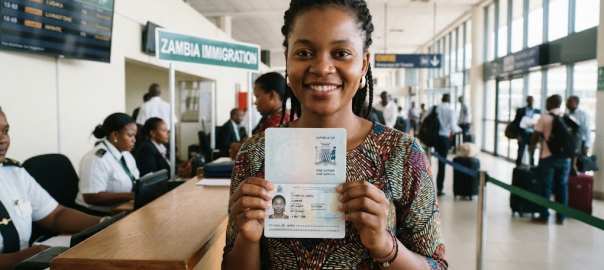
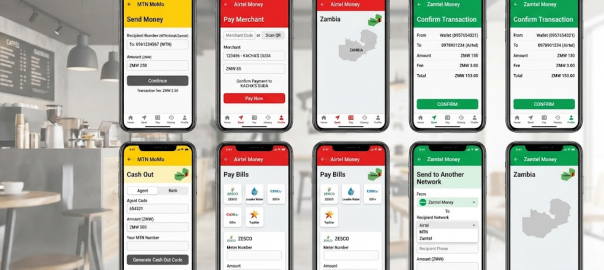
Tue Sep 08 2026 /Mpelembe Media/ — For a student entering the world of fintech, the African payment landscape can initially seem overwhelming. Unlike Western markets where credit cards are the standard, the African ecosystem is built on a “Hybrid Imperative.” In markets like Zambia, global tools like Stripe are often used for international billing, but they lack localized settlement and struggle with poor conversion rates due to bank-side fraud rules. To reach the actual local consumer, businesses must tap into the infrastructure that people already use: mobile money.The ecosystem is supported by three primary players:

  1. Mobile Network Operators (MNOs):  The foundational infrastructure providers that issue digital wallets and manage the movement of local currency.
  2. Payment Gateways:  Intermediaries that bridge the gap between global standards and local methods across multiple countries.
  3. Payment Aggregators:  Specialized “simplifiers” that bundle multiple mobile money connections into a single, developer-friendly interface.Learning Insight: The “So What?”  While credit and debit cards are the global gold standard for SaaS, they represent only a minor fraction of transactional volume in many African nations. In the retail ecosystem of Southern Africa, mobile money is the dominant force. Understanding how to connect to these networks is the key to unlocking the market.While these three pillars work together, the journey starts at the foundational “source”: the MNOs.

Continue reading →

05Sep/26

Emmanuel Mwamba from statecraft to sedition

Diplomacy, Dissidence, and Digital Resistance: The Life and Career of Emmanuel Mwamba

Sat Sep 05 2026 /Mpelembe Media/ — Emmanuel Mwamba was born on April 18, 1971, in the mining hub of Luanshya within the Copperbelt Province of Zambia. He completed his secondary education at Roan Antelope Secondary School and subsequently earned a Diploma in Journalism and Public Relations from Evelyn Hone College. He expanded his qualifications globally, obtaining a Master of Business Administration from Edith Cowan University in Australia and a Master in Peace Studies from the Institute of Peace & Security Studies at Addis Ababa University. After initial employment at the Zambia National Commercial Bank, he entered the political arena as the administrative secretary and spokesperson for Zambia’s second president, Frederick Chiluba. During this time, Mwamba aggressively defended Chiluba against state-directed corruption prosecutions. This loyalty caused friction with the administration of Levy Mwanawasa, resulting in the termination of Mwamba’s probationary contract in October 2004, though he continued serving Chiluba in a private capacity. Following the reconciliation of Chiluba and Michael Sata in 2005, Mwamba transitioned his allegiance to the Patriotic Front (PF). Continue reading →

04Sep/26

The strategy behind Zone Fam’s 12-year comeback

Fri Sep 03 2026 /Mpelembe Media/ — Zone Fam, a pioneering Zambian hip-hop supergroup formed in Lusaka in 2009, established a massive regional presence by blending traditional “Zed beats” with Western hip-hop arrangements and multilingual lyrics in English, Nyanja, Bemba, and Zulu. Composed of Jackson Banda (Jay Rox), Sam Sakala (formerly Dope G), Reginald Lube (Yung Verbal), and Timbwama Chisenga (formerly Thugga, now known simply as Tim), the collective rose from a local mixtape group into prominent continental stars. They captured national bestseller status with their 2011 debut album, The Business: Foreign Exchange, and signed an international deal with Taurus Musik of Kenya in 2012, eventually winning Best Group at the Channel O Music Video Awards for their hit song “Contolola”. Following the release of their single “Two Things” in September 2014, the group entered a prolonged hiatus, which was formalized when Tim officially departed on April 1, 2015, to pursue Christian hip-hop. Continue reading →