
Jan. 28, 2026 /Mpelembe Media/ — In January 2026, Zambia’s inflation rate dropped to 9.4%, marking a significant milestone as it fell below double digits for the first time in three years. This shift was largely driven by a strengthening national currency, the kwacha, which helped ease the cost of consumer goods. According to reporting from Bloomberg, the sudden slowdown in price increases provides the central bank with more flexibility to lower interest rates. Official data presented by the Statistician-General confirms that the economic environment is stabilizing compared to the higher rates seen in previous months. These developments suggest a positive trend for the copper-rich nation’s economy and its future borrowing costs.
A stronger Kwacha influences Zambia’s overall economic stability primarily by driving a downward trend in the annual inflation rate. According to the sources, the appreciation of the currency helped push inflation to 9.4% in January 2026, down from 11.2% the previous month. This shift is a significant indicator of increased stability, as it represents the first time inflation has dropped below the 10% threshold in nearly three years.
The impact of a stronger Kwacha on economic stability also extends to monetary policy and credit accessibility. The sources highlight that the reduction in consumer price growth strengthens the case for cutting borrowing costs. Lowering these costs can stabilize the economy by making credit more affordable for businesses and consumers, which may stimulate further growth in the copper-rich nation.
It should be noted that while the economists detail the positive correlation between the rising Kwacha and lower inflation, they do not provide information on potential downsides, such as the impact of a stronger currency on the competitiveness of Zambian exports and how this currency trend affects the broader trade balance.
The primary implication of inflation dropping below 10%—falling to 9.4% in January 2026—is that it strengthens the case for further cuts in borrowing costs. This shift represents a significant milestone for Zambia, as it is the first time the annual inflation rate has reached single digits in nearly three years.
Broader implications derived from the sources and our conversation history include:
Shift in Monetary Policy: The downward trend in consumer price growth provides the central bank with more flexibility to adjust monetary policy. By potentially cutting borrowing costs, the government can aim to stimulate economic activity in the copper-rich nation.
Increased Credit Accessibility: As noted in our previous discussion, a reduction in borrowing costs makes credit more affordable for businesses and consumers, which is a key driver for domestic investment and economic stability.
Currency Correlation: The drop in inflation is closely linked to the stronger Kwacha, suggesting that currency appreciation is a critical lever for maintaining price stability below the 10% threshold.
The analysts specifically focus on the relationship between inflation and borrowing costs. They do not provide data on other common implications of lower inflation, such as changes in real wage growth or specific impacts on the national debt service and how these factors are being affected by the current inflationary environment.
Lowering borrowing costs, supported by the inflation rate dropping to 9.4% in January 2026, could significantly impact Zambia’s future industrial growth by creating a more favorable environment for investment.
Here is how lower borrowing costs might influence industrial growth:
Stimulating Investment in Key Sectors: The sources identify Zambia as a “copper-rich southern African nation”. Lower borrowing costs make it more affordable for industrial and mining firms to finance large-scale projects, upgrade machinery, and expand operations, which is critical for a nation heavily reliant on its mineral resources.
Increased Affordability of Credit: As noted in our previous discussion, a reduction in borrowing costs makes credit more accessible for businesses. This allows industrial players to manage operational costs more effectively and invest in the long-term infrastructure necessary for industrialization.
Enhanced Economic Stability for Planning: The fact that inflation has slipped below 10% for the first time in nearly three years suggests a period of relative price stability. When combined with lower borrowing costs, this stability allows industrial firms to make more predictable future growth projections and long-term capital commitments.
Expansion of Domestic Production: By strengthening the case for cutting interest rates, the current economic climate encourages domestic businesses to borrow for expansion rather than just survival, potentially diversifying the industrial base beyond copper.
It should be noted that the analysis primarily focus on the macroeconomic indicators (inflation and currency) and the case for cutting costs; they do not provide specific data on projected industrial output or specific government industrialization policies and how specific sectors, such as manufacturing or agribusiness, are responding to these shifting financial conditions.
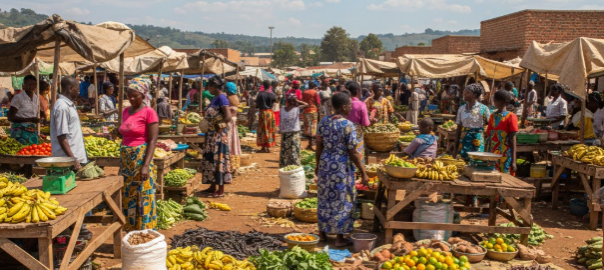
Single-digit inflation, which reached 9.4% in January 2026, affects everyday consumer spending power by slowing the rate at which the prices of goods and services increase.
The impact on consumers includes:
Slower Erosion of Purchasing Power: Because the annual inflation rate dropped from 11.2% to 9.4%, consumer prices are rising less rapidly than in the previous month. This represents the first time in nearly three years that price growth has slowed to this level, which helps stabilize the value of the Kwacha for everyday household purchases.
Reduced Cost of Credit: The drop below the 10% threshold strengthens the case for further cuts in borrowing costs. As discussed in our conversation history, a reduction in interest rates makes credit more affordable for consumers, potentially allowing them to finance larger purchases or manage debt more effectively.
Increased Economic Predictability: The resumption of a downward trend in inflation provides a more stable environment for consumer planning. When prices are not rising as sharply, households can better predict their future expenses, which can lead to increased confidence in spending.
While the economists indicate that price growth is slowing, an inflation rate of 9.4% still means that prices are rising, just at a slower pace than before. The sources do not provide specific details on which “everyday” goods (such as food or fuel) have seen the most significant price stabilization; you may want to independently verify the specific components of the Consumer Price Index (CPI) to see how individual household staples are affected.
The recent stabilization of prices, highlighted by inflation falling to 9.4% in January 2026, is expected to encourage a shift toward local business investments by creating a more favorable and predictable financial landscape.
Stable prices influence local investment in the following ways:
Reduction in Borrowing Costs: The sources explicitly state that inflation slipping below 10%—the first time in nearly three years—strengthens the case for further cuts in borrowing costs. As we discussed previously, lower interest rates make credit more affordable, allowing local businesses to more easily finance expansions, purchase machinery, and fund operational needs.
Improved Business Planning: Our conversation history notes that price stability allows for more predictable future growth projections. When local business owners are not battling double-digit inflation (which was 11.2% just the previous month), they can make long-term capital commitments with greater confidence.
Lower Input Costs: The downward trend in inflation is attributed to a stronger Kwacha. For local businesses that rely on imported equipment or raw materials, a stronger currency combined with stable domestic prices reduces the overall cost of doing business, potentially increasing profit margins that can be reinvested into the company.
Favorable Climate for Copper-Related Industries: Given that Zambia is a “copper-rich southern African nation,” the combination of lower borrowing costs and price stability may specifically encourage local investment in the mining supply chain and related industrial sectors.
It should be noted that while the analysts emphasize that these conditions “strengthen the case” for lower costs, they do not guarantee that commercial banks will immediately lower their lending rates or that local investment will increase across all sectors. It is essential to independently verify the specific responses of Zambian commercial banks to these inflationary shifts to see if the “case” for lower costs has translated into actual market-wide rate reductions.
Lower interest rates, resulting from a downward trend in inflation, could create a more favorable environment for attracting investment, including from foreign sources.
Key factors that could influence this include:
Improved Macroeconomic Stability: The fact that inflation has slipped below 10% (to 9.4%) for the first time in nearly three years signals a return to price stability. As noted in our previous discussion, this stability allows for more predictable future growth projections, which is a critical factor for foreign investors when evaluating long-term risks.
Reduced Cost of Financing: The sources state that the current inflationary trend “strengthens the case for further cuts in borrowing costs”. Lower interest rates make it more affordable to finance large-scale capital projects. In a “copper-rich southern African nation” like Zambia, lower borrowing costs are particularly significant for capital-intensive industries such as mining and infrastructure, where foreign investment is often concentrated.
Currency Confidence: The sources link the slowdown in inflation directly to a stronger Kwacha. For foreign investors, a stronger and more stable currency reduces the risk of exchange rate losses when repatriating profits or paying for imports, potentially making the Zambian market more attractive.
Favorable Business Environment: As discussed in our conversation history, lower borrowing costs make credit more accessible. This can stimulate the local ecosystem, creating more robust domestic partners and supply chains, which further incentivizes foreign entities to invest in the region.
Note that the experts do not explicitly mention “foreign investment” or specific foreign capital inflows; they focus on the macroeconomic indicators and the potential for reduced borrowing costs. Information regarding how international markets specifically view these changes or the current level of Foreign Direct Investment (FDI) is not in the sources and should be independently verified.