
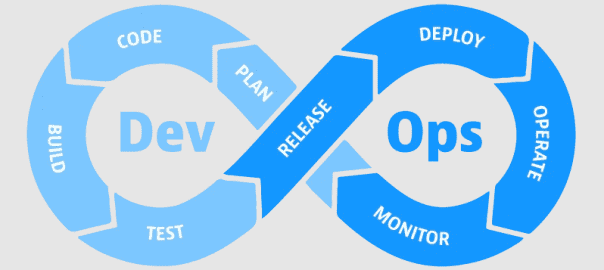
Dec. 25, 2025 /Mpelembe Media/ — This introductory eBook by GitLab serves as a foundational guide for professionals transitioning into DevOps practices. It defines the core philosophy of the movement, highlighting how collaborative cultures and shared responsibility eliminate traditional development silos. The text details essential technical components, such as continuous integration, automated testing, and the “shift left” approach to security. By exploring the nine stages of the software lifecycle, the guide explains how businesses can achieve greater agility and speed. Additionally, it provides a comprehensive directory of educational resources, including podcasts and certifications, to support career growth. Ultimately, the source illustrates how a unified platform resolves practical engineering challenges and improves software delivery.
The bedrock of DevOps culture is built upon collaboration and joint responsibility, a mindset that replaces the traditional, siloed approach to software development. These pillars are not merely “soft skills” but are essential technical and professional requirements for delivering secure, high-quality software at speed.
Joint Responsibility: Taking Ownership
A core tenet of DevOps culture is the ability of every team member to take ownership of a situation or problem rather than viewing it as someone else’s department. This shift in mindset involves several key behaviours:
Trust and Stability: Members must be able to listen, stay calm under pressure, and actively create trust among their peers.
Accountability: Instead of a “pass-the-parcel” approach to errors, teams share the burden of maintaining and fixing the software throughout its entire lifecycle.
Active Learning: A true culture of responsibility is built by inviting discussion and input from both experienced and new team members, allowing the organisation to rely on collective expertise.
Collaboration: Breaking Down Business Silos
In a DevOps environment, collaboration extends far beyond the developers and operations staff working together. It is a cross-functional effort that integrates various departments into the development process:
Universal Integration: Effective collaboration involves the security team, marketing, finance, customer service, and the C-suite. This ensures that everyone understands the business needs and works together to solve problems.
Integrating Security: A primary goal of this collaboration is to weave security into the entire development process, moving away from the old method where security was an afterthought.
Single Source of Truth: This culture is supported by using a single, unified platform that provides improved visibility for everyone involved. When all participants have instant access to the same information, it reduces friction and enables rapid iteration.
Technical Enablers of Culture
The sources highlight that certain technologies are specifically designed to feed into this collaborative culture:
Containers: Because they are modular units of software, containers make it easy for different teams to share work reliably and seamlessly, ensuring software runs the same way in different environments.
Continuous Iteration: The culture focuses on a constant cycle of measurement, assessment, and reevaluation, allowing teams to learn from deployments and improve them continuously.
Think of collaboration and joint responsibility like a mountain rescue team. Every member—from the medic to the navigator—is equally responsible for the mission’s success. They don’t wait for their specific “turn” to care about the outcome; they share information constantly and rely on each other’s specialised skills to ensure everyone gets off the mountain safely.
The DevOps process is a continuous loop that moves beyond the basic “build, test, and deploy” workflow to incorporate more complex layers that ensure efficiency, reliability, and speed. The following nine key stages define this lifecycle:
Plan: This foundational stage encompasses everything that occurs before a single line of code is written. It involves creating a product roadmap to guide development, which helps the team organise resources, set priorities, and track the progress of projects.
Create: As the first stage of the Continuous Integration (CI) pipeline, this is where software is designed and developed. Multiple developers use version control (Source Code Management) to coordinate changes to the same codebase, which is essential for increasing the velocity of updates.
Verify: This stage focuses on confirming the quality of the code through automated processes. It provides developers and testers with instant feedback via security testing, code quality analysis, and parallel execution, allowing them to fix flaws while they are still in the development phase.
Package: Occurring after the code has been successfully tested, this stage involves packaging applications and their dependencies. By managing containers and building artifacts, teams ensure a consistent and reliable software supply chain.
Release: Also known as deployment, this stage involves pushing code updates into the production environment. In a DevOps model, releases are handled as iterative updates that are deployed as soon as they are ready, rather than waiting for a preplanned, static release date.
Configure: This stage is dedicated to setting up and maintaining application environments. It uses automated configuration management to handle complex environments across servers, networks, and storage systems, ensuring they remain consistent.
Monitor: This is a proactive and automated part of the process that tracks the status of software, infrastructure, and networks. It raises alerts for any identified problems, which increases the overall security, reliability, and agility of the system.
Protect: This stage focuses specifically on runtime security. It involves securing applications and their environments from external intrusions and newly discovered vulnerabilities.
Manage: This final stage provides end-to-end visibility and control over the entire lifecycle. It involves managing permissions, standardising build and deployment processes, and automating “guardrails” to ensure that all security and compliance policies are met.
These stages are part of an ongoing cycle where information is shared across a single platform, providing a “single source of truth” for all participants. This ensures that security is not an afterthought but is instead integrated into every stage of the process.
The DevOps process is like a high-end professional kitchen. Planning is the recipe and prep list; Creating is the chefs cooking the components; Verifying is the head chef tasting for quality; Packaging is the plating; Releasing is the waiter taking it to the table; Configuring is ensuring the dining room atmosphere is right; Monitoring is checking if guests are happy; Protecting is maintaining food safety standards; and Managing is the restaurant manager overseeing the entire flow to ensure the night runs smoothly.
Shifting security left is the practice of incorporating security testing and review processes earlier in the software development lifecycle, rather than treating them as a final step before production. In traditional models, security was often an “afterthought” that occurred only after code was deemed ready for deployment. This frequently resulted in “costly delays” and “technical debt” because fixing vulnerabilities late in the process is significantly more difficult and time-consuming.
Key aspects of this concept include:
DevSecOps Integration: Shifting security left is a fundamental part of DevSecOps, where security is integrated into end-to-end automation. It ensures that security is a part of every stage of the process, from documenting requirements to automated testing.
Cost-Effectiveness and Efficiency: Enabling developers to find and fix flaws while they are still in the active development phase has been proven to be more cost-effective and efficient. Automated testing in the Continuous Integration (CI) pipeline allows bugs and threats to be identified earlier with greater context, reducing the need for manual reworking later on.
Automated Security Methods: To successfully shift security left, organisations integrate various automated tools into their CI pipelines, such as:
Static and Dynamic Application Security Testing (SAST and DAST).
Container and cluster image scanning.
Dependency scanning and Secret detection.
Infrastructure-as-code (IaC) scanning and API testing.
Collaborative Accountability: This approach breaks down “inefficient silos” between security teams and the rest of the DevOps organisation. It requires active collaboration between DevOps teams and other parts of the business—such as security, finance, and marketing—to ensure security is woven into the entire development process.
Visibility: Using a single, unified platform provides a “single source of truth”. This allows for instant insights into security flaws, enabling teams to work iteratively to resolve them and simplify audits.
By shifting security left, teams can move away from “deep-seated frustrations” and instead deliver more compliant and secure software at higher speeds.
Imagine shifting security left like checking the blueprints and materials while building a house, rather than waiting until the building is finished to see if the wiring is safe. If you find a fault in the foundations while the concrete is being poured, it is easy to fix; if you wait until the roof is on and the walls are painted to check the structure, you might have to tear the entire house down to make it safe.
Continuous Integration (CI) is a fundamental DevOps practice that enables rapid iteration by having developers commit code changes to a shared source code repository frequently—often many times a day. This process automates the manual work of building and testing code, which allows teams to identify and fix problems more easily and deploy new features with fewer bugs.
According to the sources, an effective CI setup requires the following six core elements:
A Source Code Repository: This must contain all the necessary files and scripts required to successfully create builds. Tools like Source Code Management (SCM) are vital here, as they allow multiple developers to work on a single project simultaneously while identifying and flagging conflicting edits for resolution.
Automated Builds: Teams should use scripts that include everything needed to build the software from a single command. This automation streamlines the transition from the “Create” stage—where code is designed—to the “Verify” stage.
Self-Testing Builds: The build process must be automated to verify policies; for example, a build should automatically fail if any integrated tests fail. This ensures that “bugs, security threats, and compliance issues” are caught before they progress further.
Frequent Commits and Iterations: By committing code often, developers reduce the number of places where conflicts can hide, making the integration process smoother and faster.
Stable Testing Environments: It is essential that the testing environments accurately reflect the production environment to ensure that the software will behave as expected once it is live.
Visibility: Every developer on the team must have access to the latest executables and be able to see any changes made to the repository in real-time. This creates a “single source of truth” that improves collaboration and reduces friction.
Integrating these elements allows for “shifting security left,” where automated security testing (such as SAST, DAST, and dependency scanning) is performed early in the CI pipeline. This makes finding and fixing flaws significantly more cost-effective and efficient than waiting until the end of the development cycle.
For example, Think of effective Continuous Integration like a professional newsroom. Instead of every journalist writing an entire book in isolation and hoping it all fits together at the end of the year, they submit frequent short articles to a central system. An automated editor (the CI pipeline) immediately checks each submission for spelling, facts, and style. If an error is found, it’s fixed instantly, ensuring the final newspaper is accurate, cohesive, and ready for the public every single morning.