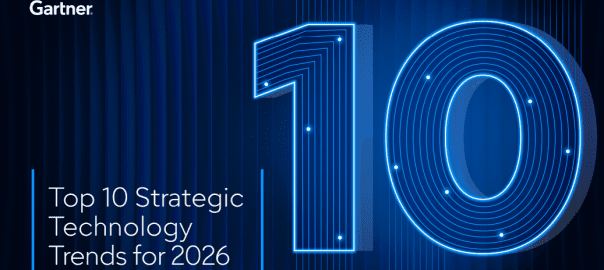
Oct. 29, 2025 /Mpelembe Media/ –The strategic imperatives that define success for technology leaders navigating the AI-powered, hyperconnected world are captured within the three themes of the Gartner Top 10 Strategic Technology Trends for 2026. These trends are considered strategic imperatives that demand thoughtful consideration and decisive action from technology leaders.
The three overarching themes define how leading organizations must innovate, compete, and protect value:
1. The Architect: Build Secure, Scalable, and Adaptive Digital Foundations
To accelerate innovation and resilience, technology leaders must modernize platforms and infrastructure. The Architect themes focus on creating AI-ready foundations that ensure speed, security, and scalability, which are essential for thriving in the AI-powered world.
The specific strategic trends associated with The Architect are:
- AI-native development platforms: These platforms use generative AI to create software faster and easier, empowering “tiny teams” to build more applications with the same resources, helping CIOs address backlogs.
- AI supercomputing platforms: These deliver the massive processing power needed to train and run advanced AI models, addressing the surging demand for complex models that exceed traditional infrastructure limits.
- Confidential computing: This trend utilizes hardware-based Trusted Execution Environments (TEEs) to protect data while it is being processed, even from cloud providers. This is critical for secure cloud strategies and compliance, given stricter privacy laws and AI adoption.
2. The Synthesist: Orchestrate Diverse Technologies for New Value
Technology leaders must integrate specialized models, multiagent systems, and physical AI to unlock new sources of differentiation and value. This imperative focuses on orchestrating diverse technologies to create adaptive, intelligent ecosystems that drive innovation.
The specific strategic trends associated with The Synthesist are:
- Multiagent systems (MAS): These use collections of specialized AI agents that collaborate to complete complex workflows, enabling modular automation and cross-platform integration where single-agent AI struggles with multistep processes.
- Domain-specific language models (DSLMs): These are AI models trained on specialized datasets for specific functions (like finance or healthcare), delivering higher accuracy and compliance than generic large language models (LLMs).
- Physical AI: This brings intelligence into the real world through devices like robots, drones, and smart devices that sense, decide, and act, applying the productivity of digital AI to physical environments.
3. The Vanguard: Elevate Trust, Governance, and Security
In an era of rising risk and regulatory scrutiny, trust is non-negotiable. The Vanguard trends emphasize proactive security, transparent governance, and digital integrity to protect reputation, ensure compliance, and maintain stakeholder confidence while scaling digital transformation and AI.
The specific strategic trends associated with The Vanguard are:
- Preemptive cybersecurity (PCS): This uses advanced AI-driven techniques to anticipate, disrupt, and neutralize cyberattacks before they occur, moving beyond traditional detection and response, which is crucial as AI-powered threats grow exponentially.
- Digital provenance: This verifies the origin and integrity of software, data, and media using tools like Bills of Materials (BOMs), ensuring transparency and trust in systems built on third-party components and AI-generated content.
- AI security platforms (AISPs): These consolidate controls to secure both third-party AI services and custom-built AI applications, addressing AI-native risks such as prompt injection, rogue agent actions, and data leakage.
- Geopatriation: This involves relocating workloads from global hyperscale clouds to sovereign or local environments to mitigate geopolitical risk, driven by geopolitical turbulence and regulatory mandates.
When will multiagent systems become common?
Multiagent systems (MAS) are projected to become common within the near future, which is defined by Gartner as the **3–Based on the sources, multiagent systems (MAS) are projected to become common within the near future, which is defined by Gartner as the 3–5 year timeframe from the publication date of the report.
Key details regarding the timeline and adoption of multiagent systems (MAS) include:
- Near-Term Trend: Multiagent systems (MAS) are listed as Strategic Technology Trend #4 for 2026 and fall under the “Near 3–5 years” timeframe, indicating that they are expected to become common or mainstream during this period.
- Rapid Interest: The sources signal rapid enterprise interest, noting a 1,445% surge in MAS inquiries from the first quarter of 2024 (1Q24) to the second quarter of 2025 (2Q25).
- Specialized Adoption: By 2027, 70% of MAS will use narrowly specialized agents, which is expected to improve accuracy, although it will increase coordination complexity.
- Interoperability: By 2028, 60% of MAS will support multivendor interoperability, which will drive innovation and flexibility.
MAS are collections of specialized AI agents that collaborate to complete complex workflows, enabling modular automation and cross-platform integration, particularly where single-agent AI struggles with multistep processes. Technology leaders are advised to focus on identifying high-value use cases and adopting interoperability standards to future-proof MAS investments.
When will AI security platforms be adopted?
AI security platforms (AISPs) are projected to achieve a significant level of adoption within the near future.
Specifically, the sources project that:
- By 2028, over half (+50%) of enterprises will adopt AISPs.
AISPs are listed as Strategic Technology Trend #9 for 2026 and fall under the “Near 3–5 years” timeframe. They are crucial because traditional security tools are failing to protect AI workflows as AI adoption accelerates. AISPs consolidate controls to secure both third-party AI services and custom-built AI applications, addressing AI-native risks such as prompt injection and data leakage. crucial because traditional security tools are failing to protect AI workflows as AI adoption accelerates. AISPs consolidate controls to secure both third-party AI services and custom-built AI applications, addressing AI-native risks such as prompt injection and data leakage.
“Tiny teams” are using AI-native development platforms.
These platforms are the strategic technology trend that empower “tiny teams” to build more applications with the same resources. This capability enables, for example, five teams of two employees to deliver five applications at once, helping Chief Information Officers (CIOs) address application backlogs.
AI-native development platforms utilize generative AI to create software faster and easier than ever before. The platforms offer various tools, which “tiny teams” would leverage, including:
- “One-shot” tools that generate software from a single prompt.
- “Vibe coding” tools that enable software development without requiring deep technical knowledge.
- AI agents orchestrated together to create software.
By 2030, it is projected that organizations will evolve larger software engineering teams into these smaller, AI-augmented teams.
In summary, the report outlines Gartner’s Top 10 Strategic Technology Trends for 2026, which technology leaders must address for business transformation. These trends are categorised into three strategic themes: The Architect, focusing on building secure, scalable digital foundations with technologies like AI-native development platforms and confidential computing; The Synthesist, which emphasises orchestrating diverse technologies such as multiagent systems and Physical AI for domain-specific value; and The Vanguard, which highlights the necessity of elevating trust and security through preemptive cybersecurity, digital provenance, and AI security platforms.
Download the full report here