
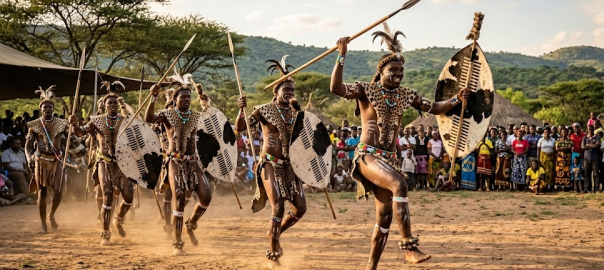
28 Feb. 2026 /Mpelembe Media/ — The N’cwala (or Nc’wala) ceremony is a major annual cultural festival celebrated by the Ngoni people of Zambia’s Eastern Province. Held every year on the last Saturday of February at Mtenguleni village near Chipata, it primarily serves as a thanksgiving festival for the first fruits of the harvest and an occasion to pay homage to God, ancestral spirits, and the Paramount Chief Mpezeni.
Here are the key aspects of the ceremony’s history, rituals, and significance:
Historical Background
The Great Migration: The ceremony is deeply tied to the Ngoni people’s origins. In the 1800s, the Ngoni fled the Mfecane wars and Shaka Zulu’s empire in present-day South Africa under the leadership of King Zwangendaba. They famously crossed the Zambezi River on November 20, 1835, during a solar eclipse—an event they took as a divine sign.
Colonial Ban and Revival: Following a fierce rebellion against the British South Africa Company and the subsequent execution of the Ngoni Prince Nsingo in 1898, the British colonial government banned the N’cwala ceremony, labeling it as “heathen” and “too war-like”. The tradition survived in secret for 82 years until it was officially revived by Paramount Chief Mpezeni III in 1980.
Core Rituals and Performances The modern N’cwala is a meticulously choreographed sequence of events:
The Mulumo (First Fruits Ritual): Before the general public can harvest their fields, the Paramount Chief must bless the crops. He receives the season’s first produce (such as millet, pumpkin, sugar cane, and maize) from Senior Chief Madzimawe. The Chief tastes the food to the sound of ululations and praise songs, signaling the transition from hunger to plenty.
The Royal Procession: The Paramount Chief travels from his Ephendukeni (or Ipendukeni) palace to the Laweni palace in Mtenguleni in a slow-moving convoy, escorted by chanting warriors.
The Ingoma Dance: Ngoni warriors (impis) dressed in traditional leopard skins, holding shields, spears, and knobkerries (clubs), perform aggressive, rhythmic stamping dances that re-enact their historical military conquests. Women (Khuzeyeni) accompany them with rhythmic clapping and singing.
The Mnikelo (Bull Sacrifice): The spiritual climax of the festival is the slaughtering of a pure black bull, which symbolizes the life-force and prosperity of the Ngoni. A warrior must strike the bull dead with a single, precise spear thrust. The Paramount Chief then drinks the fresh blood of the bull to absorb the vitality of the land, and the roasted liver is shared among his honored guests.
Diplomacy and Tribal Cousinship N’cwala is a massive vehicle for national unity and regional diplomacy. It draws foreign dignitaries and traditional leaders from neighboring Malawi, Mozambique, and Eswatini.
Crucially, it acts as a stage for Chimbuya, or traditional tribal cousinship. Following historic military stalemates in the 19th century between the Ngoni and the Bemba people of northern Zambia, the two tribes resolved to live as “cousins.” During N’cwala, Bemba royalty (such as King Chitimukulu or Chief Mwata Kazembe) attend the ceremony to engage in a humorous “war of jokes” and mock insults with the Ngoni, a socio-political mechanism that helps maintain peace and prevent ethnic tension in Zambia.
Recent Commemorative Expansions The ceremony continues to evolve. For the 2026 N’cwala, the organizing committee added an unprecedented transnational element to physically retrace the Ngoni’s 1,600-kilometer migration path. This includes a sacred pilgrimage to Chipeta Village in Nakonde to visit the final resting place of King Zwangendaba, followed by a dramatic re-enactment of the historic 1835 Zambezi River crossing in Feira (Luangwa District).
The “joke diplomacy” between the Ngoni and Bemba people is a unique social relationship known as Chimbuya, or traditional tribal cousinship. The practice is rooted in their 19th-century military stalemates; after battling for twenty years without a clear victor, the two tribes resolved to live together peacefully as “cousins” rather than enemies.
They practice this diplomacy by engaging in a humorous “war of jokes” that involves exchanging mock insults and playful challenges which would normally be considered offensive in other contexts. For example, a Bemba man might jokingly claim that all Ngoni women rightfully belong to him, and vice versa, a remark that is always met with shared laughter rather than aggression.
This playful banter is practiced across various social settings:
Traditional Ceremonies: During the Ngoni’s annual N’cwala ceremony, high-ranking Bemba royalty, such as the Chitimukulu (Bemba king) or Chief Mwata Kazembe, often attend as special guests to partake in this cultural exchange.
Everyday Life: The exchange of tribal jokes is a common social pastime that takes place during daily workplace interactions, drinking sprees, and significant life events like weddings and funerals.
Ultimately, Chimbuya serves as a highly effective conflict resolution mechanism. By transforming historical military trauma into shared humor and mutual respect, it prevents ethnic animosities and helps maintain peaceful coexistence in Zambia. This social engineering was even championed by Zambia’s first president, Kenneth Kaunda, as a method to unify the country’s 73 ethnic groups under the national motto “One Zambia, One Nation”.
Historical Origins and the Crucible of Colonialism
The historical trajectory of the Ngoni people is defined by their epic migration from present-day South Africa during the Mfecane wars of the early 19th century. Led by King Zwangendaba, the Ngoni famously crossed the Zambezi River in 1835 during a solar eclipse, eventually establishing a formidable warrior kingdom in the Chipata district of Zambia’s Eastern Province. By the late 1890s, the Ngoni fiercely resisted the expanding British South Africa Company. This culminated in the 1898 Battle of Fort Jameson, resulting in the Ngoni’s defeat and the execution of Prince Nsingo. Fearing the tribe’s martial heritage, the British banned their central cultural festival—the N’cwala ceremony—labeling it “too war-like”.
The Resurgence and Ritual Dynamics of N’cwala
After remaining underground for 82 years, the N’cwala ceremony was officially revived in 1980 by Paramount Chief Mpezeni III. Held annually on the last Saturday of February at Mtenguleni village, the festival is a Thanksgiving for the first fruits of the harvest and a profound spiritual connection to Ngoni ancestors.
The ceremony is anchored by two major rituals:
The Mulumo: The Paramount Chief receives and tastes the season’s first crops (such as maize and pumpkin), signaling to his people that the transition from hunger to plenty has begun.
The Mnikelo: A pure black bull is sacrificed with a single spear thrust by a warrior. The Chief drinks its fresh blood, a deeply symbolic act reflecting the absorption of the land’s vitality and the life-force of the Ngoni nation. These rites are accompanied by the intense Ingoma dance, where warriors adorned in leopard skins and wielding shields and knobkerries aggressively re-enact their historical conquests.
A Catalyst for National Unity and Regional Diplomacy
Today, N’cwala is a sophisticated vehicle for both national integration and international relations. Domestically, the ceremony reinforces peace through Chimbuya, a unique system of “tribal cousinship” forged after 19th-century military stalemates between the Ngoni and Bemba tribes. During the festival, Bemba royalty attend to engage in a humorous “war of jokes” with the Ngoni, a conflict-resolution mechanism that effectively diffuses ethnic tensions and champions the national motto, “One Zambia, One Nation”.
Regionally, the ceremony brings together thousands of people and high-ranking dignitaries from neighboring Malawi, Mozambique, and Eswatini. Zambian President Hakainde Hichilema frequently graces the event, utilizing it to foster bilateral ties, promote cultural diplomacy, and strengthen shared historical bonds across borders.
Tourism, Economic Impact, and Future Evolution The festival has grown into a major driver of cultural tourism in Zambia’s Eastern Province. In preparation for the 2025 and 2026 iterations, the N’cwala Organizing Committee expanded the celebrations to include a massive transnational pilgrimage. This includes retracing the 1835 migration route by visiting King Zwangendaba’s grave in Nakonde and staging dramatic re-enactments of the Zambezi River crossing in Luangwa. This expansion stimulates local economic activity, filling hotels in Chipata and showcasing Zambia’s rich intangible heritage to a global audience.