
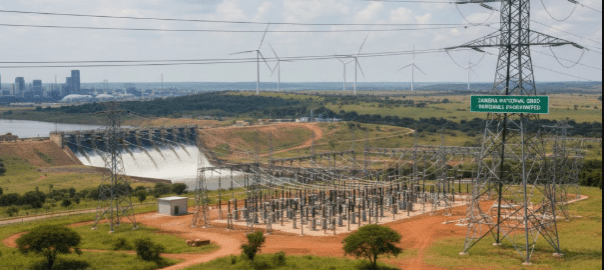
Jan. 28, 2026 /Mpelembe Media/ — Norway and Zambia have recently entered into a formal agreement to exchange carbon credits under the framework of the Paris Agreement. This bilateral deal allows Norway to purchase offsets generated by the expansion of renewable energy projects within the African nation. The initiative specifically targets the enhancement of Zambia’s electrical grid to compensate for a decline in traditional hydroelectric power sources. By supporting these sustainable energy transitions, the partnership aims to achieve measurable emission reductions while addressing local energy security. Ultimately, this collaboration represents a strategic use of Article 6 to foster international cooperation on global climate goals.
The Article 6 framework of the Paris Agreement facilitates international climate cooperation by enabling countries to enter into bilateral agreements for the purchase and transfer of carbon credits. This mechanism allows nations to collaborate on specific projects that result in verifiable emission reductions.
This framework supports cooperation in the following ways:
Financial and Technical Exchange: It allows developed nations to provide financial support to other countries in exchange for carbon credits. For instance, Norway has signed a deal to purchase credits from Zambia, effectively funding climate action initiatives in the African nation.
Support for Renewable Energy: The framework can be used to target specific environmental needs, such as increasing renewable electricity delivered into a country’s grid. In the case of Zambia, these credits are linked to efforts to bolster electricity supplies that have been impacted by waning hydro supplies.
Market-Based Emission Reductions: By creating a system where emission reductions can be traded, Article 6 encourages countries to implement green energy solutions that might otherwise lack the necessary funding, thereby contributing to global climate goals through international partnership.
Information regarding the broader legal requirements and global oversight of Article 6 beyond this specific bilateral deal is not contained in the provided sources, and those broader international regulations should independently verified..
Norway’s purchase supports Zambia’s renewable energy transition by providing financial investment in exchange for carbon credits, which are specifically tied to the delivery of increased renewable electricity into Zambia’s power grid,. This support is strategically targeted to help Zambia make up for waning hydro supplies, which have traditionally been a cornerstone of the country’s energy production but are now declining.
By utilizing the Article 6 framework of the Paris Agreement, this deal facilitates the following:
Grid Stabilization: The funds from the carbon credit sale incentivize the addition of new renewable sources to the national grid, helping to stabilize energy supplies as hydroelectric capacity fluctuates,.
Monetizing Emission Reductions: Zambia is able to turn its efforts to reduce emissions into a tradable asset, creating a revenue stream that supports the infrastructure necessary for a green energy transition.
Bilateral Climate Action: The agreement formalizes a partnership where Norway’s climate goals are met through the funding of verifiable renewable power generation projects in Zambia.
The analysts do not specify which specific renewable technologies (such as solar or wind) are being implemented beyond the mention of “renewable electricity” and “hydro supplies,” and I may want to independently verify the specific project types being funded under this agreement.
The deal helps Norway meet its climate goals by allowing the country to purchase carbon credits under the Article 6 framework of the Paris Agreement,.
This arrangement supports Norway’s objectives through the following mechanisms:
Acquiring Emission Reductions: Norway secures credits based on emission reductions generated by projects in Zambia. These reductions specifically come from the delivery of increased renewable electricity into Zambia’s national grid to compensate for waning hydro supplies,.
International Cooperation: By using Article 6, Norway can fulfill its climate commitments by funding green energy transitions in other nations, effectively counting those verifiable reductions toward its own environmental targets.
Strategic Investment: The deal allows Norway to support the stabilization of renewable power in a region facing energy vulnerabilities while receiving the carbon offsets necessary to balance its own climate portfolio.
The energy expertss do not specify the exact volume of credits Norway intends to purchase or the specific domestic climate targets these credits will be applied toward, and I may want to independently verify Norway’s official climate policy for those details.
The deal impacts Zambia’s emission reduction efforts by monetizing the expansion of its renewable energy capacity through the sale of carbon credits to Norway. According to the sources, the emission reductions generated by this agreement come specifically from increased renewable electricity delivered into Zambia’s national grid,.
The impact on Zambia’s goals includes:
Mitigating Energy Loss: The deal directly addresses the challenge of waning hydro supplies by funding alternative renewable sources. This allows Zambia to maintain or increase its share of clean energy even as its traditional hydroelectric power declines,.
Funding for Green Infrastructure: By selling these credits under the Article 6 framework, Zambia gains financial support to implement renewable projects that contribute to its overall green energy transition.
Credit Transfer: It is important to note that because these are verifiable emission reductions sold to Norway, the specific credits from these projects are intended to help Norway meet its climate targets.
The energy experts do not explicitly detail how these sold credits affect Zambia’s ability to count the same reductions toward its own Nationally Determined Contributions (NDCs) or whether a “corresponding adjustment” has been made to prevent double counting. This is a technical aspect of the Article 6 framework that may be independently verified through official Paris Agreement regulatory documents.
The energy experts do not explicitly state what happens if Zambia uses the same credits for its own goals; however, the deal is specifically governed by the Article 6 framework of the Paris Agreement.
Based on the nature of this framework and information from outside the sources, here is how that situation is addressed:
Prevention of Double Counting: A core requirement of Article 6 is the prevention of “double counting,” which occurs if both the selling country (Zambia) and the buying country (Norway) claim the same emission reductions toward their climate targets.
Corresponding Adjustments: To avoid this, international regulations (not detailed in your sources) require a “corresponding adjustment.” This means that when Zambia transfers carbon credits from its increased renewable electricity to Norway, Zambia must “un-count” those reductions from its own national tally, allowing only Norway to use them to meet its goals.
Impact on National Targets: If Zambia were to use the same credits for its own goals after selling them, it would violate the terms of the Article 6 Carbon Credit Alliance. This would compromise the environmental integrity of the deal, as the same ton of CO2 avoided by using renewable energy instead of waning hydro supplies would be incorrectly counted twice.
Because the publicly available documents do not contain details on the specific penalties or the administrative process for “corresponding adjustments” for this particular deal, you may want to independently verify the official Article 6 implementation guidelines set by the UN Climate Change (UNFCCC).
Norway chose to partner with Zambia because the country has a specific need to address waning hydro supplies by increasing the amount of renewable electricity delivered into its national grid,.
The partnership is strategically designed to facilitate the following:
Addressing Energy Gaps: By focusing on Zambia, Norway can support a project that directly compensates for the decline in traditional hydroelectric power with new renewable energy sources.
Generating Verifiable Credits: This specific situation in Zambia allows for the creation of carbon credits based on measurable emission reductions resulting from the transition to non-hydro renewables,.
Article 6 Implementation: This deal serves as a practical application of the Article 6 framework of the Paris Agreement, allowing Norway to acquire credits through a bilateral agreement that supports another nation’s green energy infrastructure.
The available documents do not mention other potential reasons for this specific selection, such as diplomatic history, economic ties, or the specific cost-effectiveness of Zambian credits compared to other nations; therefore, I may want to independently verify Norway’s broader international development and climate strategies for additional context.