
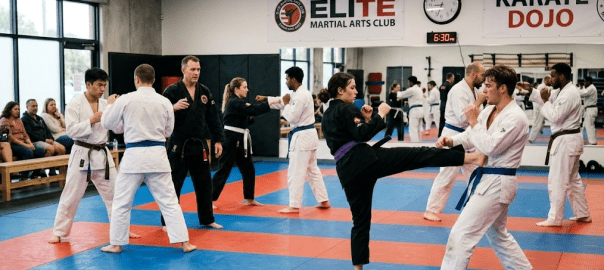
Chuck Norris’s enlistment in the United States Air Force in 1958 was the pivotal turning point that launched his entire martial arts and entertainment career
March 20, 2026 /Mpelembe Media/ — For the better part of two decades, Chuck Norris has existed in the digital collective as a shorthand for the impossible. Through the “Chuck Norris Facts” phenomenon, he became a modern folk hero—a man who doesn’t sleep, but waits; a man who can divide by zero. However, on March 20, 2026, the world was reminded of the quiet mortality behind the boisterous myth. The legendary martial artist and actor passed away peacefully at the age of 86, leaving behind a legacy far more nuanced than a series of hyperbolic internet jokes.Only ten days prior, on March 10, 2026, Norris had celebrated his 86th birthday. He greeted the milestone with his characteristic “I don’t age, I level up” philosophy, a mindset that defined his transition from a shy, self-described underachiever in Oklahoma to a global icon. To truly understand Norris, a cultural historian must look beyond the roundhouse kicks and the memes to the impactful milestones that defined his 86-year journey.
1. The Cold War Catalyst and a Brother’s Sacrifice
The foundation of the Chuck Norris persona was not laid in a Hollywood studio, but at a military base during the Cold War. Born in Ryan, Oklahoma, Norris initially struggled with a lack of athletic distinction and a paralyzing shyness. Seeking a path forward, he enlisted in the U.S. Air Force in 1958. Serving as an Air Policeman—a precursor to today’s Security Forces—Norris initially aimed for a traditional career in law enforcement.His trajectory shifted permanently during a deployment to Osan Air Base in South Korea. It was there that he began studying Tang Soo Do and Judo, disciplines that provided the self-confidence he had lacked in his youth. Yet, his devotion to the military was anchored by a deeper, more personal human story: the loss of his younger brother, Wieland, who was killed in action in Vietnam. This tragedy galvanized Norris’s lifelong support for veterans and informed the stoic, protective nature of his later screen roles.”The military is very close to me, because it turned my life around… Joining the military helped me get on the right path.”
2. The Bruce Lee Connection: From Competition to Cinema
Before he was a movie star, Norris was a dominant force in the world of competitive fighting, holding the Professional Middleweight Karate Champion title for six consecutive years starting in 1968. During this era, he operated a chain of karate schools in Los Angeles, where he became a “bridge” between the martial arts world and the Hollywood elite. His client list was a Who’s Who of 1970s celebrity, including Priscilla Presley and Steve McQueen; it was McQueen who famously encouraged Norris to pursue acting.The true “breakthrough” moment, however, occurred at a 1968 martial arts demonstration in Long Beach where Norris met Bruce Lee. Their friendship, rooted in mutual training and respect, led to Lee casting Norris as the nemesis in the 1972 film The Way of the Dragon . Their battle in the Roman Colosseum remains a touchstone of martial arts cinema, transitioning Norris from a world-class fighter into a legitimate action icon.
3. The “Facts” Were Almost About Someone Else
The “Chuck Norris Facts” are perhaps the most successful meme in internet history, yet their origin was remarkably arbitrary. The trend began in 2005 on the “Something Awful” forums, where humorist Ian Spector created a fact generator. Interestingly, the absurdist claims were originally centered on actor Vin Diesel following the release of The Pacifier . After a few months, the community pivoted to Norris, whose stoic “tough-guy” persona—cemented by the “Walker Texas Ranger Lever” sketches on Late Night with Conan O’Brien —made him a more fertile ground for the humor.Norris’s reaction was a study in sophisticated adaptation. While he initially filed a 2007 lawsuit against a publisher for trademark infringement, he eventually embraced the phenomenon. By 2009, he co-authored The Official Chuck Norris Fact Book , merging his real-life philosophy with the internet’s favorite tall tales. He understood that the meme wasn’t a mockery, but a digital-age form of Paul Bunyan folklore.”Chuck Norris was once bitten by a king cobra; after ten excruciating minutes, the cobra died.”
4. A Philosophy of “Character Through Karate”
Perhaps his most enduring legacy was the 1990 founding of Kickstart Kids (originally Kick Drugs Out of America ), established with the assistance of President George H. W. Bush. For Norris, this was more than philanthropy; it was the marketing of non-violence through the vessel of combat. The program, recognized by the Texas Education Agency, has benefited over 120,000 students by focusing on the “Code of Bushido”—virtues like humility, loyalty to family, and integrity.Norris often noted that true martial arts was about the discipline required to avoid a fight. This commitment to character development over physical violence earned the foundation “Safe School Awards” from Crime Stoppers of Houston in 2015 and the North Texas Crime Commission in 2016. In his transition from the “nemesis” in the Colosseum to the “mentor” in the classroom, he proved that his most effective weapon was not his roundhouse kick, but his curriculum of character.
5. The Final Level Up: A Quiet Passing in Hawaii
The end of the legend’s life was marked by the same discipline that characterized his youth. Residing on the North Shore of Kauai, Norris remained active well into his 80s, engaging in his personal system of martial arts— Chun Kuk Do (translated as “The Universal Way”), which he rebranded as the Chuck Norris System in 2015.On March 18, 2026, he was reportedly training and in high spirits, but a sudden medical emergency on March 19 led to his hospitalization at Wilcox Medical Center in Lihue. The logistical reality of Kauai’s rural medical system—where serious cases often require air transfer to the Level I facilities on Oahu—highlighted the human vulnerability of an icon synonymous with invincibility. He passed away peacefully on March 20, 2026. In their final statement, his family reminded the world that while he was a symbol of strength to millions, to them he was simply a “devoted husband, a loving father and grandfather.””I don’t age. I level up. I’m 86 today! … I’m grateful for another year, good health, and the chance to keep doing what I love.”
Conclusion: The Enduring Way of the Dragon
Chuck Norris was the ultimate bridge: between Eastern discipline and Western spectacle, and between traditional stardom and the viral age. From the Osan Air Base to the Colosseum, he remained a consistent symbol of resilience. Ultimately, his shift from physical combat to a mission of character-building invites us to reconsider our definition of power. In an age often defined by superficial displays of strength, Norris’s 86-year journey leaves us with a provocative question: Is true strength found in the ability to deliver a blow, or in the discipline required to ensure one is never necessary?