
The Soul Frontier: Robbie Vincent, the ‘Soul Mafia,’ and the Integration of British Broadcasting (1970–1985)
1. The Industrial and Social Landscape of 1970s British Radio
The late 1970s represented a critical transition in the UK’s media history, where radio moved beyond its “dull landscape” of predictability to become a decisive tool for cultural disruption. In an era of stagnant mainstream broadcasting, specialist programming emerged as a necessary shock to the British establishment. This period was defined by a stark cultural invisibility; specialist Black music was relegated to fewer than 10 hours of airtime per week nationally. The institutional caution was so severe that labels like Tamla Motown frequently omitted artist photographs from album sleeves, fearing that visible Blackness would alienate white consumers.This vacuum was occupied by the “Soul Mafia,” a collective of broadcasters and club DJs whose “missionary enthusiasm” bridged the gap between underground dancefloors and the BBC.
Table 1: Key Figures of the Soul Mafia
Figure,Primary Broadcasting/Club Platforms,Notable Contribution
Robbie Vincent,”BBC Radio London, BBC Radio 1″,Architect of the Saturday Soul Show; used journalistic rigor to advocate for specialist music.
Chris Hill,”The Gold Mine (Canvey Island), Lacy Lady (Ilford)”,Resident DJ and figurehead who pioneered the Essex soul scene and swing/nostalgia fashion.
Greg Edwards,Capital Radio ( Soul Spectrum ),”Known for his New York-raised perspective and the iconic, romantic “”Bathroom Call”” segment.”
DJ Froggy,Various (Mobile and Club),”Engineered the UK’s first serious, high-amplification sound systems and the Matamp mixing console.”
The transition from this static landscape to a vibrant, integrated future was largely orchestrated by the “missionary” role of Robbie Vincent, who professionalized the promotion of jazz-funk and soul.
2. Robbie Vincent: The Architect of ‘Rhythm Buds’ and Media Advocacy
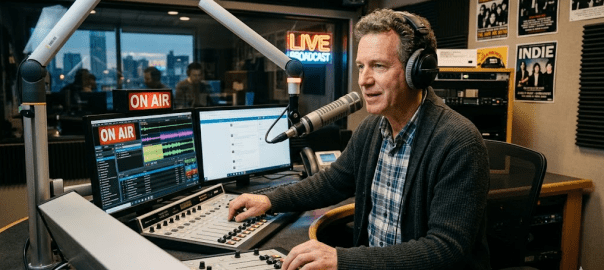
Robbie Vincent occupied a singular position in British media, utilizing his dual status as an Evening Standard journalist and broadcaster to provide jazz-funk and soul with unprecedented professional credibility. His broadcasting career launched on October 6, 1970, at BBC Radio London, but it was the social upheaval of 1974 that cemented his influence. During Ted Heath’s Three-Day Week, as early television shutdowns left the nation in darkness, Vincent’s Late Night London phone-in show triumphed “beyond all expectations,” establishing him as a master of the medium.Vincent’s methodology was rooted in his “devil’s advocate” journalistic style. He brought this sharp, inquisitive edge to his interviews with giants like Marvin Gaye and James Brown, treating the music as a matter of cultural importance rather than mere entertainment. This was particularly vital as he fought against the commercialized “dross” that followed the Saturday Night Fever explosion. To foster a dedicated listener identity, he utilized deliberate branding tools, including the “Sound of Sunday Night” jingle and a vocabulary of “Robbie-isms” that defined the era:
- “If it moves, funk it” : The central mantra for the “good music cause.”
- “Rhythm Buds” : A term for the listeners’ musical sensibilities.
- “Soul Satellite” : A recurring segment that “scanned the country” to land in specific locations, building a national community.
- “Government meltability warning” : A descriptor for high-energy tracks.As a media advocate, Vincent was responsible for “essential listening” that dictated specialist record sales and industry charts like the Blues and Soul “Fusion Few” and his own “Fusion Jazz 40.” He famously broke tracks ahead of official UK releases, including Lionel Richie’s “All Night Long” and Mtume’s “Juicy Fruit” . He pioneered the UK careers of Maze (featuring Frankie Beverly) and managed the Brit Funk group Second Image . Vincent’s 1979 column in the Daily Star further expanded his advocacy, recognizing the “Soul Tribes” as a cultural phenomenon.This professionalized broadcasting ensured that the music did not remain abstract; it was directly tethered to the physical gathering points of the movement at venues like Purley and Caister.
3. The ‘Soul Tribes’ and the Architecture of Social Cohesion
The “Soul Tribes” functioned as a strategic mechanism for breaking the “meat market” tradition of Saturday night dancehalls. These tribes—including the Dartford Tunnel Moles , Medway Maggots , Sherwood Softshoe Shufflers , and Welwyn Wobblers —adopted playful identities to signal their devotion to a music-driven community. These events, particularly “All-Dayers” and “Soul Weekenders” at Tiffany’s in Purley and the 1979 launch of the Caister Soul Weekender, created “integrated” spaces. As Light of the World’s ‘Bluey’ Maunick observed, it was a “mix of Black kids and white kids getting on” in an era otherwise defined by racist door policies.The technical infrastructure of these gatherings was revolutionary. The evolution of the dancefloor was facilitated by:
- Froggy’s Sound System : The UK’s first serious, high-amplification sound system, which allowed for the physical impact of funk.
- The Matamp Mixing Console : Crucial for providing the seamless cross-fades necessary for maintaining dancefloor momentum.
- The 12-inch Vinyl Format : A novel format in the late 70s that provided extended versions of tracks, catering to the athletic requirements of the tribes who engaged in wild dance moves and human pyramids.This technical and social synergy, highlighted in Vincent’s October 1982 “All Winners Show” which rediscovered acts like Prince Charles and the City Beat Band , laid the groundwork for a unique homegrown sound: Brit Funk.
4. Brit Funk: Forging a Unique Black British Identity
Brit Funk served as the instrumental form of expression for the first generation of Black people born in the UK. It marked a critical pivot from the “American Masquerade” of the early 1970s—where acts like Sweet Sensation performed covers in the style of US performers on the cabaret circuit—to a sound that embraced a distinct Black British identity.The genre was defined by a “British twist,” which included Caribbean-influenced “looser rhythms,” hints of reggae, and the rejection of American accents in favor of British wit and “chanting.” This chanting, a “football crowd” style of interaction, was ironically influenced by the early 1970s glam rock the musicians had grown up with. Brit Funk also drew energy from the punk scene; the “naivety” and DIY spirit of musicians resulted in a sound that sat between “slick funk” and aggressive guitar thrashing.The collaborative nature of the scene was exemplified by Spandau Ballet , whose members watched Light of the World’s rehearsals for advice. This culminated in the landmark track “Chant Number One,” for which Beggar & Co provided the brass section. Major acts that transitioned to mainstream success on Top of the Pops included:
- Hi-Tension : The first to chart with their eponymous hit. | Light of the World : Members later formed Incognito and Beggar & Co.
- Freeez : Known for the 1981 hit “Southern Freeez.”
- Central Line : Achieved success with “Walking into Sunshine.”This movement proved that Black British artists were commercially viable, leaving a legacy that would eventually transform the national media landscape.
5. The Professional Legacy: From Underground to Institutional Change
The Soul Mafia era provided the strategic blueprint for the 1980s pop explosion and the eventual integration of British broadcasting. By proving the commercial viability of Black music, the movement forced an institutional opening that led to the establishment of 24/7 specialist stations. Stations such as Kiss FM , Choice FM , and Jazz FM are direct descendants of the vacuum first identified by Vincent and his contemporaries.
The Professional and Social Summary
- Mainstream Representation : The movement ended the era of cultural invisibility for Black British artists, providing the first consistent platform for their mainstream success.
- Cultural Fluidity : Brit Funk and the Soul Tribes created a space where strict ethnic and class boundaries were blurred, allowing for a shared British identity negotiated through music.
- Institutional Transformation : The UK dancefloor was reinvented from a site of “apartheid” into one of “universal language,” while the “missionary zeal” of the Soul Mafia ensured that the “Sound of Young America” was successfully reclaimed and reinvented for the UK.Ultimately, the Soul Mafia’s role was to reinvent “Swinging London” for the 1980s. They were not merely playing records; they were the architects of a more integrated, modern British media identity that continues to resonate today.
Listen to full Podcast: https://notebooklm.google.com/notebook/626a3f9b-7876-4963-8d48-262b87e3dbae/artifact/6b23971a-d0ec-4978-a310-fed822dc87c4