
NWSL MVP Temwa Chawinga Receives Global Spotlight in ‘Ted Lasso’ Premiere
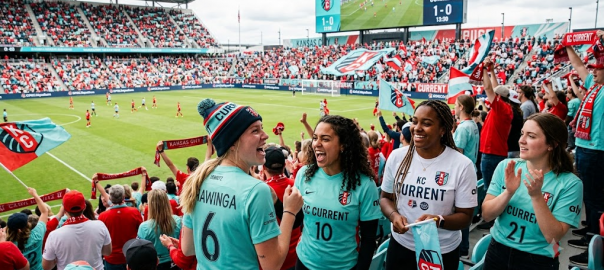
Fri , Aug 0& 2026 /Mpelembe Media/ — The fourth season of Apple TV+’s critically acclaimed comedy Ted Lasso premiered on August 5, 2026, shifting its core narrative focus from the men’s English Premier League to the establishment and coaching of AFC Richmond’s newly formed second-division women’s team. In the premiere episode, titled “Home,” the show’s main characters travel to Kansas City in an effort to convince Ted Lasso, who is currently working as an assistant manager at a local grocery store, to return to London to lead the new women’s club. To capture authentic stakes for the crossover, the show’s producers collaborated closely with the Kansas City Current, spending three weeks filming on location, which was highlighted by an intensive 11-hour shoot at CPKC Stadium—the first venue in professional sports purpose-built specifically for a women’s soccer team. This partnership seamlessly blends scripted footage with real-world match clips, featuring Kansas City’s star forward, two-time NWSL MVP, and Golden Boot winner Temwa Chawinga scoring a real-world goal against Gotham FC during a prior league match.
This high-profile integration reflects a sophisticated digital marketing and fan engagement strategy designed to bridge professional sports and popular entertainment. As part of the promotional push, Apple TV+ and the Current co-hosted a major “Ted Lasso Night” watch party for the World Cup quarterfinals at CPKC Stadium in July 2026, which featured themed giveaways, video highlights, and appearances by cast members Jason Sudeikis, Juno Temple, Jeremy Swift, Brendan Hunt, and Abbie Hern. The crossover further amplified online fan dynamics on Instagram and other platforms, where “NWSL detectives” enthusiastically dissected the premiere’s clips to verify the match footage, while Gotham FC supporters playfully contested the narrative by highlighting their club’s real-world playoff victories over the Current.
This television validation coincides with Chawinga’s legendary real-life career, marked by her record-breaking debut in 2024 when she became the first player in NWSL history to score against all 13 opposing teams in a single campaign on her way to a regular-season record of 21 goals. Her individual brilliance is mirrored by the explosive growth of the NWSL in 2026, which saw expansion team Denver Summit FC break the national attendance record for a professional women’s sporting event by drawing 63,004 fans to their inaugural home match against the Washington Spirit. Furthermore, other major market clubs achieved landmark milestones, such as Gotham FC drawing a historic crowd of 42,175 to Citi Field and welcoming the return of international icon Sam Kerr.
Despite the commercial and cultural success of this cross-promotional alignment, the premiere episode of Season 4 drew mixed reactions from television critics. Some reviewers graded the episode a “B,” praising the dramatic potential of Ted’s lingering homesickness, his grocery store antics, and the promising future of him coaching the Richmond women’s team. Conversely, other critics offered a harsher “C-” grade, criticizing the 42-minute premiere as unnecessarily bloated, preachy, and slow-moving, arguing that the show relies on broad, gimmicky Kansas City setups and offscreen character developments rather than exploring the genuine emotional core of Ted’s return. Nevertheless, this high-profile partnership demonstrates how professional women’s sports have attained the cultural and commercial maturity required to anchor mainstream global entertainment properties, establishing an unprecedented standard for brand integration.
Believe 2.0: How Ted Lasso Season 4 and the NWSL Rewrote the Narrative Engine of Women’s Sports
1. The Return of the “Believe” Spirit
After a three-year hiatus that left “Diamond Dogs” everywhere parsing every Jason Sudeikis sighting for clues, Ted Lasso has finally returned. But the Season 4 premiere, which debuted on August 5, 2026, isn’t just a continuation of the Richmond fairy tale; it’s a fundamental hard-pivot. The “soft relaunch” shifts the narrative engine from the English Premier League to the establishment of AFC Richmond’s women’s side—an idea originally sparked by Keeley Jones in the Season 3 finale that has now become the show’s central heartbeat.When we find Ted, he’s a long way from the pitch, serving as a part-time assistant manager at a local Kansas City grocery store. It’s a grounded, slightly melancholic existence that stands in stark contrast to the high-stakes, record-breaking reality of modern women’s professional soccer. This transition creates a fascinating friction: How does a show built on the whimsical, “Believe” vibe of the 2020 lockdown survive in the 2026 sports landscape, where women’s soccer is no longer an underdog story but a commercial juggernaut? While critics like Saloni Gajjar have noted that the premiere occasionally “spins its wheels” with overlong runtimes and some “meandering melodrama,” the episode successfully bridges the gap between Apple TV+ fiction and the NWSL’s heavy-hitting reality.
2. The Stadium is the “Proof of Concept”
The premiere, titled “Home,” finds its soul at CPKC Stadium, the home ground of the Kansas City Current. The location choice is a masterstroke of sports-entertainment synergy. CPKC isn’t just another backdrop; it is the first stadium in the world purpose-built specifically for a professional women’s team. In the world of the show, the stadium serves as a visual argument—a physical rebuke to the outdated notion that women’s sports are a charity case rather than a destination for premier capital.For Kansas City Current co-owner Angie Long, the collaboration (which began in April 2025) is more than just a cameo; it’s a validation of the league’s foundational shift toward infrastructure and permanence.”It is a little bit proof of concept. Everything that we’ve built, even a show like Ted Lasso is seeing it. So, I think it’s endorsement. But again, what it means for sport, for women’s soccer is huge.”
3. Temwa Chawinga: A GOAT in Every Universe
The episode’s most electric moment occurs when Rebecca Welton and Keeley Jones take their seats in the stands. As they watch the game, the screen blends scripted drama with real-world footage of Kansas City Current forward Temwa Chawinga clinical finish against Gotham FC.If there was ever a “shining moment” to validate the league’s elite status, Chawinga is it. Her “stat-check” reads like a video game: she was the first player in NWSL history to score against every active opponent in a single campaign (2024), finishing with 21 goals. By the time of the premiere, she’s already secured back-to-back MVPs and Golden Boots, including a historic May 10, 2026, hat-trick that ended a rare six-week drought. On social media, the consensus was instant: Chawinga is a “GOAT” across both the real and fictional universes, a player whose gravity is so strong she can pull a fictional narrative into her orbit.
4. The 11-Hour Authenticity Grind
There is a clear cultural weight to the production rigor of Season 4. To avoid the “awful CGI” that plagued the Season 3 finale—specifically that caricaturish wedding sequence—producers committed to a grueling three-week filming period in Kansas City. This included a singular, 11-hour shoot at CPKC Stadium to ensure the scripted scenes felt indistinguishable from the atmosphere of a real matchday.This move away from the “caricaturish” depictions of the past signals a newfound respect for the women’s game. By filming actors in the stands alongside high-definition game footage, the show treats the NWSL with the same prestige usually reserved for the Champions League. This level of production rigor is a proxy for the league’s growing cultural capital; the show isn’t just “featuring” the NWSL, it’s trying to keep up with it.
5. The Rise of the “NWSL Detectives”
The crossover has birthed a new digital phenomenon: the “NWSL Detectives.” Within hours of the premiere, fans were parsing footage to verify match origins and tactical validity. This wasn’t just casual viewing; it was a full tactical dissection. Fans on X and Instagram debated defensive positioning and ball-chasing, proving that the crossover tapped into a deeply analytical fanbase.Perhaps the most “online” moment involved USWNT defender Emily Sonnett. Fans quickly realized the footage used for the Chawinga goal featured Sonnett being beaten on the play, leading to a wave of humorous sympathy. “Did they have to do that to Miss Sonnett?” asked one user, while others lamented that the veteran defender was “done dirty” for the sake of a Richmond plot point. It’s exactly the kind of granular, player-centric discourse that makes this synergy feel authentic rather than corporate.
6. Reality is Outpacing Fiction: The 63,000-Fan Milestone
While the premiere touches on the fictional concern that women’s sports might not be “financially viable,” the 2026 macroeconomic data suggests that reality has already won the argument. The show frames the women’s side as an “untapped demand,” but the NWSL is already cashing those checks.Consider the “Summer of Soccer” tailwinds of the FIFA World Cup 26, which served as the backdrop for the “Ted Lasso Night” event at CPKC—a night that coincided with the Argentina-Switzerland quarterfinal. Or look at the expansion teams: on March 28, 2026, Denver Summit FC drew a staggering 63,004 fans to their inaugural home match. Even the newer clubs like Boston Legacy are rewriting the books, with goalkeeper Casey Murphy recently recording a historic assist. The show’s narrative of “building something from nothing” is a nostalgic look at a hurdle the league has already cleared.
7. Conclusion: A New State of Mind
The Season 4 premiere concludes with Rebecca Welton’s poignant line: “Home is a state of mind.” In the context of the NWSL, that state of mind is one of absolute confidence and commercial dominance.The convergence of Ted Lasso and the Kansas City Current marks a turning point in sports-entertainment synergy. It forces us to ask: Is the entertainment industry finally catching up to the commercial reality of women’s sports, or is Ted Lasso simply the first of many to truly “believe” in the investment? As the fictional Lady Greyhounds take the pitch, they do so in a world where reality is moving faster than any script can follow. The synergy is vibrant, but the message is clear: the game is no longer waiting for anyone to believe in it. It’s already here.