
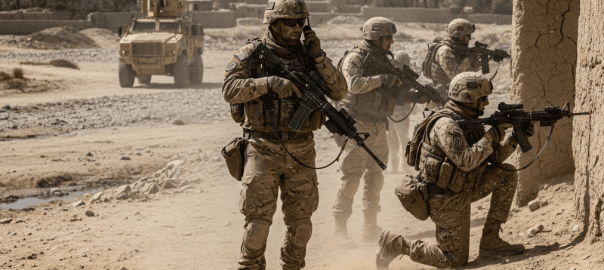
Jan. 22, 2026 /Mpelembe Media/ — In January 2026, President Trump sparked a significant international crisis by disparaging the frontline contributions of NATO allies in Afghanistan, leading to widespread diplomatic condemnation. Statistical evidence from nations like the UK, Canada, and Denmark refuted his claims, showing that these countries often suffered higher proportional casualties than the United States. This “honor crisis” coincided with a tense standoff over Greenland, where the President’s threats of annexation and tariffs were met with a unified European military and political response. To resolve the deadlock, a compromise known as the Arctic Sentry framework was established, shifting focus from American ownership to a collaborative NATO presence. Central to this agreement is the Golden Dome, a sophisticated missile defense shield that will now be developed as a multilateral security project rather than a unilateral American initiative. Ultimately, the ordeal forced a transition from transactional threats to a more cooperative strategy for securing the Arctic against global adversaries.
While the United States suffered the highest total number of fatalities during the war in Afghanistan, several NATO allies and partner nations experienced higher proportional losses relative to their troop size or population. This statistical reality is often attributed to allied forces being assigned to the conflict’s most volatile regions, such as the Helmand and Kandahar provinces.
Fatality Rates and Proportional Sacrifice
The sources highlight that the “ultimate price” paid by non-U.S. forces often matched or exceeded U.S. levels when measured proportionally:
Canada: Tasked with securing Kandahar Province, Canadian troops faced a fatality rate of 5.4% of their peak deployment, more than double the U.S. rate of 2.3%.
United Kingdom: In the high-intensity guerrilla warfare of Helmand Province between 2009 and 2010, a British soldier was nearly twice as likely to be killed as a U.S. soldier.
Denmark: Despite its small population, Denmark’s per-capita death rate was 7.82 deaths per million people, a figure virtually identical to the U.S. rate of 7.96 per million.
Georgia (Partner): As a coalition partner, Georgia suffered a per-capita loss of 8.42 per million, which actually exceeded the U.S. rate.
Estonia: Maintaining a high-intensity combat role in Helmand, Estonia’s 9 fatalities represented a significant sacrifice for its small population, resulting in 6.92 deaths per million.
Total Fatalities and the “2-to-1” Ratio
From 2001 to 2021, the U.S. recorded 2,461 total fatalities. In a 2026 data-driven correction to President Trump, NATO Secretary-General Mark Rutte pointed out a specific ratio regarding the broader coalition: for every two Americans killed, one soldier from another NATO country also died.
Statistical Comparison Table (2001–2021)
The following data from the sources compares the impact on key nations involved in the conflict:
| Country | Total Fatalities | Fatalities per Million Population | Key Responsibility |
|---|---|---|---|
| United States | 2,461 | 7.96 | Nationwide / Special Ops |
| United Kingdom | 457 | 7.25 | Helmand Province (Combat) |
| Canada | 159 | 4.68 | Kandahar Province (Combat) |
| Denmark | 43 | 7.82 | Helmand Province (Combat) |
| Georgia (Partner) | 32 | 8.42 | High-risk Helmand patrols |
| Estonia | 9 | 6.92 | Counter-insurgency (Frontline) |
These statistics have been used by military analysts and diplomats to challenge the narrative that allies stayed “off the front lines,” noting that the intense combat in “Green Zones” and the birthplace of the Taliban required significant allied sacrifice.
The “Helmand Effect” refers to the extreme risk and disproportionately high casualty rates experienced by British and Danish forces due to their assignment to the Helmand Province, which was one of the most volatile and dangerous regions in Afghanistan. This effect was driven by high-intensity guerrilla warfare within the province’s “Green Zones”.
The impact on these two nations is detailed in the sources as follows:
United Kingdom: Operating as part of the British-led Task Force Helmand, UK troops faced such intense combat that, at the peak of the conflict (2009–2010), a British soldier was nearly twice as likely to be killed as their U.S. counterpart. The UK ultimately suffered 457 total fatalities in the conflict.
Denmark: Despite being a small nation, Denmark experienced 43 fatalities while operating in Helmand. This resulted in a per-capita death rate of 7.82 deaths per million people, a figure the sources note is virtually identical to the United States’ rate of 7.96 per million.
The “Helmand Effect” is a central point of the recent diplomatic backlash against President Trump’s 2026 comments that allies stayed “off the front lines”. Allied leaders and veteran organizations have pointed to these statistics to demonstrate that their service was “forged in fire” and involved significant sacrifice—often exceeding U.S. levels proportionally—to defend the U.S. under Article 5.
In the current 2026 geopolitical climate, this historical sacrifice has made it politically difficult for Danish leaders to negotiate with the U.S. regarding the Greenland Crisis, as the President’s dismissal of their frontline service is viewed as an attack on their national honor.
The “Helmand Effect”—the high-intensity combat and disproportionate casualties suffered by Danish and British forces in Afghanistan—became a central point of diplomatic friction that nearly derailed the 2026 Greenland negotiations.
The complication arose from the collision of historical sacrifice and 2026 geopolitical pressure in the following ways:
Delegitimizing Sovereignty
President Trump’s January 2026 claim that allies stayed “off the front lines” was viewed by analysts as a deliberate tactic to delegitimize Denmark’s sovereignty. The narrative suggested that if Denmark was not a “real” combat partner capable of frontline defense, they did not “deserve” to hold strategic territory like Greenland. Danish leaders responded with “high-level indignation,” pointedly noting that Denmark suffered the highest per-capita loss of any NATO ally, a reality rooted in the “Helmand Effect”.
The “Honor Crisis” and Political Deadlock
The dismissal of allied sacrifices created an “honor crisis” that made it politically impossible for Danish or Greenlandic politicians to negotiate a deal.
Loss of Leverage: By insulting the families of fallen soldiers, the President removed the ability of Danish leaders to make concessions without appearing to surrender their national honor.
Diplomatic Deadlock: This perceived lack of respect for those who paid the “ultimate price” in Helmand and Kandahar transformed a territorial negotiation into a “reception of cold fury,” leading to a diplomatic deadlock that nearly fractured the NATO alliance.
European Unification and Military Response
Instead of intimidating Denmark into ceding territory, the insults regarding frontline service unified Europe against the U.S.. This led to:
Operation Arctic Endurance: Denmark and eight other allies (including the UK and Canada) deployed elite arctic warfare troops to Greenland on January 15, 2026, as a direct response to U.S. annexation threats.
The “End of NATO” Warning: Danish PM Mette Frederiksen warned that U.S. aggression against an ally whose troops had stood “shoulder-to-shoulder” with America would mean the end of the alliance.
Shift to the “Arctic Sentry” Framework
Because the “Helmand Effect” made the U.S. goal of complete ownership/annexation untenable, the negotiations were forced to shift toward a multilateral NATO presence known as the “Arctic Sentry” mission. This compromise allowed the U.S. to build its “Golden Dome” missile defense components in Greenland under a “sovereign base area” model while Greenland remained part of the Kingdom of Denmark. This shift fulfilled security requirements while avoiding the “diplomatic catastrophe” of forced annexation.
The Arctic Sentry mission is a permanent, multilateral NATO operation established as part of the “Rutte Framework” compromise in January 2026. It was designed to resolve the diplomatic deadlock between the United States and Denmark by shifting from a unilateral U.S. annexation plan to a cooperative defense model.
The mission includes the following key details:
Legal and Sovereign Structure
Greenlandic Sovereignty: Unlike the initial U.S. vision of complete ownership, the Arctic Sentry mission operates under the agreement that Greenland remains part of the Kingdom of Denmark.
Sovereign Base Area Model: The U.S. and NATO maintain military facilities in Greenland using a “sovereign base area” model, which is historically similar to the status of British bases in Cyprus. This allows for strategic military control without the “diplomatic catastrophe” of forced annexation.
Military and Technical Components
The “Golden Dome” Hub: Greenland serves as the central hub for a “Golden Dome piece,” which includes advanced radar and interceptor sites. This architecture is designed to monitor and defend against aerial threats such as ICBMs and hypersonic glide vehicles traveling through the Arctic flight path.
Multilateral “Arctic Shield”: The project has transitioned from an American-only defense system into a NATO-wide “Arctic shield”. Participating allies, including Canada and various European nations, are invited to join provided they “pay their fair share” toward the costs.
Surveillance: A primary goal of the mission is to maintain a constant watch on Russian and Chinese movements in the “High North”.
Strategic and Economic Impact
Diplomatic De-escalation: The framework replaced President Trump’s threats of military force and 25% tariffs on EU goods with a cooperative military-industrial project.
Industrial Partnerships: The mission involves major defense contractors, including Lockheed Martin, SpaceX, and Anduril, creating a joint venture model for the Arctic’s security infrastructure.
Resource Management: While the U.S. initially sought total control over critical minerals, the mission framework allows for joint ventures with Greenlandic oversight, ensuring the territory is not treated as a U.S. colony.
By implementing the Arctic Sentry mission, the alliance successfully fulfilled U.S. security requirements for a “Golden Dome” missile shield while blocking the pursuit of territorial ownership that had previously unified Europe against the U.S. following the “Helmand Effect” backlash.
The Golden Dome, also referred to as the “Iron Dome for America,” is a multi-layered missile defense architecture designed to provide a “near-100% effective” shield against a wide range of aerial threats, including intercontinental ballistic missiles (ICBMs), hypersonic glide vehicles, and drone swarms.
According to the sources, the specific technical pillars and integrated components of this system include:
Space-Based Interceptors: This central pillar involves a constellation of satellites equipped with kinetic weapons. These interceptors are designed to strike missiles during their “boost phase,” which is the critical window immediately after launch.
Proliferated Warfighter Space Architecture (PWSA): This new system is used to track threats across the globe in real-time, providing the necessary data to coordinate the defense layers.
Layered Sensors and Existing Integration: The Golden Dome is not a standalone system but integrates with existing land and sea-based assets, specifically the THAAD (land) and Aegis (sea) systems.
Advanced Ground Hubs: As part of the “Arctic Sentry” framework, specific sites—such as those in Greenland—function as strategic hubs. These hubs house advanced radar and interceptor sites under a “sovereign base area” model to monitor the Arctic flight path, which is the shortest route for adversary missiles.
The technical development and maintenance of these pillars involve a cooperative military-industrial project with major contractors, including Lockheed Martin, SpaceX, and Anduril. While the administration initially marketed the project with a $175 billion price tag, the Congressional Budget Office estimates the actual cost of these technical requirements to be over $542 billion.