
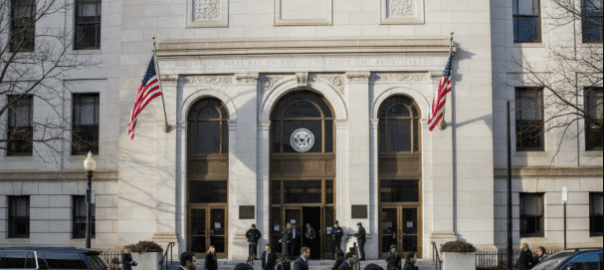
02, Feb. 2026 /Mpelembe Media/ — The Department of Justice (DOJ) released a final tranche of documents on January 30, 2026, totaling over 3.5 million pages, 2,000 videos, and 180,000 images. While the DOJ identified over 6 million potentially responsive pages, it released only about half, discarding duplicates and non-relevant materials, and has declared its review complete and its legal obligations met. This assertion has drawn bipartisan criticism from lawmakers like Rep. Ro Khanna and Rep. Thomas Massie, who question why millions of pages remain withheld and are demanding access to unredacted files.
Global Fallout and High-Profile Revelations The files document Epstein’s interactions with powerful figures long after his 2008 sex crimes conviction, leading to immediate political consequences:
Political Resignations: Lord Peter Mandelson resigned from the UK Labour Party after files revealed Epstein sent him money and Mandelson requested to stay at Epstein’s home during the financier’s work release. In Slovakia, National Security Adviser Miroslav Lajčák resigned following the release of emails between him and Epstein.
Prince Andrew: New photographs appear to show the former prince crouching over a woman, prompting UK Prime Minister Keir Starmer to suggest Andrew should testify before the US Congress.
Business and Tech Leaders: Emails reveal Elon Musk asking Epstein about the “wildest party” on his island, and Epstein drafting emails regarding Bill Gates and an alleged affair. Commerce Secretary Howard Lutnick was identified arranging a family trip to Epstein’s island.
US Presidents: The DOJ stated that while the files contain mentions of Donald Trump, some claims submitted to the FBI were “unfounded and false”. Photos show Bill Clinton with Epstein, though he has not been accused of a crime in the files.
Privacy Breaches and Redaction Failures The release has been marred by significant privacy failures. Faulty redaction techniques allowed the public to view blacked-out text by simply copying and pasting it. Furthermore, the January release inadvertently exposed the full names of at least 43 victims and dozens of unredacted nude images of women and minors. The DOJ acknowledged that “mistakes are inevitable” due to the volume of the release and has set up an email address for the public to report sensitive information for removal.
Institutional Insights The files offer a window into legal failures, including a 2007 draft indictment by Florida prosecutors listing 30 criminal counts against Epstein that was never pursued in favor of a lenient plea deal. Additionally, records show that Epstein’s lawyers met with prosecutors less than two weeks before his death to discuss his potential cooperation.
The “Epstein Library,” a digital repository hosted by the Department of Justice (DOJ) to fulfill the mandates of the Epstein Files Transparency Act, presents several significant privacy risks stemming from technical failures, human error, and the sheer volume of data involved.
Technical Failures and Faulty Redactions A primary risk involves “faulty redaction techniques” that allowed the public to bypass censorship measures. Following the initial release of documents in December 2025, users discovered they could recover blacked-out content by simply copying and pasting the text into other applications or using basic editing tools like Photoshop,. This technical failure exposed underlying text that officials intended to withhold, including details regarding the methods and members of Epstein’s trafficking ring,.
Exposure of Personally Identifiable Information (PII) Despite the DOJ’s stated efforts to redact non-public PII, the library has exposed sensitive personal data,. Specific instances of PII exposure include:
Victim Identification: A review by The Wall Street Journal found that the full names of at least 43 out of 47 victims were left unredacted in the files, including over two dozen who were minors at the time of abuse,.
Personal Documents: Sensitive personal documents were released, such as the driver’s license of victim Anouska de Georgiou,.
Location Data: Keyword searches within the files revealed home addresses of individuals,.
Inadvertent Release of Sensitive and Sexual Content The repository poses a risk of exposing sensitive sexual content, including unredacted nude images. The DOJ admitted that the January 2026 release included dozens of unredacted nude photographs showing young women or teenagers with their faces visible,. Furthermore, because the DOJ could not definitively confirm that individuals in commercial pornography found in Epstein’s possession were not victims, some sexually explicit materials were released in redacted form, necessitating an age verification (18+) to access the library,. This exposure has drawn criticism for potentially “retraumatizing” survivors,.
Systemic Inconsistencies and Human Error The privacy risks are exacerbated by the massive scale of the archive and the speed at which it was processed:
Volume and Deadlines: The DOJ reviewed over 6 million pages and released roughly 3.5 million; officials acknowledged that with such a high volume of data processed under strict Congressional deadlines, human errors were “inevitable”,,.
Inconsistent Standards: Redactions were applied inconsistently across the archive; in several instances, a name was redacted in one document but left fully exposed in a duplicate copy of the same record,.
Mitigation Efforts The DOJ has acknowledged these risks by posting a privacy notice on the site, warning users that files may contain information that should not have been posted,. To address these breaches, the Department established a dedicated email address ([email protected]) for the public to report sensitive information so it can be removed or corrected,.
Following the release of additional documents on December 22, 2025, members of the public discovered they could bypass censorship measures using simple technical methods. Users were able to recover the underlying text by highlighting the blacked-out portions, copying the content, and pasting it into another application,.
Additionally, users employed basic editing tools and software, such as Photoshop, to reveal the hidden information. These “faulty redaction techniques” were traced back to a 2021 court filing by the Virgin Islands attorney general’s office in a civil racketeering case, which the Department of Justice had incorporated into its document release.
Based on the provided sources, the legal consequences and responses regarding the redaction failures in the Epstein Library release include:
Judicial Intervention and Takedown Requests The most immediate legal consequence was action taken by attorneys representing the victims. On February 1, 2026, lawyers representing more than 200 alleged victims filed requests with Federal Judges Richard Berman and Paul Engelmayer, asking them to order the immediate takedown of the Department of Justice’s Epstein Files website,. These attorneys characterized the release as “the single most egregious violation of victim privacy in one day in United States history” due to the exposure of unredacted names and sensitive information.
Retraction and Correction of Records The Department of Justice was forced to remove specific files to address the breaches:
Removal of Files: Following reports of the failures, the DOJ removed at least 16 files from the website,.
Removal of Images: Dozens of unredacted nude images were removed from the site after the press, specifically The New York Times, notified the Department of the error.
Corrective Process: The DOJ established a dedicated email address for victims to report redaction errors and committed to removing affected documents pending correction.
Legislative Oversight and Threats of Contempt While primarily driven by the delay in releasing files, the botched handling of the release—including the redaction failures—fueled legislative threats against DOJ officials:
Contempt of Congress: Representatives Ro Khanna and Thomas Massie threatened to pursue “inherent contempt” charges or impeachment proceedings against senior officials, including Attorney General Pam Bondi, citing the failure to properly comply with the law’s disclosure and protection requirements,,.
Demand for Review: The House Judiciary Committee Democrats demanded an “urgent” review of the unredacted files to evaluate the Department’s compliance with federal law, specifically questioning the lawfulness and appropriateness of the redactions,.
Violation of Statutory Mandates The exposure of victim identities constituted a failure to adhere to the specific mandates of the Epstein Files Transparency Act. The Act explicitly permitted the Attorney General to withhold or redact records containing “personally identifiable information of victims” to prevent a “clearly unwarranted invasion of personal privacy”. The release of unredacted names and medical details violated these protective provisions intended by the statute,,.
Based on the latest file release in January 2026, the following political figures resigned:
Miroslav Lajčák: The National Security Adviser to the Prime Minister of Slovakia resigned from his government post. The released files contained emails between Lajčák and Epstein from 2018 in which they discussed young women, and an invite was extended for a meeting with Epstein, Kathryn Ruemmler, and Steve Bannon. Lajčák denied wrongdoing, stating the contacts were part of his diplomatic duties, but stepped down to avoid political strain on the government.
Peter Mandelson: The British politician and member of the House of Lords resigned his membership in the Labour Party. The files revealed that Epstein sent approximately $75,000 (£55,000) to accounts linked to Mandelson between 2003 and 2004, and that Mandelson had requested to stay at Epstein’s home while the financier was in jail on work release. Mandelson stated he had no recollection of the payments but resigned to prevent “further embarrassment” to the party.
Donald Trump is mentioned in the Epstein files is mentioned extensively throughout the released documents.
A review by The New York Times of the January 2026 release identified more than 5,300 files containing over 38,000 references to Donald Trump, his wife Melania, Mar-a-Lago, and related terms,. The references include:
Flight Logs: Trump appears on flight logs for Epstein’s private jet for at least eight flights between 1993 and 1996,.
Photographs: The files contain photographs of Trump with Epstein, some of which had been circulating publicly for decades. One photo showing Trump, Epstein, Melania Trump, and Ghislaine Maxwell was briefly removed from the DOJ website before being restored,.
Correspondence: Trump is frequently mentioned in emails where Epstein and associates shared news articles about him, discussed his policies, or gossiped about his administration. For example, Epstein exchanged texts with Steve Bannon regarding Trump,.
While Trump appears frequently in the files, the documents do not implicate him in Epstein’s criminal activities:
Witness Testimony: Juan Alessi, Epstein’s former house manager, testified that while Trump visited Epstein’s Palm Beach home for dinner, he “never” stayed overnight and never received a massage,. Similarly, victim Johanna Sjoberg testified that she was with Epstein and Trump at one of Trump’s casinos but stated she never gave Trump a massage,.
DOJ Statement on False Claims: The Department of Justice noted that some documents contained “untrue and sensationalist claims” against Trump—including an unverified tip regarding the death of an infant—that were submitted to the FBI right before the 2020 election,. The DOJ clarified these claims were “unfounded and false”.
No Allegations of Wrongdoing: None of the victims who have gone public have accused Trump of wrongdoing, and the DOJ stated they found no credible information to merit further investigation into sexual misconduct allegations against him,.
Confusion regarding his presence in the files may stem from early redactions or specific DOJ protocols:
Private Citizen Status: In earlier releases, FBI FOIA officers redacted Trump’s name because he was considered a private citizen at the time of the 2006 federal investigation.
DOJ Clarification: Deputy Attorney General Todd Blanche stated that the DOJ was not seeking to protect Trump and that “notable individuals and politicians were not redacted in the release of any files” in the January 2026 tranche,.
Based on the newly released files, there are no details regarding specific incriminating information Jeffrey Epstein offered to share with prosecutors before his death. While his lawyers broached the topic of cooperation, the documents indicate that Epstein died before any substantive disclosures were made.
No Specific Proposal to Prosecutors Investigative notes from a meeting on July 29, 2019—less than two weeks before Epstein’s death—reveal that while his attorneys discussed the “possibility of the defendant’s cooperation,” they did so only in “very general terms”. The files explicitly state that Epstein’s counsel “did not make a specific proposal, and they did not indicate what the nature of Epstein’s cooperation might be, if any”. Prosecutors reportedly told his legal team to contact the Southern District of New York only if Epstein was prepared to “accept responsibility for his conduct” or had a specific proposal.
Absence of a “Client List” or Blackmail Evidence Contrary to long-standing theories that Epstein held leverage over powerful figures, the Department of Justice (DOJ) and FBI concluded in a July 2025 memo that there was no evidence Epstein maintained an incriminating “client list” or that he “blackmailed prominent individuals as part of his actions”.
Information Shared with Associates (According to Released Emails) While Epstein did not share criminal information with law enforcement, the released correspondence reveals the types of information he shared with his network:
Geopolitical Intelligence: Epstein discussed plans to help seize frozen Libyan state assets (estimated at $80 billion) using former MI6 and Mossad agents. He also tracked the political careers of figures like Ukrainian President Volodymyr Zelenskyy and Russian opposition leader Ilya Ponomarev.
Unverified Gossip: Epstein drafted emails (some sent to himself) containing unverified allegations, such as claims that Bill Gates had an affair with a Russian bridge player and contracted a sexually transmitted disease.
Political Advice: He offered advice to contacts like Steve Bannon regarding European geopolitics and to Sarah Ferguson regarding her public image.
Epstein’s brother, Mark Epstein, claimed in media interviews that Jeffrey had told him he possessed “dirt” on Donald Trump and alleged that the released files were being “sanitized” to remove Republican names. However, the DOJ stated that the released files include “untrue and sensationalist claims” and unvetted tips, suggesting they did not filter out such allegations even if they were unfounded.
Based on the released files, Jeffrey Epstein formulated a plan in 2011 to profit from the recovery of Libya’s frozen state assets following the fall of Muammar Gaddafi’s regime.
The Objective: Epstein aimed to help seize or recover frozen Libyan state funds, which he estimated to be worth approximately $80 billion,.
The Method: He proposed using former intelligence agents from the United Kingdom (MI6) and Israel (Mossad) to locate and secure these funds,,.
Key Collaborators: Emails show Epstein discussing this plan with Sultan Ahmed bin Sulayem, a prominent Emirati businessman and the CEO of DP World,.
Financial Incentive: Epstein sought a substantial commission for facilitating this recovery, proposing a compensation fee of 10% to 25% of the recovered assets.
Based on the released files, the primary business leader discussed in Jeffrey Epstein’s emails regarding Libya is Sultan Ahmed bin Sulayem.
Identity: Bin Sulayem is a prominent Emirati businessman and the CEO of DP World, a major global logistics company.
Context of Discussions: The correspondence between Epstein and Bin Sulayem concerned a plan to help seize or recover frozen Libyan state assets following the fall of Muammar Gaddafi’s regime.
Details of the Plan: The emails reveal discussions about utilizing former agents from MI6 (British intelligence) and Mossad (Israeli intelligence) to locate and secure the funds, which Epstein estimated to be worth approximately $80 billion. Epstein reportedly sought a commission of 10% to 25% of the recovered assets.
Based on the released files, Jeffrey Epstein likely targeted Sultan Ahmed bin Sulayem for the Libya asset recovery scheme due to his influential position as an Emirati businessman and CEO of DP World, as well as their existing transactional relationship involving geopolitical projects and access to U.S. power brokers.
Collaboration on Geopolitical Projects The files reveal that Epstein and Bin Sulayem were already discussing complex international ventures beyond the Libya scheme.
Libya Assets: The two discussed utilizing former MI6 (British) and Mossad (Israeli) agents to locate and recover frozen Libyan assets estimated at $80 billion following the fall of Muammar Gaddafi’s regime.
Somaliland Ventures: Their correspondence also included discussions about potential projects in Somaliland, specifically involving water exports and the creation of a film studio.
Exchange of Political Access The emails indicate a relationship built on the exchange of access to high-profile political figures, which Epstein likely leveraged to engage Bin Sulayem in his schemes.
Access to Trump: In 2017, Bin Sulayem emailed Epstein inquiring if it would be possible to “shake hand with [Donald] Trump” at an upcoming event. Epstein replied, “Call to discuss”.
Steve Bannon Connection: Epstein attempted to broker a connection between Bin Sulayem and Steve Bannon in 2018, telling the businessman, “We have become friends you will like him.” Bin Sulayem pushed back on the introduction, noting, “Trump doesn’t like him”.
Based on the released documents, Jeffrey Epstein’s 2011 emails and broader correspondence with Emirati businessman Sultan Ahmed bin Sulayem revealed several key details beyond the Libya asset recovery plan:
Somaliland Ventures In addition to the Libya scheme, the two discussed business ventures in Somaliland. Specifically, their correspondence included discussions regarding the development of a film studio and projects involving water exports.
Personal Favors and Inappropriate Content The emails also exposed personal and logistical favors exchanged between the two:
Masseuse Training: Bin Sulayem facilitated the transfer of one of Epstein’s masseuses to a spa in Turkey for training.
Pornography: The correspondence reveals that Bin Sulayem sent Epstein a link to pornography.
The Libya Asset Scheme (2011) While previously touched upon, the specific details regarding the 2011 email are clarified in the files:
Target: The plan focused on recovering frozen state assets belonging to the regime of Muammar Gaddafi following its fall.
Value and Commission: Epstein estimated these frozen assets at $80 billion and sought a compensation fee of 10% to 25% for their recovery.
Tactics: The correspondence proposed utilizing former intelligence agents from MI6 (British) and Mossad (Israeli) to execute the seizure.
Released emails and documents indicate that Elon Musk maintained a more extensive correspondence with Jeffrey Epstein between 2012 and 2014 than previously known, primarily centering on social events, travel logistics, and requests for parties,,.
Inquiries about Parties and Travel
“Wildest Party”: In a 2012 email, Musk asked Epstein when the “wildest party on your island” would take place,,.
Helicopter Logistics: In a November 25, 2012, exchange regarding a helicopter ride to Epstein’s island, Epstein asked how many people Musk was bringing. Musk replied, “Probably just Talulah and me,” referring to his then-wife, Talulah Riley.
“Let Loose”: On Christmas Day 2012, Musk emailed Epstein asking about planned parties, stating he had been “working to the edge of sanity” and wanted to “hit the party scene in St. Barts or elsewhere and let loose,” noting that a “peaceful island experience is the opposite of what I’m looking for”.
Invitations and Meeting Suggestions
SpaceX Factory: In February 2013, Musk suggested that Epstein meet him at the SpaceX rocket factory near Long Beach, California.
Caribbean Trips: In November 2013, Epstein invited Musk to the Caribbean for Christmas, mentioning that filmmaker Woody Allen was with him; Musk replied, “Yes”. In September 2014, Epstein asked Musk to join him in St. Barts again, mentioning LinkedIn founder Reid Hoffman; Musk replied, “Don’t know”,.
Scheduling Notes: An October 2014 schedule reminder sent by Epstein’s assistant, Lesley Groff, noted that Musk “is to go to the island on Dec. 6th,” though a subsequent note asked, “is this still happening?”.
Musk’s Response Following the release of these documents, Musk stated on X (formerly Twitter) that he had “very little correspondence with Epstein” and had “declined repeated invitations to go to his island or fly on his Lolita Express”,. He acknowledged the emails could be “misinterpreted” but maintained he did not attend the events. Documents released by the House Oversight Committee indicated Epstein had meetings with Musk, Peter Thiel, and Steve Bannon, though Musk has previously stated he visited Epstein’s Manhattan home only once briefly,.
Source: US DOJ