
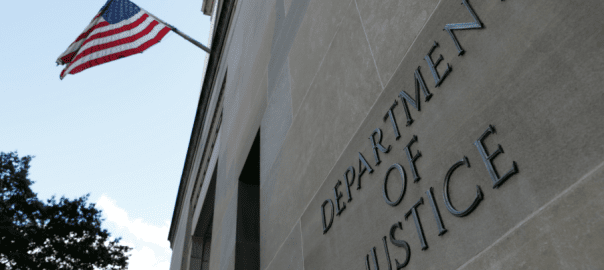
25 Feb. 2026 /Mpelembe Media/ — The Department of Justice’s (DOJ) recent release of documents mandated by the Epstein Files Transparency Act (EFTA) has ignited a fierce political and constitutional crisis. While the DOJ claims to have complied with the law by publishing roughly 3.5 million pages, investigations and congressional leaders allege a systemic cover-up designed to protect President Trump and his associates, alongside gross negligence regarding victim privacy.
Missing Files Related to Donald Trump An investigation by NPR, backed by The New York Times and House Oversight Democrats, revealed that the DOJ withheld at least 53 pages of FBI interviews and notes concerning a woman who accused Donald Trump of sexually abusing her in the 1980s when she was 13. While one interview describing her abuse by Epstein is public, three subsequent interviews detailing her specific allegations against Trump were scrubbed from the public database. Rep. Robert Garcia, the top Democrat on the House Oversight Committee, confirmed the omission after reviewing unredacted evidence logs, accusing the DOJ of “illegally” withholding the documents. The DOJ maintains that unreleased files are privileged, duplicates, or part of ongoing investigations, while simultaneously labeling the claims against Trump as “untrue and sensationalist”.
Surveillance of Congressional Lawmakers The conflict escalated into a separation-of-powers dispute when it was revealed that the DOJ had been secretly tracking the search histories of Members of Congress who were reviewing unredacted Epstein files in a secure DOJ reading room. During a Judiciary Committee hearing, a photograph of Attorney General Pam Bondi’s briefing binder—dubbed a “burn book”—showed a document titled “Jayapal Pramila Search History,” detailing the exact files Rep. Pramila Jayapal had searched just 23 hours prior. Democratic lawmakers blasted this as a “flagrant assault on congressional oversight” and an illegal intrusion into the legislative process.
Catastrophic Redaction Failures and Victim Exposure While the DOJ heavily redacted the names of high-profile individuals and alleged co-conspirators, it simultaneously executed “catastrophic” redaction failures that exposed the identities of numerous victims. Faulty PDF redactions allowed the public to easily uncover hidden text, and the DOJ inadvertently published the full names, addresses, and even unredacted nude images of dozens of women who were victimized as minors. Victim attorneys described the release as “the single most egregious violation of victim privacy in one day in United States history,” pointing out that the DOJ ignored a list of 350 victim names provided to them to ensure their protection.
Preferential Treatment of Ghislaine Maxwell Congressional investigators are also scrutinizing the DOJ’s treatment of convicted sex trafficker Ghislaine Maxwell. Following an unusual jailhouse interview with Deputy Attorney General Todd Blanche, Maxwell was transferred to a minimum-security prison camp in Texas. Whistleblowers allege she is receiving unprecedented five-star treatment, including access to a therapy puppy, private gym time, and unsupervised laptop use. Concurrently, whistleblowers who attempted to report widespread sexual abuse by staff at that same facility claim they have been fired or subjected to severe retaliation by the prison’s warden.
Congressional Pushback and Next Steps In response to the DOJ’s actions, the House Oversight and Judiciary Committees have launched parallel investigations into the missing Trump documents and the surveillance of lawmakers. Bipartisan groups of senators are calling for the DOJ Inspector General to conduct a neutral audit of the department’s compliance with the EFTA. Meanwhile, the Oversight Committee is moving to hold Attorney General Pam Bondi in contempt of Congress for willfully violating their subpoena.
The Missing Pages: 4 Surprising Revelations from the DOJ’s Epstein File Investigation
In the forensic world of government transparency, truth is often found in the silence between the records. When the Department of Justice began releasing millions of pages under the Epstein Files Transparency Act, the public expected a final accounting of Jeffrey Epstein’s sprawling criminal enterprise. Instead, a meticulous forensic audit by NPR has uncovered a “50-page shadow”—a series of digital breadcrumbs suggesting that the most sensitive allegations against the sitting President have been systematically scrubbed or withheld.By cross-referencing unique serial numbers and discovery document logs, investigators identified a chilling pattern: the public record skips. Where there should be testimony, there is an empty sequence; where there should be clarity, there is a bureaucratic “clerical error.” What follows are the four most startling revelations from the files the government didn’t want you to see.
Takeaway 1: The 50-Page Shadow in the Public RecordThe NPR investigation exposed a significant gap in the public archive by tracking the “unique serial numbers” stamped onto every FBI case record. By comparing chronological Serial Reports against the discovery logs turned over during the Ghislaine Maxwell trial, investigators found that at least 53 pages of interview notes involving a specific survivor are missing. This isn’t a mere formatting glitch; it is a structural void in a database mandated by federal law to be complete.This survivor, known in legal filings as “Jane Doe 4,” provided a glimpse into the atmosphere of fear that defined Epstein’s circle. During her first FBI interview, she presented agents with a photograph of Epstein but chose to provide a cropped version. Her attorney explained the edit was born of pure “fear of retaliation,” as the uncropped image featured the victim alongside Epstein and Donald Trump—a “well-known” individual she was terrified to implicate.The gravity of these omissions has already triggered a firestorm on Capitol Hill. Representative Robert Garcia, the ranking member of the House Oversight Committee, recently reviewed the unredacted evidence logs behind closed doors at the Justice Department.”Yesterday, I reviewed unredacted evidence logs at the Department of Justice,” Garcia stated. “Oversight Democrats can confirm that the DOJ appears to have illegally withheld FBI interviews with this survivor who accused President Trump of heinous crimes.
“Takeaway 2: The Allegation That Left a MarkAmong the internal FBI lists and slideshows of “prominent names” is a 1983 allegation that stands out for its specificity and the seriousness with which agents originally treated it. A then-13-year-old girl alleged that Epstein introduced her to Trump, who then allegedly forced her into a sexual act; when she resisted by biting him, he reportedly punched her in the head and kicked her out. While the DOJ has labeled many Epstein-related claims as “unverifiable,” this specific lead was treated as a priority.Internal records show that this allegation was significant enough to be sent to the FBI’s Washington field office specifically to coordinate a formal interview. Despite the “unverifiable” tag often applied to historical claims, the FBI interviewed this accuser four separate times. However, in the public database, only the first interview—the one that curiously makes no mention of Trump—has been released to the American people.The missing notes from the subsequent three interviews represent a critical failure in the DOJ’s commitment to transparency. The fact that investigators returned to this witness repeatedly suggests a level of credibility that contradicts the department’s current decision to keep her full testimony under lock and key.
Takeaway 3: The “Mar-a-Lago” IntroductionThe files also detail the account of a second woman, a key witness in the Maxwell prosecution, who described being brought to the Mar-a-Lago Club as a minor to meet Trump. The interview report captures a chillingly brief exchange that highlights the casual nature of the social circle Epstein navigated.”EPSTEIN told TRUMP, ‘This is a good one, huh,'” the interview report reads, describing how both men then chuckled.This interaction, while fleeting, served a darker purpose: it provided Epstein with a “veneer of legitimacy” that silenced the girl’s family. The victim’s mother told investigators that the sight of “a prince and Donald Trump” at Epstein’s home convinced her that Epstein couldn’t possibly be a criminal. To a protective parent, the presence of the world’s most powerful men acted as a social seal of approval for a predator.
Takeaway 4: The DOJ’s “Clerical” Defense vs. External CriticismThe Justice Department has dismissed the missing pages as the result of “redaction errors” or privileged material related to “ongoing investigations.” They maintain that no records were withheld to avoid political embarrassment. Yet, this defense rings hollow to the attorneys representing the survivors, who point out a staggering irony in the department’s performance.While the DOJ was busy withholding substantive evidence involving the President, they simultaneously “accidentally” published the names of victims who had fought for decades to remain anonymous. This technical incompetence—protecting the powerful while doxing the vulnerable—has led to a breakdown in trust between the department and the public.Attorney Robert Glassman, who represents a witness in the Maxwell case, was blunt in his assessment of the department’s handling of the files.”This whole thing is ridiculous,” Glassman said. “The DOJ was ordered to release information to the public… Instead, they released the names of courageous victims who have fought hard for decades to remain anonymous. They had one job to do here and they didn’t do it.
“The Final Thought: ConclusionThe “missing pages” have now moved from a journalistic discovery to a legislative crisis. The House Oversight Committee has opened parallel investigations into why these specific documents were suppressed, even as the White House insists the President has been “totally exonerated” and has done more for victims than any predecessor.As the battle for the full Epstein file continues, we are left to wonder about the fragile state of government accountability. When the Department of Justice acts as a filter rather than a conduit for the truth, where does the public’s right to know end and executive discretion begin? For now, the most vital parts of the Epstein story remain written in the margins of the files we aren’t allowed to see.