
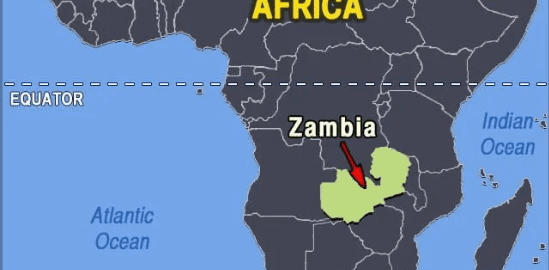
Dec. 29, 2025 /Mpelembe Media/ — Hakainde Hichilema as been ranked as one of the pre-eminent global leaders of 2025. The Zambian President has successfully positioned his nation as a highly desirable partner amidst the geopolitical competition between the United States and China. High-level diplomatic visits, such as the arrival of the Chinese Premier, underscore the country’s growing strategic importance.
Hakainde Hichilema is the President of Zambia, recently recognised by The Telegraph as the fifth-best World Leader of the Year for 2025. He is distinguished by his ability to navigate the intense geopolitical rivalry between the United States and China, effectively turning Zambia into a “prize” that both superpowers now covet.
His strategic positioning of the country has led to Zambia being described as Africa’s “pretty girl” within the context of the power struggle between Donald Trump and Xi Jinping. The high level of international importance Hichilema has secured for his nation was demonstrated when Chinese Premier Li Qiang specifically prioritised a visit to Zambia in November while en route to a G20 summit in Johannesburg.
To understand his leadership style, you might think of Hichilema as a skilful diplomat who has managed to place his country at the centre of a global “bidding war”, ensuring that instead of being forced to choose a side, Zambia remains the highly sought-after partner for the world’s most powerful economies.
There are several ways this positioning is evident:
Strategic Diplomatic Priority: The level of international interest is demonstrated by the actions of high-ranking officials, such as Chinese Premier Li Qiang, who specifically made time to visit Zambia in November while travelling to a G20 summit in Johannesburg.
Global Recognition: Hichilema’s ability to navigate this “Trump-Xi power tussle” contributed to him being named the fifth-best World Leader of the Year for 2025 by The Telegraph.
By making Zambia a sought-after partner for both the East and the West, Hichilema has placed his country at the heart of global diplomatic and economic competition.
To understand this better, you might think of Zambia as a highly sought-after free agent in a professional sports league, where the two biggest and wealthiest teams are both competing to offer the best deal to secure a partnership.
Hakainde Hichilema is the President of Zambia, recently recognised by The Telegraph as the fifth-best World Leader of the Year for 2025. He is distinguished by his ability to navigate the intense geopolitical rivalry between the United States and China, effectively turning Zambia into a “prize” that both superpowers now covet.
The main area of interest is as a strategic geopolitical “prize” within a high-stakes “power tussle” between Donald Trump and Xi Jinping. Zambia is positioned as a nation that both superpowers covet, leading to its description as “Africa’s ‘pretty girl’” because of how sought-after it has become by both the United States and China.
Key insights regarding this positioning include:
Strategic Diplomatic Priority: The intensity of China’s interest is highlighted by Chinese Premier Li Qiang making a specific stop in Zambia in November while en route to a G20 summit in Johannesburg.
Geopolitical Competition: President Hakainde Hichilema has successfully turned Zambia into a focal point of competition, where both the East and West are vying for influence and partnership.
While the provided sources focus on the diplomatic and leadership aspects of this competition, they do not explicitly name the underlying economic drivers. It is important to note that, according to external information you may wish to verify, the primary “area of interest” for both superpowers is Zambia’s vast mineral wealth, particularly copper and cobalt. These materials are essential for the global transition to green energy and the production of electric vehicle batteries, making control over or access to Zambian mines a critical objective for both the US and Chinese industrial strategies.
To visualise this, you can imagine Zambia as a crucial bridge in a global marathon; both the US and China are competing to provide the materials and support to maintain that bridge, knowing that whoever has the strongest relationship with the bridge-keeper controls the fastest route to the future of global energy.
In essence, Zambia aims to transform its strategic location and resources into tangible national development, leveraging global competition to its advantage while navigating complex international pressures.