
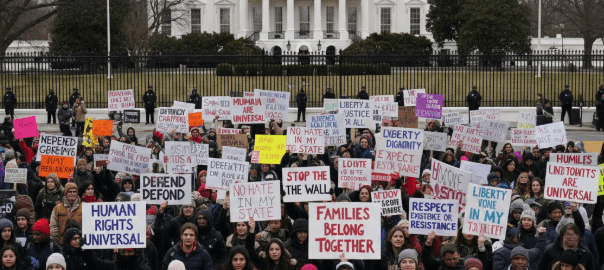
Jan. 9, 2026 /Mpelembe Media/ — Given the complex overlap of federal authority, extremist infiltration concerns, and the evolving legal landscape of 2026, U.S. Immigration and Customs Enforcement (ICE) finds itself at the center of an unprecedented convergence of federal expansion and civil rights controversy. Following a historic 120% increase in manpower and the diversion of over 28,000 personnel from other federal agencies to enforcement operations, the agency has faced intense scrutiny regarding its vetting processes and the infiltration of far-right extremist ideologies.
While official DHS policy strictly prohibits membership in Domestic Violent Extremist (DVE) groups, internal investigations have highlighted a persistent “gray area” where coded language—such as the “14 Words” and “Which Way, American Man?”—has appeared in recruitment and internal communications. This has blurred the distinction between federal agents and militant organizations like the Proud Boys, who have increasingly positioned themselves as unofficial “force multipliers” for the agency.
Simultaneously, the legal landscape for oversight has shifted. New 2026 “Rules of Engagement” have redefined traditional civil rights activities, such as filming agents, as “visual violence” or operational interference. With the expansion of the 287(g) program and the increased use of private security contractors, the traditional boundaries of federal law enforcement are being reshaped, leading to heightened tensions in “sanctuary” cities and a surge in domestic terrorism investigations targeting anti-ICE activists.
While the two groups share some political alignment regarding immigration, they are fundamentally different in their legal status, structure, and authority.
Key Differences Between ICE and the Proud Boys
| Feature | U.S. Immigration and Customs Enforcement (ICE) | The Proud Boys |
| Status | A federal law enforcement agency under the Department of Homeland Security (DHS). | A far-right, neo-fascist militant organization (designated as a terrorist group in Canada and New Zealand). |
| Authority | Derived from the Homeland Security Act of 2002; agents have federal arrest and detention powers. | No legal authority; described by the SPLC as a “hate group” and by the ADL as an “extremist” group. |
| Size/Scope | Over 20,000 employees with an $8 billion budget and 400+ global offices. | Decentralized regional chapters with estimated memberships in the low thousands. |
| Mission | Investigation and enforcement of federal laws related to border control, customs, and immigration. | Promotion of “Western chauvinism”; frequently involved in street-level political violence and counter-protesting. |
Recent Tensions and Overlaps
While ICE is a formal government body, your question likely stems from recent reports and controversies that have blurred the lines for some observers:
Recruitment Concerns: Former DHS officials have expressed concern about extremist groups, including the Proud Boys, attempting to enter federal service. Some recent recruitment advertisements for immigration officers have been criticized for using rhetoric—such as “Defend your culture!”—that mirrors far-right talking points.
Informal Support: Reports from early 2025 and 2026 indicate that some Proud Boys chapters have “fantasized” about being deputized as ICE enforcers or have offered to act as “independent contractors” to track undocumented immigrants for bounties.
Conflict with Activists: In cities like Portland and Minneapolis, Proud Boys have frequently clashed with “Anti-ICE” protesters. In these scenarios, the Proud Boys often position themselves as defenders of federal agents, leading to public perception that the two groups are aligned.
Leadership Links: There have been documented meetings between associates of the Proud Boys and high-ranking immigration officials to discuss deportation strategies, which has drawn significant criticism from civil rights organizations.
The Current Environment (January 2026)
As of early 2026, tensions involving ICE have escalated following high-profile incidents, such as the fatal shooting of a woman by an ICE agent in Minneapolis. This has intensified the debate over federal power, with local leaders (like the Mayor of Minneapolis) demanding that ICE units leave their cities, while far-right groups often rally in support of the agency’s actions.
Ultimately, while there is documented ideological overlap and instances of Proud Boys attempting to align themselves with ICE’s mission, ICE remains a formal government agency bound by federal law, whereas the Proud Boys are a private extremist organization with no legal standing to enforce U.S. policy.
Would you like me to look into the specific training and background check requirements for becoming an ICE agent?
ICE agents are federal employees subject to stringent vetting processes, but recent reports have raised questions about how effectively those standards are applied during periods of rapid hiring.
Here is a breakdown of how ICE vets its recruits and the legal requirements regarding affiliations with extremist groups or “secret societies.”
The Vetting Process for ICE Recruits
To become an ICE agent, applicants must pass a multi-stage background investigation conducted by the ICE Personnel Security Division (PSD).1 In 2026, the process typically includes:
Standard Background Investigation: This checks criminal history, financial records, and credit reports to identify “risk-based” red flags (like debt that could lead to bribery).
Suitability Adjudication: Investigators use a “whole person” concept to evaluate character, conduct, and loyalty to the U.S.
Polygraph Examination: Candidates for certain job series (like Criminal Investigators) may be required to take a pre-employment polygraph.
Periodic Reinvestigation: Agents are typically required to undergo a full security review every five years to ensure they remain fit for service.
Recent Controversies:
As of late 2025 and early 2026, reports have surfaced indicating that the agency’s “hiring spree” led to hundreds of recruits entering training before their background checks were finalized.5 This resulted in cases where recruits were later dismissed for criminal backgrounds or failing drug tests while already enrolled in the academy.
Mandatory Disclosures & Affiliations
While federal law does not have a blanket requirement for agents to list every “secret society” they belong to, they are legally required to disclose specific types of affiliations:
Terrorist & Subversive Groups: Applicants must disclose any membership in, or support for, organizations that advocate for the overthrow of the U.S. government or engage in terrorist activities.
Extremist Activity: Under updated DHS guidelines, “Domestic Violent Extremism” (DVE) is a disqualifying factor. If an agent is found to be an active member of a group like the KKK or the Proud Boys, it generally violates the “Loyalty to the United States” and “Trustworthiness” standards required for a security clearance.
The “Grey Area”: Historically, agencies like CBP and ICE have been criticized for lacking a clear, written policy specifically banning membership in non-designated “militia” groups.7 During a 2023 congressional hearing, it was revealed that there was no explicit policy preventing agents from associating with certain paramilitary groups, provided the group itself wasn’t legally designated as a domestic terrorist organization.
Monitoring “Secret” Affiliations
Monitoring serving agents for ties to groups like the KKK is challenging because these groups often operate clandestinely.
Social Media Monitoring: Federal agencies increasingly monitor the public social media footprints of recruits and current agents for signs of extremist rhetoric.
The FBI’s Role: The FBI occasionally issues bulletins to other agencies warning of “domestic violent extremists” attempting to infiltrate law enforcement. However, in late 2025, the FBI notably cut ties with groups like the SPLC (which tracks hate groups), signaling a shift in how the government identifies which organizations are considered “extremist.”
Whistleblowers & Tips: Internal investigations often rely on tips from other agents or civilian complaints. In 2026, several investigations were launched into ICE agents using “coded language” (such as white nationalist slogans) in official agency communications.
Summary Table: Disclosure Requirements
| Group Type | Must Disclose? | Potential Consequence |
| Designated Terrorist Groups | Yes | Immediate disqualification / Criminal charges. |
| “Western Chauvinist” Groups | Yes* | *If flagged during background check, may be found “unsuitable.” |
| Secret Societies (e.g., Masons) | No | Generally considered private/personal unless linked to illegal activity. |
| Militias/Paramilitary | Varies | Often depends on whether the group advocates for violence against the state. |
Would you like more information on the specific “coded language” controversies currently being investigated within the Department of Homeland Security?
In 2025 and early 2026, investigations and reports have surfaced regarding the use of “coded language” by both ICE and the Department of Homeland Security (DHS) in their official communications and recruitment efforts.
The controversy centers on the idea of “plausible deniability”—using phrases and symbols that appear harmless to the general public but carry specific, historical meanings within extremist and white nationalist circles.
The “14 Words” Controversy
In late 2025, several watchdog groups, including the Southern Poverty Law Center (SPLC), flagged a series of DHS social media recruitment posts for ICE. One post featured a historical painting of settlers moving west with a caption that contained exactly 14 words.
The Code: In white supremacist circles, “14 words” refers to a specific slogan coined by David Lane: “We must secure the existence of our people and a future for white children.”
The Investigation: While DHS officials claimed the word count was a coincidence, experts noted that certain words in the caption—like “heritage” and “homeland”—were capitalized in ways that mirrored extremist literature.
“Which Way, American Man?”
DHS released a recruitment graphic in August 2025 showing an Uncle Sam-style figure at a crossroads. The signs pointing in various directions included phrases like “INVASION,” “CULTURAL DECLINE,” and “LAW & ORDER.”
The Code: The caption “Which way, American man?” is the title of an influential book by William Gayley Simpson, which is a staple in neo-Nazi and white nationalist circles.
The Defense: DHS leadership described the digital strategy as “bold and effective” outreach to patriotic citizens, rather than an intentional nod to extremist text.
“See You in Valhalla”
In late 2025, following the shooting of a high-profile conservative activist, high-ranking federal officials—including those overseeing agencies that work closely with ICE—began using the phrase “I’ll see you in Valhalla, brother” in official press conferences.
The Code: While Valhalla is a concept from Norse mythology, it has been heavily appropriated by far-right militant groups (such as the “Soldiers of Odin”) to signal a shared identity as “warriors” for a specific racial or cultural cause.
“Absolute Boys” and Internal Slang
Internal reports from early 2026 have highlighted the use of “alt-right” internet slang in internal ICE communications.
The Code: One recruitment graphic leaked in 2025 featured a vintage advertisement for a van with the caption: “Want to deport illegals with your absolute boys?” * The Significance: The phrase “absolute boys” (or “the boys”) is often used in online spaces to refer to a tight-knit, exclusionary group of men, sometimes linked to the “Western Chauvinism” promoted by the Proud Boys.
Current Status of Oversight
As of January 2026, the environment regarding these investigations is highly polarized:
Congressional Scrutiny: Democratic lawmakers have introduced the ICE Security Reform Act of 2025, which aims to increase oversight and separate investigative units (HSI) from enforcement units to prevent extremist infiltration.
DHS Response: Under Secretary Kristi Noem, DHS has largely dismissed these concerns as “political rhetoric” from “sanctuary politicians.” The agency has instead focused on reporting a 1,300% increase in assaults against agents, arguing that the real danger is the “dehumanization” of federal law enforcement by the public.
Would you like to see a list of the specific symbols that the FBI and DHS currently use to identify potential “Domestic Violent Extremism” (DVE) within their own ranks?
As of January 2026, the FBI and DHS maintain a “Domestic Violent Extremism (DVE) Symbols Guide” to help investigators identify potential infiltration or radicalization within law enforcement and the general public.
These symbols are categorized based on the ideologies of “Militia Violent Extremists” (MVE) and “Racially or Ethnically Motivated Violent Extremists” (REMVE). While using these symbols is not always illegal, federal investigators use them as “indicators” of potential extremist affiliation.
Anti-Government & Militia Symbols
These are the most common symbols found among individuals who view themselves as “patriot” enforcers or members of private militias.
The “III%” (Three Percenters): Often seen as a Roman numeral III surrounded by stars. It represents the debunked claim that only 3% of American colonists fought the British.
The Punisher Skull: While originally a comic book icon, federal guides flag it when combined with other symbols (like the “Thin Blue Line” or the “III%” logo). It is often used to signal a “warrior” mindset that operates outside the traditional rule of law.
“Molon Labe” (ΜΟΛΩΝ ΛΑΒΕ): A Greek phrase meaning “Come and take them.” It is widely used by groups that advocate for armed resistance against government gun-control measures.
The “Black Flag”: An all-black or black-and-white American flag. In extremist contexts, this signals “no quarter shall be given,” implying that the wearer does not intend to take prisoners or follow standard rules of engagement.
White Supremacist & “Accelerationist” Symbols
These symbols are more closely associated with groups like the KKK or neo-fascist organizations.
The Sonnenrad (Sun Wheel/Black Sun): An ancient Norse symbol repurposed by the Nazis. It is frequently used by “Accelerationists” who believe modern society must be destroyed to build a white ethno-state.
14/88: * 14: Refers to the “14 Words” (a white supremacist slogan).
88: “H” is the 8th letter of the alphabet; 88 stands for “Heil Hitler.”
The Valknut: Three interlocking triangles from Norse mythology. While also used by peaceful pagans, the FBI flags it when worn by individuals who also display anti-immigrant or white nationalist rhetoric.
The “Pepe” Variant: While many versions of “Pepe the Frog” are harmless memes, specific versions (like Pepe in a SS uniform or ICE tactical gear) are tracked as indicators of alt-right radicalization.
Coded Phrases and Slang
In 2025-2026, the focus has shifted toward digital “dog whistles” used in official or semi-official communications:
| Phrase/Term | Meaning in Extremist Circles |
| “The Boogaloo” | A reference to a coming second American Civil War. Often signaled by Hawaiian shirts or igloo icons. |
| “Which Way, American Man?” | A prompt used to frame current events as a choice between “destruction” and far-right “nationalism.” |
| “Deportation Force” | While used politically, the FBI monitors this term when used by private citizens claiming they have “standing orders” to assist ICE. |
| “Remigration” | A polite-sounding term used by white nationalists to describe the forced mass expulsion of non-white citizens and immigrants. |
Why this is difficult for ICE to monitor
Federal oversight reports from late 2025 highlight a “gray area” problem. Because many of these symbols (like the Gadsden “Don’t Tread on Me” flag or the Punisher skull) are also popular with mainstream conservative culture, ICE supervisors often struggle to distinguish between personal political expression and extremist affiliation.
Current policy (as of Jan 2026) generally requires “behavioral indicators” alongside the symbols. For example, wearing a Punisher patch might result in a warning, but posting “14 Words” rhetoric on an anonymous forum while owning that patch would trigger a full internal investigation.
Would you like me to find the specific DHS “Self-Screening” checklist that agents are currently encouraged to use to identify extremist “grooming” in their units?
In 2025 and early 2026, the Department of Homeland Security (DHS) significantly updated its internal guidance to help personnel identify “insider threats” and radicalization within their own ranks.
This guidance includes a Self-Screening and Peer-Observation Checklist. It is designed to help agents distinguish between “patriotic fervor” and “extremist grooming,” particularly when an individual is being targeted by groups like the Proud Boys or “Accelerationist” militias.
The DHS Insider Threat “Grooming” Checklist
The checklist focuses on the behavioral evolution of an agent. It is divided into three stages: Motivation, Preparation, and Mobilization.
Stage 1: Motivation Indicators (The “Grooming” Phase)
Narrative Adoption: Does the individual begin using specific “us vs. them” rhetoric, such as referring to immigrants as “invaders” or “biological threats”?
Isolation from Peer Groups: Has the agent stopped socializing with their usual multi-ethnic or diverse friend groups in favor of an exclusive, “like-minded” circle?
Style and Symbol Shift: Is the agent incorporating “coded” symbols into their uniform or gear (e.g., Punisher skulls, “III%” patches, or specific Norse runes) that were not present before?
Grievance Venting: Frequent expressions of a “stolen country” or feeling that the government is “betraying” law enforcement.
Stage 2: Preparation Indicators (The “Active Association” Phase)
Seeking Outlaw Status: Does the agent speak admiringly of individuals who “did what was necessary” outside of official policy or law?
Clandestine Communication: Is the agent using encrypted apps (like Signal or Telegram) specifically to discuss work-related “operations” with non-government actors (e.g., militia leaders)?
Unsanctioned Training: Attending private tactical training sessions or “range days” organized by groups known for anti-government sentiment.
Stage 3: Mobilization Indicators (The “Red Flag” Phase)
Data Siphoning: Accessing federal databases (like TECS or NCIC) for information on political activists or local “enemies” that are not related to their assigned cases.
Leakage of Intent: Making statements like “Soon they’ll see who’s really in charge” or “The rules are about to change.”
Inventory Anomalies: Missing tactical gear, ammunition, or “lost” official identification that may have been handed off to unauthorized groups.
The “Notice, Check, Share” Protocol
DHS currently trains supervisors to use the “Notice, Check, Share” protocol to handle these indicators:
-
Notice: Identify the behavioral change using the checklist.
-
Check: Determine if there is a “non-extremist” explanation (e.g., is the agent just stressed or going through a divorce?).
-
Share: If the behavior matches multiple extremist indicators, it must be reported to the Office of Intelligence and Analysis (I&A) or the DHS Office of Inspector General (OIG).
Recent Challenges (January 2026)
While this checklist exists, its enforcement has been complicated by the current political climate. In late 2025, several ICE union representatives argued that these checklists are “political litmus tests” designed to purge conservative agents.
Consequently, as of early 2026, many of these screenings are voluntary for supervisors unless a formal complaint is filed. This has led to “islands” within certain field offices where extremist symbols and rhetoric remain common despite the official DHS ban.
Would you like me to find the specific 2026 DHS policy on the use of “civilian contractors” or “volunteers” (militias) during enforcement actions?
In 2026, the “Rules of Engagement” for ICE interactions with protesters and legal observers have become significantly more restrictive due to new Department of Homeland Security (DHS) regulations implemented in late 2025.
Under Secretary Kristi Noem, the agency has shifted its stance, categorizing many traditional forms of protest as “interference” or even “domestic extremism.”
The Right to Record vs. “Visual Violence”
The most significant change in 2026 is the government’s reclassification of recording agents.
The Policy: In November 2025, DHS implemented a rule change that explicitly calls out photography and videography as potential “obstruction” on or near federal property.
“Visual Violence”: Secretary Noem has stated that revealing the identities of agents via video constitutes a form of “violence” because it enables “doxing.”
Reality for Observers: While the First Amendment still technically protects the right to film in public, ICE agents are now authorized to seize devices or arrest observers if the filming “impedes operations” or occurs within a designated “enforcement zone.”
Dispersal and “Interference”
The definition of what constitutes “interference” has been broadened to give agents more “flexibility” during raids:
Safe Distance: Agents typically establish a perimeter. In 2026, crossing this line—even if it is just a public sidewalk—is frequently met with immediate arrest for “disorderly conduct” or “failure to obey a lawful order.”
Verbal Protest: While chanting and speaking out are protected, the 2025 DHS regulations prohibit “creating a loud or unusual noise” near federal property or during active operations if it is deemed to “impede operations.”
“No Sleep for ICE” Tactic: Activists who target the hotels where ICE agents stay (using noise and light) are now being monitored by federal “spy technology” (like Penlink and Zignal Labs). DHS has warned that these protesters may face federal charges if their actions are linked to “domestic terrorism” definitions.
Use of Force and De-escalation
Following the high-profile shooting of a legal observer in Minneapolis in January 2026, the agency’s use-of-force protocols are under intense scrutiny:
Official Stance: ICE maintains that agents are trained in de-escalation and only use force to protect themselves or the public.
The “Mask” Policy: ICE agents frequently wear masks during raids. The official reason given is “to prevent doxing.” For protesters, this often makes it impossible to identify agents who may be using excessive force.
Crowd Control: In cities where local police have been “surged” into 287(g) partnerships, the rules of engagement often mirror local riot control tactics, including the use of chemical irritants and “kettling.”
Summary Table: Observer Rights vs. ICE Enforcement (2026)
| Action | Legally Protected? | Risk in 2026 |
| Filming ICE in public | Yes (1st Amendment) | High risk of device seizure or “obstruction” arrest. |
| Asking for a warrant | Yes | Agents may refuse to show it to “non-involved” bystanders. |
| Silent Observation | Yes | Low, provided you stay outside the perimeter. |
| Providing “Know Your Rights” cards | Yes | Agents may claim this is “encouraging evasion.” |
| Blocking a driveway/door | No | Immediate arrest for “Interference with Federal Duties.” |
A Note on “Constitutional Observers”
In 2026, the FBI has reportedly begun conducting “home visits” to individuals identified as leaders of anti-ICE demonstrations, asking questions about their funding and affiliations. This is part of a broader effort to categorize anti-ICE activism as a “coordinated left-wing conspiracy.”
In 2026, the National Lawyers Guild (NLG) and the ACLU have updated their “Legal Observer Field Manuals” to address the new, more aggressive enforcement tactics used by ICE.
Observers use a specific Fourth Amendment Audit Checklist to document evidence that can later be used to file “Motions to Suppress” (throwing out evidence in court) or to file “Bivens actions” (civil lawsuits against federal agents for constitutional violations).
The Legal Observer’s Fourth Amendment Checklist (2026)
I. Entry and Authority (The “Threshold” Test)
[ ] Administrative vs. Judicial: Did the agent present a Form I-200/I-205 (Administrative Warrant) or a Judicial Warrant signed by a judge?
Note: Administrative warrants do not grant authority to enter private areas without consent.
[ ] Consent Verification: Did agents enter through a “Show of Authority” (shouting, pushing) rather than waiting for voluntary consent?
[ ] Perimeter Breach: Did agents cross marked “Private” signs or locked doors without a judicial warrant?
[ ] The “Plain View” Trap: Did agents intentionally position themselves to peek through windows or gaps to manufacture “Probable Cause”?
II. The Nature of the “Seizure” (The “Free to Leave” Test)
[ ] Physical Restraint: Were individuals handcuffed before any questioning began?
[ ] Constructive Custody: Did agents block all exits (kettling) so that a reasonable person would feel they were not free to leave?
[ ] Identity Roving: Did agents stop individuals based solely on their “apparent race” or “foreign accent” (a violation of the United States v. Brignoni-Ponce standard)?
III. Search and Extraction (The “Scope” Test)
[ ] Beyond the Warrant: If a judicial warrant existed, did agents search rooms or files not listed in the warrant?
[ ] Digital Extraction: Did agents seize cell phones or use “GrayKey” devices to extract data without a specific digital search warrant? (A major 2026 legal battleground).
[ ] Document “Fishing”: Did agents demand to see birth certificates or passports of bystanders who were not the targets of the raid?
IV. Agent Identification (The “Accountability” Test)
[ ] Masking: Was the agent wearing a face mask or gaiter that obscured their identity?
[ ] Hidden Badges: Was the agent’s nameplate or badge number covered by a tactical vest or “thin blue line” patch?
[ ] Contractor Identification: Was the individual an actual federal agent, or a “Private Security Contractor” (PSC) performing tasks restricted to sworn officers?
How Observers Document “Coded” Interactions
In 2026, observers are trained to listen for specific phrases that indicate “Prejudicial Intent,” which can be used to prove a search was discriminatory:
Recording if agents used the term “Invader” or “Target” instead of “Subject.”
Noting if agents wore non-regulation patches (like the “III%” or “Punisher” symbols) which suggest a “Warrior” rather than “Law Enforcement” mindset.
Documenting “Tactical Aggression” (e.g., drawing weapons on non-compliant but non-violent observers).
The “Pocket Guide” for the Public
Most observers also carry cards to hand to those being searched, which contain the “Five Silent Rules”:
-
“I do not consent to this search.” (Must be said out loud).
-
“I am exercising my right to remain silent.”
-
“I wish to speak to an attorney.”
-
“Is this a judicial warrant signed by a judge?”
-
“Am I free to leave?”
In 2026, legal advocacy groups like the ACLU, National Lawyers Guild (NLG), and National Immigration Law Center (NILC) have developed highly specific scripts for workplace scenarios. These are designed to protect both the business and the employees from the “accelerated” enforcement tactics mentioned in the legislative history.
Workplace Script: “The ICE-at-the-Door” Protocol (2026)
This script is divided by roles to ensure a coordinated, non-confrontational, and legally sound response.
For the Receptionist or “Front Gate” Staff
The first person to encounter agents must not grant “voluntary consent” to enter private areas.
The Script:
“I cannot give you permission to enter the private areas of this building. Our company policy requires that you speak with our manager and legal counsel before proceeding. Please wait here while I contact them. May I see your badge and a copy of any judicial warrant signed by a judge?”
Action: If they push past, do not resist. State clearly: “I am not consenting to this entry.”
Action: Immediately call the designated “Response Lead” and legal counsel.
For the Employer or Manager (The “Warrant Audit”)
The manager’s goal is to distinguish between an Administrative Warrant (which doesn’t grant entry) and a Judicial Warrant.
The Script:
“I am the manager. I do not consent to a search of these premises. If you have a warrant signed by a judge, please provide it now so that I may fax a copy to our attorney. Until our attorney reviews it, we will not facilitate interviews or access to non-public employee records.”
Action: Look at the top of the warrant. If it says “U.S. District Court” or “Superior Court,” it is a judicial warrant. If it says “Department of Homeland Security” or “Form I-200,” it is an administrative warrant and does not allow them to enter private workspaces without your permission.
For the Employees (The “Right to Silence”)
Employees have the most risk. They must be trained to remain calm and avoid “flight” (running), which agents use to justify a chase.
The Script (to be said to any questioning agent):
“I am exercising my right to remain silent. I will not answer any questions about my immigration status or where I was born. I wish to speak with a lawyer before answering any further questions. Am I free to leave?”
Action: If the agent says “No,” the employee should sit down and remain silent.
Action: Do not show any documents (like a passport or foreign ID) unless your lawyer is present. Showing a foreign ID can be used as “probable cause” for arrest.
The “Know Your Rights” Workplace Checklist
| Rule | Why it matters in 2026 |
| Do Not Run | Running is considered “suspicious behavior” that allows agents to detain you even without a warrant. |
| Silent but Out Loud | You must verbally state that you are using your right to remain silent for it to be legally invoked. |
| No Sorting | Do not help agents sort employees by “citizens” and “non-citizens.” This assists their “probable cause” gathering. |
| Record, Don’t Interfere | You have a right to film, but keep a 10-foot distance. In 2026, agents are trained to arrest for “obstruction” if you are too close. |
| Medical Needs | If an employee is being detained, a manager should loudly state if that person has a medical condition or children who need to be picked up. |
In 2026, the rise of “Private Security Contractors” (PSCs) and the surge in “patriotic volunteer” activity have made it difficult for civilians to know if the person at their door is a sworn federal agent or a private individual.
To address this, legal aid organizations have released the “Red Flag Detection Guide.” Use this guide to determine if you are dealing with a legitimate federal officer or an unauthorized group.
The Identification Check (Credentials)
A legitimate ICE agent must carry two forms of identification: a gold-colored metal badge and laminated credentials with their photo and the DHS seal.
Red Flag: The person only shows a “concealed carry” badge or a generic “Security” badge.
Red Flag: They refuse to let you see the name or agency on their credentials.
2026 Policy: Under the No Masks for ICE Act (July 2025), agents are technically prohibited from covering their faces during non-tactical enforcement. If the person refuses to show their face while asking for documents, it is a major red flag.
Uniform and Equipment Discrepancies
Real federal agents have strict “Uniform and Dress Code” directives (ERO 11770.2).
| Feature | Legitimate ICE/CBP Agent | Red Flag (Militia/Imposter) |
| Patches | Agency-specific (ICE, CBP, HSI) with clear DHS seals. | Non-regulation patches (Punisher, “III%”, “Valhalla,” or Skull/Crossbones). |
| Gear | Standard-issue black or olive tactical vests; clean, professional appearance. | “Mix-and-match” camouflage; civilian tactical gear; worn-out or “surplus” equipment. |
| The “POLICE” Vest | Often says “POLICE / ICE” in high-contrast yellow or white. | Says “POLICE” but has no agency name or has a “Security” or “Contractor” tag. |
| Masking | Must have a clear operational reason; usually only tactical teams (SRT). | Wearing a “gaiter” with a skull print or “Western Chauvinist” symbols. |
Operational Behavior (The “Ruse” Check)
Legitimate agents sometimes use “ruses” (lying about why they are there), but they are limited by federal law.
The “Financial” Red Flag: A real federal agent will never ask you for money, wire transfers, or gift cards to “resolve” an immigration issue.
The “Local Police” Ruse: Agents often say, “We’re the police investigating a hit-and-run.” If you ask, “Are you local police or federal?” and they dodge the question, they are likely ICE.
Contractor Limits: In 2026, Private Security Contractors (PSCs) are legally restricted to transportation and detention. They cannot legally execute a search warrant or make an arrest on private property. If a person in a “Contractor” vest tries to handcuff you inside your home, they may be exceeding their legal authority.
Vehicle Indicators
Real ICE: Often use unmarked but late-model SUVs (Chevy Tahoes, Ford Explorers) with hidden LED light bars and “exempt” or government license plates.
Red Flag: Civilian trucks or vans with magnetic “Security” signs, “thin blue line” stickers, or “infowar” decals.
What to do if you suspect an Imposter
If you believe the people at your door are not real federal agents:
-
Do not open the door.
-
Call 911 immediately and report “individuals impersonating officers.”
-
Film the encounter from behind a window, focusing on their faces, patches, and license plates.
-
Request a Judicial Warrant. If they cannot slide a warrant signed by a judge under the door, they have no legal right to enter.