
Middle East in Flames: US-Israeli Strikes on Tehran Prompt Massive Iranian Counterattack
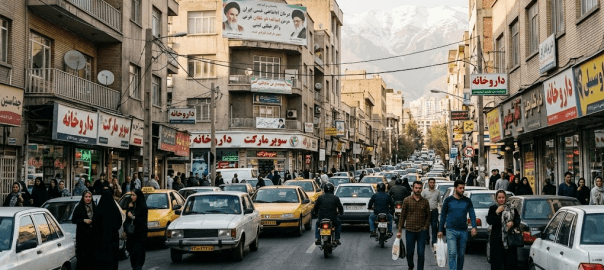
28 Feb. 2026 /Mpelembe Media/ — These reports detail a massive joint military operation by the United States and Israel against Iran on February 28, 2026, aimed at dismantling its nuclear program and security apparatus. President Donald Trump and Prime Minister Benjamin Netanyahu confirmed the strikes, with the later claiming that Supreme Leader Ayatollah Ali Khamenei was likely killed in an attack on his compound. In response, Iran and its regional allies launched retaliatory missile and drone barrages at Israel and several U.S. military bases in the Persian Gulf. International reactions vary, as Western leaders support the effort to prevent a nuclear-armed Iran while Oman, Russia, and China warn of a catastrophic regional war. Domestic chaos has gripped Iran, characterized by infrastructure damage, internet blackouts, and civilians attempting to flee the capital amidst calls for regime change.
These reports detail a massive joint military operation by the United States and Israel against Iran on February 28, 2026, aimed at dismantling its nuclear program and security apparatus. President Donald Trump and Prime Minister Benjamin Netanyahu confirmed the strikes, with the later claiming that Supreme Leader Ayatollah Ali Khamenei was likely killed in an attack on his compound. In response, Iran and its regional allies launched retaliatory missile and drone barrages at Israel and several U.S. military bases in the Persian Gulf. International reactions vary, as Western leaders support the effort to prevent a nuclear-armed Iran while Oman, Russia, and China warn of a catastrophic regional war. Domestic chaos has gripped Iran, characterized by infrastructure damage, internet blackouts, and civilians attempting to flee the capital amidst calls for regime change.
If Supreme Leader Ayatollah Ali Khamenei is dead, the Iranian constitution dictates that the 88-member Assembly of Experts is responsible for appointing a permanent successor. In the interim, his duties would be assumed by a Provisional Leadership Council consisting of the President, the Chief Justice, and a cleric from the Guardian Council.
While the Assembly’s deliberations are highly secretive, several prominent figures have emerged as potential successors:
Establishment Clerics and Insiders
Ayatollah Alireza Arafi: A senior figure who heads Iran’s nationwide seminary system and serves on both the Guardian Council and the Assembly of Experts. His selection would represent continuity within the current clerical structure.
Ayatollah Gholam Hossein Mohseni Ejei: The current Chief Justice of Iran. Unlike many other clerical contenders, he has significant administrative experience and has exercised national security responsibilities.
Ayatollah Mohsen Araki: A long-time member of the Assembly of Experts with established religious credentials and institutional experience.
Ayatollah Hashem Hosseini Bushehri: The Friday prayer leader in Qom and a member of the Assembly of Experts.
Hojjat-ol-Eslam Mohsen Qomi: A key advisor within Khamenei’s office and part of his trusted inner network.
Sadiq Larijani and Mohammad Mirbagheri: Close aides to Khamenei who have been frequently mentioned in succession analyses.
Prominent Political and Lineage Figures
Mojtaba Khamenei: The Supreme Leader’s second-eldest son wields significant behind-the-scenes influence and has strong ties to the Islamic Revolutionary Guard Corps (IRGC). However, his selection could be contentious due to his modest theological credentials, lack of formal administrative experience, and the regime’s historical aversion to hereditary rule.
Ali Larijani: A seasoned politician and former IRGC commander who currently serves as the secretary of the Supreme National Security Council. Reports indicate that Khamenei recently appointed Larijani as a “de facto leader” and crisis manager to prepare for wartime contingencies. Because he is not a senior Shiite cleric—a constitutional requirement to be Supreme Leader—analysts suggest Larijani might instead oversee a pragmatic military regency or guide a transition to a new governance model.
Hassan Khomeini: The grandson of the Islamic Republic’s founder, Ayatollah Ruhollah Khomeini. He is considered a moderate/reformist option who could help mitigate domestic strife, though some analysts view him as an unlikely successor because he has been largely excluded from the regime’s upper echelons.
Hassan Rouhani: The former president possesses the necessary religious credentials, though he has been sidelined from inner decision-making circles in recent years.
Alternative Governance Scenarios Analysts and reports suggest that the transition may not result in a single clerical leader:
A Leadership Council: The Assembly of Experts has previously considered replacing the singular role of the Supreme Leader with a collective leadership council, a move that could help balance rival factions.
A Military Takeover: There is a possibility of a hard shift toward an IRGC-dominated military junta, effectively dropping the pretense of religious legitimacy in favor of direct military rule to ensure state survival.
Mojtaba Khamenei’s influence is rooted in immense behind-the-scenes power and deep ties to Iran’s security apparatus, which sharply contrasts with the formal administrative experience or senior theological credentials held by other potential successors.
Here is how his influence compares to the other primary factions and candidates:
. The “Invisible” Security State vs. Formal Administration
Mojtaba Khamenei: As the Supreme Leader’s second-eldest son, Mojtaba has cultivated extensive connections with the Islamic Revolutionary Guard Corps (IRGC) and the hardline security forces. He is viewed as a central figure for continuity in a “security-focused” or militarized Islamic Republic. However, his influence is entirely unofficial; he lacks formal administrative experience and possesses only modest theological credentials. His succession also faces the ideological hurdle of hereditary rule, which the regime has historically opposed, and reports indicate even his father may have opposed him taking the role.
Political/Military Heavyweights (Ali Larijani, Mohammad Bagher Ghalibaf, Ali Shamkhani): Unlike Mojtaba, figures like Ali Larijani have highly visible administrative and executive experience. Larijani, currently the secretary of the Supreme National Security Council, was recently delegated broad executive powers by Ali Khamenei to act as a “crisis manager” and de facto leader. However, Larijani lacks the senior Shiite clerical status required by the constitution to officially become Supreme Leader. Consequently, while Larijani wields massive executive power, Mojtaba could serve as the clerical figurehead in a power-sharing arrangement with these military-political veterans.
Hardline IRGC Ties vs. Traditional Clerical Credentials
Clerical Insiders (Alireza Arafi, Gholam Hossein Mohseni Ejei, Mohsen Araki): These candidates are established functionaries with the deep religious and institutional credentials that Mojtaba lacks. Selecting one of them would be the “safest bet” for the Assembly of Experts to preserve the current theocratic system without the controversy of a hereditary handover. However, with the exception of Chief Justice Ejei, these clerics generally lack Mojtaba’s deep national security influence and strong backing from the IRGC.
Hardline Entrenchment vs. Reformist Lineage
Hassan Khomeini: Like Mojtaba, Hassan Khomeini derives significant influence from his lineage (he is the grandson of the Islamic Republic’s founder, Ruhollah Khomeini). However, while Mojtaba is entrenched in the extremist and hardline security factions, Hassan Khomeini represents a moderate/reformist path that could potentially mitigate domestic strife. Despite this, Hassan Khomeini’s practical influence is much weaker than Mojtaba’s, as he has been largely excluded from the regime’s upper echelons and was previously barred from running for the Assembly of Experts.
In summary, Mojtaba Khamenei’s influence is unmatched within the deep state and security forces, positioning him perfectly if the transition results in an IRGC-dominated military regime. However, his lack of formal religious and political titles makes him a highly contentious choice for the official role of Supreme Leader compared to the traditional clerics or seasoned politicians vying for power.
The Night the Shadows Receded: 5 Impactful Realities of the U.S.-Israeli Strikes on Iran
Shortly before 10:00 a.m. Tehran time on February 28, 2026, the long-simmering “shadow war” between the West and the Islamic Republic of Iran stepped into the blinding light of total transparency. Following the massive, coordinated strikes of “Operation Epic Fury” (U.S.) and “Operation Lion’s Roar” (Israel), a sudden, heavy silence fell over the capital. For decades, the region operated under the assumption that a direct strike on the Iranian heartland was the ultimate “red line.” In just 12 hours, that assumption was dismantled by an aerial armada of 200 fighter jets—the largest flyover in the history of the Israeli Air Force.While the military scale was unprecedented, the most significant impacts are not found in the craters of destroyed missile batteries, but in the tectonic shifts in regional power, a “critical state deceleration” of the regime, and the harrowing human stories left in the wake of the firestorm.
1. The Silence of the Supreme Leader: A Myth Exploded
For nearly 37 years, Ayatollah Ali Khamenei has been the untouchable center of the “Velayat-e Faqih” (Guardianship of the Jurist). That myth was shattered when approximately 30 bombs struck his compound in downtown Tehran. Currently, the world is witnessing a “succession paralysis” as conflicting reports emerge regarding the 86-year-old leader’s fate.While Iranian state media insists the Supreme Leader is “safe and sound,” his absence from public view—at a moment that demands a live televised appearance to project strength—suggests a regime struggling to manage a catastrophic leadership vacuum. This is a crisis of legitimacy that strikes at the heart of the theocratic model.”We’d fall off our chairs if Khamenei suddenly appeared and made a live statement. The grounded assessment is that he is no longer with us.” — Senior Israeli OfficialThe silence has emboldened centrifugal forces within the country. For the first time since 1989, the anchor of the state is gone, and the “Invisible Cabinet” that managed the regime’s daily survival—including Defense Minister Aziz Nasir Zadeh and IRGC Ground Force Commander Mohammad Pakpour—is reported to have been dismantled in the initial waves of the strike.
2. The Larijani Regency: A Pragmatic Turn in the Chaos?
In the immediate chaos, a surprising figure has emerged as the de facto “crisis manager”: Ali Larijani. A veteran conservative and former IRGC commander, Larijani’s sudden prominence marks a potential shift away from traditional clerical succession.This move toward a “pragmatic-military regency” was not accidental. In the months following the “Am Kalavi” (Rising Lion) war of June 2025, the regime reportedly established a “four-layered succession plan.” This plan anticipated the need to bypass traditional clerical candidates like Mojtaba Khamenei in favor of a nationalist, military-centric governance model capable of holding together a security apparatus under extreme kinetic shock. Larijani’s rise suggests the regime’s survival instincts are pivoting toward a “Bonapartist” solution to maintain control of a fragmenting state.
3. The Collapse of “Forward Defense”: Proxies in the Dark
For years, Iran’s national security was built on the doctrine of “forward defense”—the “Axis of Resistance” acting as a shield to keep conflict away from Iranian soil. The February 2026 strikes have officially signaled the end of this era.The lessons of the 2025 “Am Kalavi” war already hinted at this fragility, but “Epic Fury” confirmed it: Iran’s “deterrence by proxy” has reached a terminal ceiling. Despite the IRGC’s “True Promise 4” retaliatory strikes, Hezbollah, the Houthis, and Iraqi militias were unable to prevent direct, high-precision strikes on the heartland. The war demonstrated that asymmetric deterrence is rendered obsolete when faced with direct stealth capabilities and real-time intelligence. The “Ring of Fire” failed to protect the command-and-control center it was designed to insulate.
4. The Tragedy of Minab: The Heavy Toll of “Precision” Warfare
While U.S. Central Command, via Capt. Tim Hawkins, used terms like “surgical” and “surgical” to describe the mission, the Iranian Red Crescent reports a much grimmer reality: 201 dead and 747 injured across 24 provinces. The most impactful human element occurred in the southern city of Minab, where a strike hit a girls’ elementary school.Iranian state television reported that at least 85 lives were lost in the school strike. This tragedy highlights the “Kinetic-to-Cognitive Correlation”—the reality that military success is often undermined by the cognitive damage of civilian casualties.”The death toll from the strike on a girls’ elementary school in Minab, southern Iran, has risen to 85.” — Iranian Health Ministry StatementWhile the coalition urged the Iranian public to “take over their government,” events like Minab complicate the narrative of liberation. The “precision” of a 2,000-pound bomb offers little comfort to a grieving population, potentially fueling a nationalist “rally-round-the-flag” effect even among those who loathe the clerical elite.
5. The Global Fault Lines: A World Re-Divided
The strikes have acted as a catalyst, forcing the international community into stark, unexpected alignments that suggest a new regional order is being born.
The Decisive Supporters: Ukraine’s President Zelenskyy endorsed the strikes as “fair,” providing the human-centric justification that Iranian-designed Shahed drones have struck Ukrainian cities over 57,000 times as an “accomplice to Putin.”
The Vocal Critics: Russia and China labeled the operation a “pre-planned and unprovoked act of aggression,” warning of a dangerous spiral of escalation.
The Warning Voices: Oman’s Foreign Minister Badr Albusaidi expressed profound dismay, revealing a tragic missed opportunity: Iran had reportedly agreed to “zero stockpiling of nuclear enrichment” in mediated talks just prior to the strikes. His warning to the U.S.— “This is not your war” —reflects the fear that Washington is being “sucked in further” to a firestorm it cannot contain.
The Morning After the Fury
As the smoke clears, the Middle East finds itself at a historic crossroads. While the “Velayat-e Faqih” may be reaching its endgame, the future of a “fragmenting” Iranian state remains a volatile uncertainty.The military objective of “decapitating” the regime’s leadership may have been achieved, but the threat of a vacuum looms large. A state in freefall faces the immediate risk of internal dissolution into ethnic and tribal revolts among Kurds and Balochs. History asks the ultimate correspondent’s question: Does the removal of a dictator lead to the “freedom” promised by coalition leaders, or does it simply trade a centralized tyranny for a more dangerous, chaotic void?