
March 15, 2026 /Mpelembe Media/ — These sources explore different ways of honoring mothers through personal expression and cultural traditions. The first source features lyrics from Tupac Shakur, who offers a raw, emotional tribute to his mother’s resilience and sacrifices while raising him in poverty. In contrast, the second source provides a comparative look at how Mother’s Day is observed in Zambia versus the United Kingdom, noting differences in calendar systems and cultural focus. While the song emphasizes personal gratitude for a mother’s strength during hardship, the article explains the global diversity of the holiday’s timing and meaning. Together, they illustrate that maternal appreciation is a universal sentiment expressed through both individual storytelling and regional customs.
Beyond the Bouquet: 8 Impactful Truths About Motherhood and the Traditions That Honor It
1. The Mother’s Day Paradox
Every May, a familiar social performance unfolds: the frantic search for the “perfect” gift to validate a role that is, by its very nature, beyond material measure. As a cultural observer, one sees the floral arrangements and greeting cards as more than just commerce; they are artifacts of a society struggling to reconcile the profound complexity of mothering with the simplicity of a single calendar date. This exploration seeks to peel back the commercial veneer, moving beyond the bouquets to uncover research-backed truths—from the biological rite de passage of the maternal brain to the global rituals that define this enduring human experience.
2. Matrescence: The “Adolescence” You Never Knew You Had
In the traditional medical nosology, the transition to motherhood is often reduced to a series of physical events or, conversely, pathologized as a “life crisis” when distress arises. However, medical anthropologist Dana Raphael and contemporary scholar Dr. Aurelie Athan propose a necessary paradigm shift: Matrescence . Much like adolescence, matrescence is a normative developmental phase. As Raphael famously noted, “The critical transition period which has been missed is matrescence, the time of mother-becoming… Giving birth does not automatically make a mother out of a woman.”This is not merely a biological or neurological “pruning and tuning” of the brain; it is a holistic evolution. Beyond the physical, matrescence involves expanded ideological domains:
- Moral & Ecological: Many mothers experience a shift from an anthropocentric to an “ecocentric” worldview, developing a reduced tolerance for systemic violence and a heightened desire to protect the natural world for future generations.
- Existential & Spiritual: The transition often triggers a “disorienting dilemma”—a fertile period of self-discovery where a woman must navigate the paradox of autonomy versus healthy interdependence.
3. The 98-Hour Work Week: The Staggering Labor of Motherhood
The staggering reality of the modern mother is often obscured by the “supermom” myth. According to 2018 data from Welch’s, working mothers dedicate an average of 98 hours per week to their combined professional and caregiving duties—the equivalent of 2.5 full-time jobs. For those navigating the corporate landscape, this is a “Herculean task” that frequently involves managing roles across time zones and after-hours travel.From an anthropological perspective, Mother’s Day can often function as a “guilt-relief valve” for a society that fails to provide structural support for this labor. To move beyond temporary sentiment, corporate environments must adopt more substantive support systems. This includes specialized self-care workshops and “Ask-Me-Anything” (AMA) sessions or panel discussions where mothers in leadership can share strategies for work-life harmony, ensuring their efforts are seen, heard, and valued.
4. The “Hallmark Holiday” Its Founder Came to Regret
The commercialization of Mother’s Day is a phenomenon its founder, Anna Jarvis, spent her later years fighting with a fervor that bordered on the militant. In 1908, Jarvis established the holiday to honor her mother, a peace activist. Her vision was intimate: a day for handwritten letters of gratitude.However, as the day morphed into a “Hallmark holiday” driven by profit, Jarvis grew resentful. She organized boycotts and was even arrested for “disturbing the peace” while protesting against candy makers and the sale of white carnations. To Jarvis, a pre-printed card was a sign of emotional “indolence.” Her legacy serves as a reminder that the holiday’s original intent was to honor the individual mother as a “psychological subject,” not a consumer target.
5. The 85% Rule: Why Thoughtfulness Trumps Material Value
If the commercial pressure of the holiday feels overwhelming, take heart in the “85% Rule.” Surveys indicate that over 85% of mothers value thoughtfulness and personal connection over the price tag of a gift. Psychological research supports the idea that experiences produce more “enduring happiness” than material objects, which offer only transient satisfaction.High-impact “Acts of Service” mentioned in the research include:
- Legacy Meals: Preparing a homemade meal from a family recipe.
- Ecological Stewardship: Revamping a garden or planting a tree together.
- Responsibility Shifts: Taking over a daily chore or organizing the household to provide the gift of time.
6. Mothering Sunday vs. Mother’s Day: A Tale of Two Origins
A common cross-cultural confusion exists between the American “Mother’s Day” and the British “Mothering Sunday.” The former is a 20th-century secular creation held on a fixed date (the second Sunday in May), which countries like Zambia also follow. Conversely, Mothering Sunday is a medieval religious tradition tied to the Lenten calendar —a “movable feast” occurring on the fourth Sunday in Lent.Originally, this day was about returning to one’s “mother church” (the place of baptism). It was revived in 1913 by Constance Adelaide Smith as a response to the secularization of the American holiday. Smith’s vision was broader, honoring “Mother Church,” “Mother Nature,” and “Earthly Mothers.” This distinction explains why Mothering Sunday dates vary annually based on the lunar-driven Lenten cycle, whereas the US-inspired dates remain fixed within the Gregorian solar calendar.
7. Antrosht and Red Carnations: Global Rituals of Resilience
Honoring mothers is a universal impulse, but the rituals are shaped by unique ecological systems and historical factors. In Ethiopia, the Antrosht festival is a multi-day celebration at the end of the rainy season. Families gather for a traditional hash; daughters bring spices and vegetables, while sons provide the meat. This contrasts with Japan’s Haha no Hi , where red carnations are gifted to symbolize a mother’s “gentle strength.”Cultural awareness is essential in maternal care. The “One Love” perspective suggests that when healthcare systems and caregivers honor these diverse birth rituals and cultural backgrounds, they provide more affirming, respectful care. Recognizing motherhood as a universal rite de passage fosters deeper trust and leads to more positive outcomes for families of all origins.
8. Honoring the “Mums in Our Hearts”
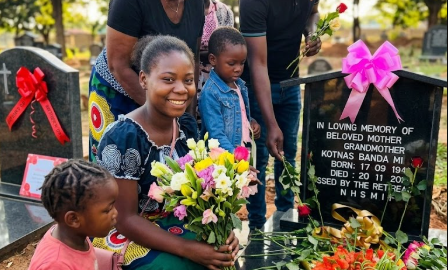
For those whose mothers have passed, this day requires a different kind of ritual—one of sensory legacy and remembrance. The psychological benefits of “Family Storytelling” and “Legacy Meals” are profound here. Cooking a mother’s favorite recipe can “bring her presence into the room” through the power of aroma and taste. Other therapeutic acts include writing a heartfelt letter to express unspoken gratitude or visiting a place that was dear to her to connect with her essence. These acts celebrate a bond that time and distance cannot break, acknowledging that a mother’s influence persists throughout the lifespan.
Conclusion: Motherhood as a Lifespan Transformation
Motherhood is not a static destination reached at childbirth; it is a profound transformation that is biological, neurological, economic, and spiritual. By embracing the concept of matrescence, we move away from pathologizing the challenges of motherhood and toward a strengths-based understanding of a woman’s evolving identity.As we look toward the future of our social and corporate structures, we must ask: If we treated motherhood as a developmental milestone as significant as adolescence, how would our homes, workplaces, and healthcare systems change? The answer may lie in moving beyond the bouquet and toward true, structural honor for the mothers who shape our world.