
Nov. 21, 2025 /Mpelembe Media/ — Africa, particularly the Sub-Saharan Africa (SSA) and Middle East and North Africa (MENA) regions, features prominently in the report’s analysis of global instability and conflict, often ranking among the world’s least peaceful and most conflict-affected areas.
The overall trend shows a continuous decline in peacefulness for both regions, marked by severe conflicts, rising geopolitical competition, and acute economic stressors.
1. Sub-Saharan Africa (SSA) Overview
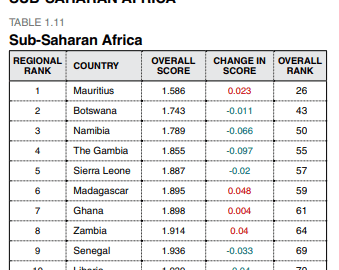
Sub-Saharan Africa recorded a deterioration in peacefulness over the past year, with its average score declining by 0.17 per cent. The region faces multiple intense security crises.
- Regional Peacefulness: Half of the countries in Sub-Saharan Africa improved in overall peacefulness, while the other half deteriorated.
- Conflict Indicators: The Militarisation and Ongoing Conflict domains deteriorated in SSA, although the Safety and Security domain saw an improvement.
- Global Hotspots: The region is home to several of the world’s least peaceful nations: the Democratic Republic of the Congo (160th), Sudan (161st), and South Sudan (156th).
- Conflict Spread: Conflicts are increasingly spilling across national borders. Between 2018 and 2023, 36 of the 44 countries in the region had some level of involvement in at least one external conflict, marking a significant increase from previous periods. This makes SSA the region with the most countries engaged in external conflicts.
- Competition for Influence: Competition for influence is intensifying in regions like Africa. In the Sahel specifically, instability and scarce resources are drawing in rival powers and fuelling a complex struggle for control.
Most and Least Peaceful Countries in SSA
- Most Peaceful: Mauritius remains the most peaceful country in Sub-Saharan Africa for the 18th consecutive year (ranked 26th globally). Mauritius is also the only country in the region that has not been involved in any internal or external conflicts over the past six years.
- Least Peaceful: The Democratic Republic of the Congo (DRC) is the least peaceful country in the region and recorded the region’s largest deterioration in overall peacefulness (4.5 per cent), ranking 160th globally (in the five least peaceful countries in the world).
- Largest Improvement: Uganda recorded the largest improvement in peacefulness in the region, driven by improvements in all three domains. Notably, the Militarisation domain saw a substantial improvement of 11.7 per cent, and deaths from internal conflict declined significantly.
- Highest Risk of Escalation: The DRC and South Sudan are listed among the countries facing the highest conflict risk factors that could lead to substantial worsening of violence.
2. Conflict, Terrorism, and Militarisation Specifics
- The Violent Conflict Crisis: The region faces a significant crisis regarding organized violence. The Central Sahel region is a major hotspot for terrorism. Burkina Faso has the highest terrorism impact in the world, and six of the ten countries with the highest terrorism impact globally are in sub-Saharan Africa.
- The DRC Conflict: The DRC’s decline was driven by deteriorations in all three GPI domains. The decline is attributed to the ongoing war with the M23 Movement, which is supported by Rwandan forces. The UN estimates that between 3,000–4,000 Rwandan troops are currently operating in the DRC, fighting alongside M23 rebels. The DRC conflict has several factors that indicate a high risk of substantial escalation.
- Militarisation Trend: Sub-Saharan Africa showed a concentrated increase in militarisation, with scores on the Militarisation domain deteriorating in 23 of the 44 countries in the region.
3. Economic and Humanitarian Stressors
Africa faces converging economic stressors that exacerbate instability and conflict risk.
- Debt Burden: Sub-Saharan African countries are highly stressed by debt servicing, with over 80 per cent of countries in the region spending more than 20 per cent of public expenditure on debt servicing, the highest percentage of any region globally. Public debt growth in developing countries, nearly half of which are in Africa, has been growing twice as fast as in advanced economies since 2010.
- ODA Cuts: Sub-Saharan Africa has been the largest recipient of Official Development Assistance (ODA) over the past decade. However, recent significant reductions in aid, such as cuts to US aid programs, pose serious risks to fragile states by affecting essential services and development.
- MENA Region (Including Sudan and North African Countries): The Middle East and North Africa (MENA) region, which includes countries like Sudan, Egypt, and Libya, remains the least peaceful region in the world for the tenth consecutive year.
- Militarisation: MENA has the highest average level of relative military expenditure in the world. Six of the ten countries with the largest per capita weapons imports globally are from the MENA region.
- Economic Stressors: Youth unemployment in MENA remained high at 24.5 per cent in 2023, which is more than ten percentage points above the global average.
- Sudan Crisis: Sudan is the least peaceful country in the MENA region (and the third least peaceful globally). The ongoing civil war between the SAF and RSF has led to Sudan facing the world’s worst refugee crisis, with over 10 million people displaced. The violence has substantially deteriorated political stability and violent crime, making it unsafe for humanitarian agencies to operate.
- Humanitarian Costs: Globally, displacement due to conflict has increased by over 185 per cent since the GPI’s inception, reaching over 122 million people. Many of the countries contributing to this figure, such as the DRC and Sudan, are in Africa.
In essence, Africa, as assessed by the GPI 2025, is defined by widening extremes: it contains the world’s most consistently peaceful region (Mauritius) but is also afflicted by highly volatile conflicts (DRC, Sudan, South Sudan) that are rapidly escalating and becoming internationalized, all set against a backdrop of severe economic pressure and cuts to development aid.
Full report available for download here