Tag Archives: Nelson Mandela

25Oct/26

How Choice Architecture Shapes Your Decisions

See the Prime, Break the Spell: Reclaiming Cognitive Agency in an Automated World

Sat Oct. 24, 2026 /Mpelembe Media/ — Joshua Chimakula Ngoma’s book, Primed: The Hidden Power That Shapes What We Do, Buy and Believe, explores how subtle environmental micro-cues shape human decision-making, commercial behavior, and socio-political beliefs. Rooted in dual-process cognitive theories, the text demonstrates that human choices are rarely unprompted acts of pure autonomous logic; instead, subtle sensory triggers—including color spectrums, ambient scents, acoustic frequencies, headline phrasing, and screen layouts—pre-activate associative neural networks below conscious awareness. This environmental priming targets System 1, the brain’s rapid, low-energy heuristic engine, allowing external choice architects to direct attention and steer behavior before System 2’s slow, reflective reasoning can engage. Drawing on three decades in subterranean mining engineering, his leadership at the Enterprising Africa Regional Network (EARN), and a Global South vantage point, Ngoma applies a structural lens to reveal how hidden behavioral architecture systematically engineers human actions across physical and digital spaces. Continue reading →
02Sep/23

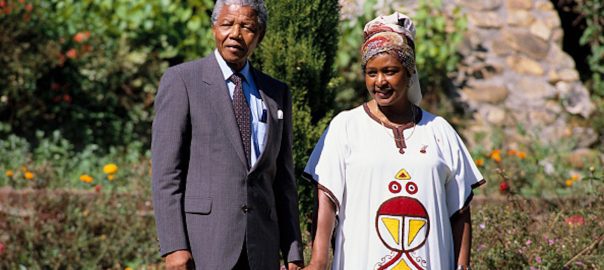
Winnie and Mandela biography: a masterful tale of South Africa’s troubled, iconic power couple

Gavin Evans, Birkbeck, University of London

A new book on South African liberation struggle icons Nelson and Winnie Mandela is a masterful biography of the pair. It’s a work of scholarship involving an immense body of primary and secondary research, written with flair and panache but in an easy and compelling style, making it accessible to anyone with an interest in politics, power and South Africa and looks set to become the definitive work on them.

Continue reading →

25Jul/23

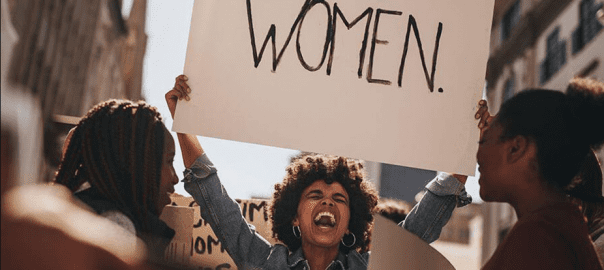
Are women better activists than men?

July 25, 2023 — There have been many great male activists throughout history, such as Martin Luther King, Nelson Mandela, and Gandhi. However, it is true that women have played a disproportionately large role in the fight for human rights.

There are a few reasons for this. First, women have traditionally been excluded from power and decision-making, so they have had to find other ways to make their voices heard. Second, women are often more directly affected by human rights abuses, such as violence against women and girls. Third, women are often more collaborative and less hierarchical than men, which can be an asset in the fight for human rights. Continue reading →