
First-of-Its-Kind HIV Vaccine Enters South African Human Trials Using Moderna’s Sequenced mRNA Technology
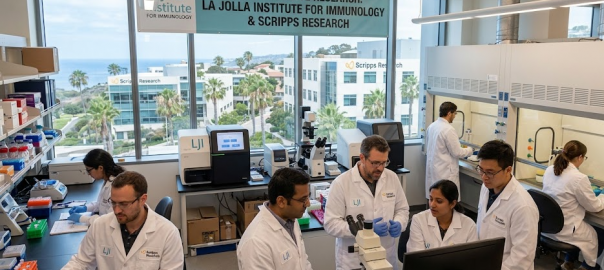
Tue, July 28 2026 /Mpelembe Media/ — Researchers at the La Jolla Institute for Immunology and Scripps Research have achieved a significant breakthrough by developing an HIV vaccine that successfully produced high levels of broadly neutralizing antibodies in primates. This innovative germline targeting approach functions as an “immune system bootcamp,” utilizing a sequence of specialized injections to train naive B cells to recognize and attack the virus’s most vulnerable regions. By mimicking the natural maturation of rare, effective antibodies, the vaccine overcomes HIV’s ability to mutate and hide behind glycan shields. Preclinical results showed that nearly half of the animal subjects developed the desired immune response, marking the most successful trial of its kind to date. Following these unprecedented results in non-human primates, scientists have transitioned to human clinical trials to evaluate the safety and efficacy of this multi-step immunization regimen. This collaborative effort represents a major advancement in the long-term mission to create a preventative vaccine for global public health.
Executive Summary: The Next-Generation Germline-Targeting HIV Vaccine Paradigm
The search for an effective prophylactic HIV vaccine has entered a transformative era, transitioning from empirical design to highly precise, structure-guided immunological engineering. HIV’s extreme sequence mutability, defensive glycan shield, and structural instability have historically stymied traditional vaccine approaches. To overcome these challenges, a collaborative network of world-class scientific institutions—including the La Jolla Institute for Immunology (LJI), Scripps Research, and the International AIDS Vaccine Initiative (IAVI)—has pioneered germline targeting, a sequential immunization strategy designed to coach the immune system step-by-step toward producing potent broadly neutralizing antibodies (bnAbs) capable of neutralizing diverse global HIV strains.
1. The Preclinical Breakthrough: Turning Rare Responses Common
In a landmark preclinical study published in Nature, researchers achieved a historic milestone by demonstrating the successful induction of mature, cross-neutralizing serum antibodies in outbred rhesus macaques.
- Unprecedented Success Rates: Approximately 44% of vaccinated primates successfully developed broadly neutralizing antibodies against HIV. The elicited antibodies closely mimicked the exact structural approach, binding footprint, and HCDR3-dominated interaction mode characteristic of human BG18 class bnAbs—which target the highly conserved V3-glycan epitope.
- Bypassing the Neutralization Barrier: This regimen successfully matured extremely rare precursor B cells, increasing their antigen affinity by over 6,000-fold within 10 weeks. Elicited antibodies neutralized a diverse panel of difficult-to-neutralize, globally circulating tier 2 HIV-1 strains, achieving up to 46% neutralization breadth.
2. The “Immune Bootcamp”: Sequential Germline Targeting
Germline-targeting vaccines act as a highly structured “immune bootcamp”, guiding rare, immature (naive) B cells through an evolutionary trajectory via a carefully ordered regimen of priming, shepherding, and polishing immunogens.
- The CD4 Binding Site (CD4bs) Pathway: To prime VRC01-class B cells, scientists developed the eOD-GT8 60-mer self-assembling nanoparticle (presented on a LumSyn scaffold). In the first-in-human IAVI G001 trial, this priming immunogen was found safe and successfully expanded VRC01-class B-cell precursors in 97% of human recipients. It also elicited robust antigen-specific CD4 helper T cell responses in 84% to 93% of vaccinees.
- The V3-Glycan (Asn332) Pathway: The N332-GT5 gp140 (or gp151) native-like envelope trimer was computationally optimized to bind human BG18-like B-cell precursors with high affinity by removing steric glycans in the V1 loop and exposing the vulnerable GDIR motif.
3. Optimizing Immune Memory: The SMNP Adjuvant and Dosing Kinetics
Peptide and protein antigens alone are poorly immunogenic. To sustain robust germinal center (GC) reactions, N332-GT5 has been paired with a novel Saponin/MPLA Nanoparticle (SMNP) adjuvant.
- Biophysical Mechanisms: SMNP is a 40 nm, ISCOM-like honeycomb structure combining the Toll-like receptor 4 (TLR4) agonist MPLA and the saponin QS-21. It bypasses the localized “depot” effect of alum, allowing rapid transit of antigen to proximal and distal lymph nodes.
- Dose-Dependent Potency: Primate studies (Ramezani-Rad et al., 2025) demonstrated that higher SMNP adjuvant doses dramatically amplify immunogenicity, showing a 6-fold increase in memory B cells and an 11-fold to 15-fold increase in memory CD4 T helper and T follicular helper (Tfh) cells. Long-lived bone marrow plasma cells (BMPCs) and Tier 2 neutralizing antibodies were also generated and sustained predominantly at the highest adjuvant doses.
4. Active Clinical Translation: Protein vs. mRNA Platforms
The promising preclinical results have rapidly transitioned into Phase 1 clinical trials using two parallel delivery platforms:
- The Recombinant Protein Pathway (HVTN 144): This completed trial (NCT06033209) evaluated N332-GT5 gp140 adjuvanted with SMNP in healthy adults. Importantly, it compared standard bolus injections against a fractionated, escalating-dose priming schedule (six small injections over three weeks). Mimicking continuous antigen release prevents systemic cytokine spikes and early antibody-mediated negative feedback, allowing lower-affinity B-cell clones to compete and enter GCs.
- The mRNA-LNP Sequential Pathway (IAVI G004 / DESIIGN001): Ongoing in South Africa, this trial evaluates Moderna’s lipid nanoparticle-encapsulated mRNA platform. It tests safety, dose levels, and immunogenicity of three sequential mRNA-encoded immunogens representing distinct B-cell maturation stages (mRNA-1645-eODGT8 prime $\rightarrow$ shepherding mRNA-1645-CoreG28v2 booster $\rightarrow$ polishing membrane-bound mRNA-1645-N332GT5 trimer). A dose-escalation model is being used to identify the minimum effective dose to prevent the skin reactions (urticaria) observed in earlier higher-dose trials.
5. Next-Generation Delivery: Controlled-Release and Thermostability (ALTA®)
To simplify complex multi-dose schedules and eliminate cold-chain requirements, researchers are leveraging the ALTA® (Atomic Layering Thermostable Antigen and Adjuvant) microparticle platform.
- Programmable Release Kinetics: By using atomic layer deposition (ALD), atom-thick layers of alumina ($Al_2O_3$) are coated onto spray-dried vaccine powders. Adjusting the coating thickness (from 50 to 200 cycles) controls the in vivo dissolution rate, delivering a tunable, sustained antigen release over weeks or months. This controlled release mimics the immunological benefits of a fractionated multi-dose priming regimen in a single-shot injection.
- Remarkable Thermostability: ALTA® formulation successfully preserves the delicate conformational assembly and neutralizing epitope binding of the N332-GT5 gp140 trimer. Potency is maintained for up to three months under accelerated thermal conditions ($40^{\circ}\text{C}$ and 75% relative humidity), offering a viable pathway to eliminate cold-chain logistics in low- and middle-income countries.
Why the New HIV Vaccine is an “Apollo Moon Mission” Moment for Science
Introduction: The 40-Year Puzzle
For over four decades, the search for an HIV vaccine has been the ultimate exercise in scientific frustration. Traditional vaccinology has effectively neutralized a litany of pathogens, yet HIV remains an elusive outlier—a “master of disguise” that has consistently outpaced our most sophisticated medicine. It doesn’t merely infect; it hides behind a sugar-coated shield, mutates at a pace that renders standard antibodies obsolete, and shifts its physical shape the moment it touches a human cell.However, a recent milestone published in Nature by researchers at the La Jolla Institute for Immunology (LJI) and Scripps Research represents more than just a step forward; it is the engineering of immunity at the atomic level. By breaking down the most impactful takeaways from this breakthrough, we can see why the scientific community views this not just as a successful trial, but as an “Apollo-level” biological victory.
Takeaway 1: We Are Finally Sending B Cells to “Bootcamp”
Historically, vaccines have functioned by presenting a weakened or dead version of a virus and “hoping” the immune system finds the right way to fight back. This new approach, known as “germline targeting,” replaces hope with a rigorous curriculum.The strategy targets B cells in their “naive” or germline state—before they have begun the maturation process. Rather than waiting for the body to accidentally stumble upon a defense, scientists are now actively guiding the maturation of these cells through a meticulously designed “bootcamp.” This represents a fundamental paradigm shift: we are no longer just showing the body the enemy; we are providing a step-by-step roadmap for the immune system to evolve its own high-precision weaponry.”This series of vaccinations will guide, or ‘walk’, a B cell from its naive state to its broadly neutralizing state,” explains LJI Instructor Patrick Madden, Ph.D.
Takeaway 2: Turning “Ultra-Rare” Responses into the Common Standard
The ultimate goal of HIV vaccinology is the elicitation of Broadly Neutralizing Antibodies (bnAbs). These are rare, elite antibodies that ignore the virus’s surface decoys and instead target conserved epitopes —sites on the virus that are so essential to its function that they remain unchanged across diverse strains. Normally, these responses are found in only a tiny fraction of people living with HIV.The breakthrough in this study, conducted on rhesus macaques , was the sheer abundance of these responses. The vaccine flipped the script on immunodominance —the immune system’s natural tendency to focus on “easy” targets that the virus can quickly change. By forcing the immune system to bypass these easier preferences, the researchers prompted a neutralizing response in 44% of the animal subjects.”We succeeded in taking ultra-rare antibody responses and turning them into common responses by the end of the vaccination process,” says LJI Professor and Chief Scientific Officer Shane Crotty, Ph.D.
Takeaway 3: Seeing Past the “Ever-Shifting Cloak” of Glycans
To understand the scale of this victory, we must examine the three specific defense mechanisms that have made HIV invincible for 40 years:
- The Glycan Cloak: HIV is wrapped in a layer of sugar molecules (glycans) that mimic those on human cells, allowing it to hide in plain sight.
- Extraordinary Mutation Speed: The diversity of HIV within a single infected individual can exceed the worldwide diversity of the influenza virus, making standard “snapshots” of the virus useless.
- Molecular Shape-shifting: The virus physically transforms during the infection process, effectively moving the target just as the immune system is ready to fire.The new vaccine overcomes these hurdles by using antigens that act as “mugshots of America’s most wanted.” By presenting these precise molecular mugshots early and often, the vaccine trains the immune system to ignore the “ever-shifting cloak” and recognize the permanent, vulnerable structures of the virus.
Takeaway 4: The Power of the “Apollo Moon Mission” Collaboration
This was not a serendipitous discovery, but a 14-year endeavor involving the Schief Lab at Scripps Research, LJI, IAVI, and the Emory National Primate Research Center . This collaboration highlights the necessity of “big science”—the idea that solving Apollo-level biological problems requires the long-term integration of molecular engineering and immunogenetics .The project demonstrates that modern medical milestones are rarely the result of a single “Eureka” moment, but are built on a foundation of a myriad of inventions—from the atomic stabilization of proteins to the mapping of B cell maturation pathways.”This has been one of those Apollo moon mission-type projects, where there is an exceptional goal and the team has to accomplish a myriad of discoveries and inventions along the way,” says Crotty.
Takeaway 5: The mRNA Parallel and the Future of Structural Vaccinology
The DNA of this success is shared with the most significant medical victories of the 2020s. It is rooted in “structure-based vaccinology”—understanding and manipulating a virus at the atomic level. This same core design principle led to the success of mRNA platforms for COVID-19 and the FDA approval of mRESVIA , the world’s first mRNA vaccine approved for a non-COVID pathogen (RSV).The common thread is the use of “prefusion-stabilized” proteins. Just as the COVID vaccines utilized 2P mutations and the RSV vaccine utilized the DS-Cav1 stabilized variant, this HIV vaccine relies on stabilizing the virus’s “envelope” protein in its most vulnerable state. By capturing the virus’s atomic structure before it can shape-shift, we allow the immune system to study a stable target.
Conclusion: A Final Thought to Ponder
With Phase 1 human trials (IAVI G004) already underway, we have moved from the era of “hoping” for an HIV vaccine to the era of “programming” one. While we work toward a 100% response rate, the fundamental “instruction manual” for training the human immune system to defeat the most complex pathogen in history has finally been drafted.As we refine these techniques, we must ask: What does a world “without disease” look like now that we have the power to out-engineer the master of disguise?Source Citation: Steichen, J. M., et al. (2026) Vaccination elicits HIV broadly neutralizing antibodies in primates . Nature . DOI: 10.1038/s41586-026-10837-5.