
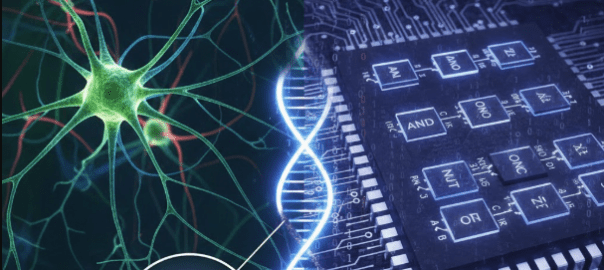
Jan. 26, 2026 /Mpelembe Media/ — This theory explores the philosophical and scientific debate regarding whether the human mind functions like a digital computer. While neuroscience traditionally views the brain as a computational machine, the text highlights significant biological differences, such as the complex, fluid nature of neurons compared to rigid logic gates. Distinguished experts, including Roger Penrose and Max Tegmark, examine if consciousness and perception can be truly captured through mathematical models or if living thought is fundamentally unique. Ultimately, the discussion questions whether artificial intelligence reflects the true essence of the cosmos or if it remains a limited imitation of organic sophistication. This inquiry serves as a centerpiece for the Institute of Art and Ideas, bringing together elite thinkers to bridge the gap between physics and philosophy.
There is a fundamental debate within neuroscience regarding whether the human brain can be accurately defined as a computational “problem-solving machine”. While the brain stores memories and processes information similarly to a computer, many researchers question if this analogy captures the true essence of the mind, including perception and consciousness.
Key distinctions between biological and digital systems include:
Architectural Complexity: Computers utilize transistors to create precise and repeatable logic gates that operate on binary data (0s and 1s). Conversely, biological neurons are far more complex, managing thousands of inputs and producing outputs that are dynamically shaped by past activity and internal states.
Systemic Resilience: The sources highlight that digital hardware is inherently brittle; if a computer’s processor is removed, it breaks. In contrast, the biological brain is remarkably robust, as evidenced by the fact that humans can survive with only one brain hemisphere.
The Computational Question: The debate, featuring prominent thinkers such as Roger Penrose, Max Tegmark, and Sabrina Gonzalez Pasterski, asks if computers are “limited machines” or if mathematics has uncovered the essential character of thought and the cosmos itself.
The researchers challenge the traditional view of the mind as strictly computational, suggesting that the sophistication of living things—characterized by perception and consciousness—may transcend the capabilities of current digital architecture.
Biological neurons and computer logic gates differ fundamentally in their complexity, predictability, and the way they process information. According to the sources, the primary distinctions include:
Input Scale and Complexity: While computers use transistors to build elementary logic gates, biological neurons are far more complex, possessing thousands of inputs rather than the limited inputs found in digital gates,.
Precision vs. Context-Dependency: Computer logic gates are designed to be precise and repeatable, enabling the exact storage of data in binary formats (0s and 1s). In contrast, neurons do not function as simple gates; their output is dependent on past activity and their current internal state, making their behavior dynamic rather than strictly algorithmic,.
Systemic Resilience: The sources highlight a significant difference in how these components contribute to the overall system’s survival. If a computer’s processor is removed, the machine breaks and ceases to function,. However, the biological brain is more resilient; for example, humans can survive with only one brain hemisphere, suggesting that neuronal networks possess a level of flexibility and redundancy not found in standard computer architectures.
Functional Outcome: While computers are problem-solving machines that store and process information, the biological interaction of neurons leads to phenomena that computer logic gates have yet to replicate, such as thinking, perception, and consciousness,.
Due to these differences, it may be a mistake to view the mind as strictly computational, as computers may be limited machines that lack the sophistication of living things,.
In biological neurons, the internal state functions as a dynamic variable that prevents the cell from acting as a simple, repeatable logic gate,. According to the sources, the influence of internal state on a neuron’s output manifests in the following ways:
Context-Dependency: Unlike a transistor that consistently processes 0s and 1s in a precise and repeatable manner, a neuron’s response to its thousands of inputs is conditioned by its current internal condition,. This means the same input may result in different outputs depending on what is happening within the cell at that moment.
Integration of History: The internal state is closely linked to past activity. This suggests that the neuron “remembers” or is shaped by previous signals, allowing its dynamic output to be a reflection of a temporal sequence rather than just an immediate stimulus,.
Non-Algorithmic Processing: Because the output is dependent on this internal state, neurons do not follow the strict, static rules of computer logic gates. This complexity allows the brain to move beyond simple problem-solving to facilitate perception, thought, and consciousness,.
It is important to note that while establishing that the internal state and past activity dictate a neuron’s output, they do not provide the specific biological mechanisms (such as ion concentration, membrane potential, or synaptic plasticity) that define that state. Information regarding those specific biochemical processes is not contained in the provided sources and would require independent verification from neurobiological texts.
Systemic resilience highlights a fundamental architectural gap between the biological brain and digital hardware regarding survival and functional integrity,. According to the sources, this distinction is evidenced in the following ways:
Critical Failure Points: Computer hardware is characterized by a fragile dependency on its core components. If you remove a computer’s processor, the machine breaks and becomes completely non-functional,.
Biological Plasticity and Survival: In contrast, the brain exhibits a level of resilience that allows for massive structural loss without the immediate cessation of the system. The sources note that humans can survive with only one brain hemisphere, demonstrating a capacity for survival that digital systems lack,.
Complexity of Components: This resilience may be linked to the difference between simple logic gates and biological neurons. While computers rely on precise and repeatable logic gates to store data in 0s and 1s, neurons are biological entities with thousands of inputs whose outputs are shaped by their internal state and past activity,.
These differences in resilience and internal complexity raise questions about whether computers are limited machines that lack the inherent sophistication of living things, such as the ability to facilitate perception and consciousness,,.
The theory suggests that the brain’s resilience is a primary reason why many researchers challenge the analogy of the brain as a computational machine. While the sources do not provide a definitive scientific proof that the brain is non-computational, they present the brain’s resilience as a key piece of evidence that distinguishes it from current computer architecture:
Fragility of Digital Systems: In traditional computing, the system is brittle; if you remove a computer’s processor, the machine breaks and can no longer function. This implies a rigid, centralized dependency that is a hallmark of current computer hardware.
Biological Robustness: In contrast, the brain demonstrates a level of systemic resilience that digital hardware cannot replicate. Specifically, the sources note that humans can survive with only one brain hemisphere. This suggests that the “essence of the mind” may not be tied to a single, indispensable processing unit in the way a computer’s functions are tied to its processor.
The Argument Against Computation: Because of this resilience—and the fact that biological neurons are influenced by internal states and past activity rather than being repeatable logic gates—the sources ask if it is a mistake to see the mind as computational. The implication is that if the brain were strictly a “problem-solving machine” composed of elementary gates, it might share the same fragility as a computer.
The Counter-Perspective: Despite these differences, the sources also present an alternative view: that computers and mathematics may have actually uncovered the essential character of thought, even if our current machines are “limited” compared to the sophistication of living things.
Ultimately, the theory uses the brain’s resilience to highlight that the biological brain possesses perception and consciousness, qualities that may set it apart from the “precise and repeatable” nature of digital computation.
Whether computers can replicate the essential character of human thought is a central debate in neuroscience and philosophy, with the sources presenting two conflicting viewpoints.
The Argument for Potential Replication: Some perspectives suggest that computers and mathematics may have already uncovered the essential character of thought, and perhaps even the nature of the cosmos itself. Within this framework, the brain is viewed as a problem-solving machine that stores memories and processes information, much like a digital computer. If consciousness is eventually understood as a “state of matter,” as proposed by panelist Max Tegmark, it implies that the fundamental aspects of mind might eventually be replicable through advanced computation or physics.
The Argument Against Replication: Conversely, many researchers challenge the idea that the computational analogy captures the “essence of the mind”. They argue that computers may be “limited machines” that fundamentally differ from the sophistication of living things. Key reasons for this doubt include:
Functional Differences: While computers rely on precise and repeatable logic gates to process binary data (0s and 1s), biological neurons integrate thousands of inputs and produce outputs based on their internal state and past activity.
Systemic Resilience: The sources point out that the mind is not tied to a single “processor” in the way a computer is; a computer breaks if its processor is removed, but humans can survive with only one brain hemisphere. This suggests the brain’s “essence” is not strictly computational in a traditional sense.
Consciousness and Perception: Fundamentally, biological brains think, possess perception, and are conscious—qualities that the sources suggest may not be captured by the elementary logic gates of current computer hardware.
The theory leaves the question open, asking whether it is a mistake to see the mind as computational or if our current machines are simply early, limited versions of a system that has already revealed the mathematical roots of thought.
Source: IaI.tv