1. Welcome to the World of 2042
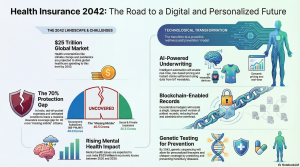
Imagine waking up in a world where your healthcare isn’t a “repair shop” you visit only when you break down, but a high-performance “maintenance crew” that keeps you running at your peak every single day. This is the great shift from a reactive model—treating sickness after it strikes—to a proactive model, where the goal is constant wellness.In the early 2020s, nearly 80% of healthcare spending was dumped into treating diseases after they appeared. By 2042, that script has flipped: the majority of global spending is now dedicated to improving health and well-being before symptoms ever show up. You’ve seen the seeds of this today in the fitness explosion sparked by icons like Niraj Chopra ; his Olympic success turned millions of students toward tracking their steps and workouts. In 2042, that “look good, feel good” energy is powered by a high-tech digital ecosystem that makes staying healthy as “grokkable” and automatic as breathing.
2. The Brain of the Future: AI and Cognitive Intelligence
The engine behind your 2042 wellness is a “digital brain” divided into two levels: Artificial Intelligence and its more powerful evolution, Cognitive Intelligence . Think of AI as a highly skilled co-pilot who helps the human pilot make decisions, while Cognitive Intelligence is the auto-pilot capable of flying the plane while the human simply monitors the flight path.| Feature | Traditional AI (The Co-Pilot) | Cognitive Intelligence (The Auto-Pilot) || —— | —— | —— || Primary Role | Reads X-rays, MRIs, and lab results faster than any human. | Performs autonomous surgeries and adjusts treatments in real-time. || Human Involvement | Doctors use AI insights to make the final diagnosis. | Doctors monitor independent systems via intelligent dashboards. || Output | Automated medical reports and help with diagnosis. | Live performance indicators and self-monitoring procedures. || Key Tech | Deep learning and medically trained algorithms. | Robotics, VR/AR, and fully intelligent automation. |
But a brain is only as good as its memory. To keep all this life-saving intelligence safe, we need a new kind of digital vault where your secrets are locked away from hackers but accessible to you in a heartbeat: the Blockchain.
3. Your Data, Your Power: Understanding Blockchain
In the old days, your medical records were stuck in “silos”—data graveyards where one hospital couldn’t talk to another. In 2042, Blockchain provides you with a “self-sovereign digital identity.” Think of it as a digital vault where only you hold the master key.Here is why Blockchain is your ultimate health superpower:
- Identity Control (The Aadhar Upgrade): You own your records. Your identity can be verified through Aadhar ID attestation , but the data belongs to you, not a hospital. You even designate “digital nominees” —trusted friends or family who can manage your health data if you are ever incapacitated.
- Security: Because the records are kept on a “distributed ledger” (stored in thousands of places at once), they are virtually unhackable and tamper-proof.
- Speed (Interoperability): Whether you are in New Delhi or New York, a doctor can access your life-saving data in seconds, ensuring “interoperability” across the entire global system.
4. The 24/7 Health Guardian: Wearables and IoT
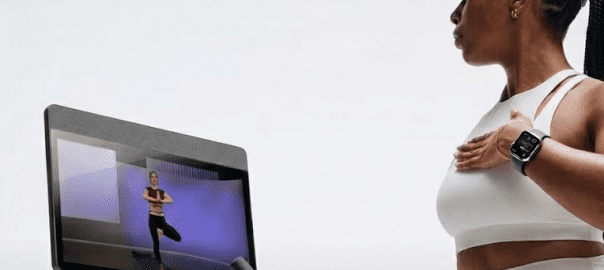
To keep that Blockchain vault filled with fresh data, you’ll use the Internet of Things (IoT) . These aren’t just fancy watches; they are your 24/7 health guardians, providing “continuous home monitoring” that can predict a problem before you even feel a sniffle.Your 2042 gear includes:
Bio-sensing Wearables: Smart patches that track your internal chemistry and vitals 24/7.
Fall-Prevention Sensors: “Smart shoes” and clothes that detect tiny balance shifts to prevent injuries in the elderly before they hit the ground.
Continuous Sugar Monitoring: Advanced patches that track glucose every second, showing you exactly how that extra snack affects your body.
Facial Algorithms: Cameras that use computer vision to monitor your heart rate, blood pressure, and even your BMI just by looking at your face.
5. Beyond the Surface: Genetics and 3D Printing
Technology in 2042 dives deep into your very blueprint: your DNA. Genetic testing has evolved from an expensive luxury into a “basic necessity” for your survival.Landmark Year 2042: This is a tipping point for India. Our population is expected to peak at 1.5 billion people , making us the most populous nation on Earth. As we become the 3rd largest economy (surpassing Japan), we face a rising “dependency ratio” —a massive aging population that needs care. Genetic testing is the key to managing this, allowing us to stop chronic diseases like cancer before they start.We now use CRISPR , which you can think of as “digital scissors for DNA,” to snip out inherited diseases from your genetic code. And if an organ does fail? Regenerative Medicine and Robotic Assistance allow us to use 3D Printing to create a new heart or kidney using your own cells, meaning your body will never reject the transplant.
6. Predicting the Future: From Data to Prevention
The “Magic Insight” of 2042 is that your data doesn’t just record the past; it predicts your future. Through Intelligent Automation , a tiny change sensed by your “smart shoe” today can prevent a hospital stay ten years from now.
The Future Health Checklist: A Real-World Scenario
Imagine your Diabetes Patch or Smart Shoe senses a microscopic shift in your physiology. Here is how the system keeps you safe:
Sensing: Your wearable detects a 1% rise in inflammatory markers or a change in your gait.
Analysis: This data is instantly cross-referenced with your genetic profile by a medically trained AI.
Notification: An AI-based bot alerts you: “Hey, your current habits are increasing your risk for a chronic condition.”
Therapy: The bot suggests a personalized nutrition plan or a specific “micro-therapy” to reverse the risk.
Prevention: You follow the automated advice, and the disease is stopped in its tracks—no hospital visit required.As a student in this era, you are far more than a patient. You are a Co-pilot of your own longevity . By mastering this digital ecosystem, you aren’t just surviving the future; you are designing a life of limitlessly optimized wellness. welcome to 2042!