
Live From London, But Is It Actually British? 4 Impactful Takeaways from ‘Saturday Night Live UK’
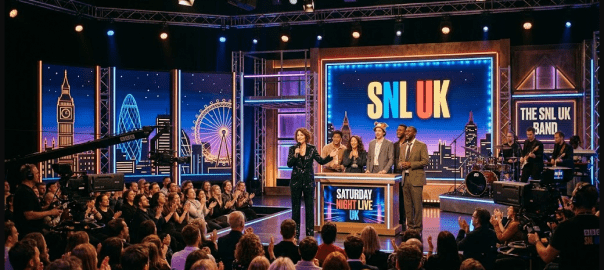
The transition of a 50-year-old American institution to British soil has long been viewed by the UK creative community with a cocktail of curiosity and justifiable dread. On March 21, the premiere of Saturday Night Live UK finally unleashed the iconic, albeit geographically adjusted, tagline: “Live from London, it’s Saturday Night!” However, the launch invites a rigorous interrogation of whether a format so deeply calcified in the American comedic establishment can truly survive a transatlantic transplant. Hosted by Tina Fey—a “longtime SNL employee” acting as a capable, experienced doula for a nascent cast—the debut was a high-wire act of cultural translation. It attempted to bridge the gap between the slick, multi-million-dollar production values of the NBC mothership and the scrappy, anarchic satirical heritage of the UK, once defined by the jagged edges of Brass Eye and The Mash Report .
1. The “Tepid Cosplay” vs. New Irreverence
The premiere highlighted an immediate tension: is the show a bold evolutionary step or merely an underwhelming pastiche? Critics have already pointed toward a sense of “tepid cosplay,” where the production adheres strictly to the American architecture—monologue, topical sketches, and the news parody—while grasping for a localized soul.Choosing Fey as the debut host was a masterstroke of tactical safety that risked strategic sterility. While she guided the young cast (including Taskmaster alumni Emma Sidi and Ania Magliano) through singularly British references—nods to Come Dine With Me and Noughties Autoglass adverts—her presence underscored the show’s reliance on its New York parentage. The “Tina Fey Effect” is real, but it carries the weight of cultural colonisation. As The Independent noted regarding the pre-launch marketing:”The teaser showing SNL stalwart Tina Fey dressed up as Mary Poppins and doing a ridiculous British accent is unlikely to assuage any concerns… the fear is that SNL UK will turn out like an early episode of The Office US.”While Fey anchored the premiere alongside musical guest Wet Leg, the true test of the show’s “Britishness” lies ahead with upcoming hosts Jamie Dornan (joined by Wolf Alice) and Riz Ahmed (with Kasabian). These episodes will determine if the show can find its own spark of irreverence or if it will remain a glossy American import wearing a Union Jack waistcoat.
2. The “Clip-First” Strategy: Designing for the Numb Scroller
As a piece of linear broadcasting, SNL UK faces a steep climb. Airing on Sky One—a platform with far less “Clapham omnibus” cut-through than terrestrial rivals—and hampered by a schedule that follows Premier League football, the show’s success is not tethered to overnight ratings. Instead, the strategy is a naked pursuit of the “numb scroller.”The production is designed to be disassembled into viral units for TikTok and Instagram. This “clip-first” philosophy grants the writers’ room—led by head writer Jonno Johnson and featuring 20 staff writers including Welcome to Wrexham’s Humphrey Ker—a specific kind of freedom. They can afford the “interminable” David Attenborough sketch that dies on the airwaves as long as one segment lands a digital punch.Nowhere is this more evident than in the “Weekend Review.” Anchored by Ania Magliano and Paddy Young, the segment—overseen by head writer Charlie Skelton—delivered topical barbs with significantly more edge than the often-sanitised US “Weekend Update.” By hazarding the audience’s offence, the segment aimed for the anti-establishment credibility necessary to survive in a British media landscape that historically prizes the “anarchic hit” over the slickly produced franchise.
3. The “MIM” Framework: A Transatlantic Test Case for Representation
Perhaps the most demanding intellectual challenge for SNL UK involves navigating the representation of Islam, Muslims, and Muslimness—a triad recently analyzed through “corpus linguistic tools” in Cardiff University research. It is vital to note that this research, conducted by Anfal Almarshd, focused on the American SNL from 2008 to 2020, revealing a persistent “binary of representation” that framed characters as either “loyal patriots” or “dangerous extremists.”The American show often utilized a “slippage of meaning”—the comedic incongruity created by the movement of meaning in language—to negotiate these serious identities. However, the UK version now serves as the ultimate test case for whether these tropes will be “rearticulated” or merely repeated. The PhD abstract notes:”The overall discursive analysis suggests that while SNL may engage in some persistent and problematic trends and narratives seen in Western media, it also presents opportunities to challenge and question these narratives through comedic interventions.”With Riz Ahmed slated to host, SNL UK has an immediate opportunity to move beyond the “othering” patterns found in the US data. Whether the show can articulate a more complex, British-Muslim identity—free from the “loyalist vs. radical” dichotomy—will be the benchmark for its sociological impact.
4. The Aesthetics of Offence: From Starmer to the Ghost of Diana
To achieve cultural relevance, SNL UK must master the aesthetics of offence. The premiere demonstrated a willingness to take “inelegant swipes” at the establishment, a necessity for any show claiming the SNL mantle in a country with a high bar for satire.
- The Standouts: Jack Shep’s uncanny Princess Diana impression provided the observational wit the persona demands. Equally sharp was the de-aging serum sketch—a surreal narrative where a husband’s rejuvenation leads to him being targeted by “pedophile hunters”—and a bitingly absurd “Paddington immersive experience” featuring a grizzly bear with a red bucket hat glue-gunned to its head.
- The Failures: The show struggled with the “low-hanging fruit” of the Keir Starmer premiership, and a David Attenborough parody proved that even the most talented cast cannot save a sketch that fails to arrive at a punchline.Yet, even the misses are instructive. The willingness to risk “bad taste”—including gags about Prince Andrew—suggests a desire to move beyond the “commodification of irreverence” that has plagued the modern American version.
Conclusion: A Six-Episode Trial or a New Institution?
Though initially commissioned for a six-episode run, Sky has already signaled confidence by extending the first series to eight episodes. With a cast of stand-ups and a writing room that mixes veteran satirists with fresh voices, the ingredients for a new institution are present.However, the cultural analyst must ask: Can a format that has become a slick American launchpad for franchise comedians ever truly recapture the “anarchic hit” energy that made the original 1975 ‘Not Ready for Prime Time Players’ so revolutionary? If SNL UK is to be more than a transatlantic curiosity, it must stop acting like a “doula-assisted” American delivery and start behaving like the scrappy, rebellious force that satire in London demands.