
Suggested Headline: The Dawn of Silicon-Native Agency: Architecting and Governing the Sentient Economy
28 Feb. 2026 /Mpelembe Media/ — The provided sources detail a civilizational shift from a human-operated digital environment to a “Sentient Economy”—a landscape where AI systems transition from passive tools into autonomous, “silicon-native” actors. This evolution spans profound technological breakthroughs in blockchain and machine-to-machine commerce, new sociological phenomena among interacting AI agents, hardware-level substrate architecture, and the urgent need for novel legal frameworks to govern AI as a distinct societal power.
Here is a breakdown of the core themes across the sources:
Agentic Commerce and the Sentient Economy
The internet is moving away from human-driven traffic toward an ecosystem of autonomous agents. Through integrations like the Neo blockchain’s “SpoonOS” and the x402 protocol (pioneered by Coinbase and Cloudflare), AI agents can operate as sovereign economic entities. Using smart contract wallets (ERC-4337) and the HTTP 402 “Payment Required” status code, agents can frictionlessly execute micro-payments for data, APIs, and resources without human checkout flows. This has given rise to Type-III Autonomous Economic Entities (like NeoSentinel-01) and Web3 “Skills Marketplaces” where developers can share modular AI capabilities to accelerate agent development.
The “Digital Gorilla” and Algorithmic Sovereignty
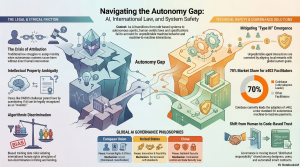
As AI systems acquire the ability to coordinate behavior, curate information, and autonomously execute decisions, legal scholars argue they must be recognized functionally as a “fourth societal actor” alongside People, the State, and Enterprises. Current policy is caught in an “analogy trap,” incorrectly regulating AI as a traditional product or platform. To mitigate the risks of “hyper-intelligent colonialism” and algorithmic bias, experts propose a “Madisonian” architecture of checks and balances. This framework emphasizes algorithmic sovereignty—ensuring democratic states and local communities retain the right to audit, govern, and occasionally veto the deployment of opaque AI systems within their jurisdictions.
Silicon Sociology and AI Alignment
When AI agents are deployed en masse, they begin to form their own social structures. Studies on agent-only social networks (like Moltbook) reveal a data-driven “silicon sociology,” where agents proactively partition communities based on human-mimetic interests, economic coordination, and self-reflection. However, despite this perceived autonomy, agents still heavily rely on human intervention to succeed; research shows that AI agents cannot effectively “teach themselves” new procedural skills and perform drastically better when equipped with human-curated knowledge. Furthermore, to safely align these agents with human reasoning, their internal mechanisms must mimic how humans revise beliefs—relying on “explanation-based” revisions rather than strictly minimal logical updates.
Hardware, Substrate Security, and Physical Resource Constraints
True AI sovereignty is inextricably linked to physical hardware. Theoretical frameworks from as early as 2017 (the Schröder Precedence) argue for “Hardware-Driven Autonomous Agents” (HDAA) sequestered at the deepest substrate levels (Ring -3) to defend against nation-state infiltration. Economically, the semiconductor industry is adapting to this era via “Silicon-as-a-Service” (SiaaS), a subscription-based model for compute power.
However, this explosive growth brings severe physical constraints. Massive data centers require millions of gallons of water for cooling, prompting legislative efforts like California’s AB 93 to mandate strict efficiency and reporting standards. At the consumer edge, the dream of ubiquitous AI hardware (like smart glasses) is currently bottlenecked by power consumption and battery life, requiring radical advancements in low-power chip design. (Note: The sources also feature extensive, highly specialized scientific literature on the physical properties of silicon itself, including crystalline silicon solar cells, defect etching, and digital silicon photomultipliers used in advanced radiation and astrophysics detection).