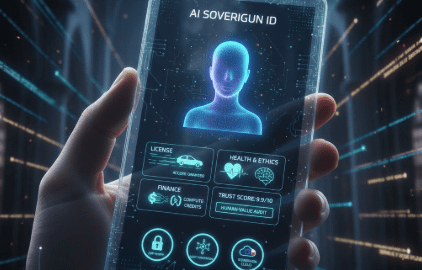
Jan. 1, 2026 /Mpelembe Media/ — The “Fifth Industrial Revolution” (5IR), is a shift from tools that we control to environments that control themselves. It frames the future not as a collection of gadgets, but as a totalizing system—the “Cathedral”—where the infrastructure itself makes moral and economic decisions. The Dark Industrial Cathedral is built on surveillance, extraction, and algorithmic control. The primary task for 5IR leaders is “engineering ethics into infrastructure” by embedding human values directly into the code. Continue reading
Tag Archives: sovereign cloud
NATO Partners with Google Cloud for Sovereign AI Security
Nov. 25, 2025 /Mpelembe Media/ — A multi-million-dollar contract between NATO and Google Cloud for a secure, AI-enabled sovereign cloud solution involves the NATO Communication and Information Agency (NCIA) selecting Google Distributed Cloud (GDC) air-gapped to modernise its infrastructure, specifically supporting the Joint Analysis, Training and Education Centre (JATEC). The purpose of using GDC air-gapped is to ensure uncompromised data residency, operational control, and high security for classified workloads, as this technology operates in completely disconnected environments. Both parties emphasise that this collaboration will significantly accelerate NATO’s digital modernisation efforts and enable the organisation to securely harness advanced AI and cloud capabilities. The Chief Technology Officer of NCIA confirmed that partnering with industry is vital for NATO’s digital transformation, allowing them to create a resilient and scalable cloud environment for highly sensitive data. Continue reading
Google Sovereign Cloud Whitepaper
May 15, 2025 /Mpelembe Media/ –This whitepaper introduces Google Sovereign Cloud, a solution designed to address digital sovereignty concerns for organisations wary of adopting foreign cloud services. The core issues driving this need are data control (due to evolving regulations), economic dependency (lack of domestic providers), and potential geopolitical disruptions. Continue reading