
The 20-Year Global Mobility Shift
Thu, July 23 2026 /Mpelembe Media/ — The 20-year retrospective analysis of global mobility reveals a profound geopolitical realignment, characterized by the expansion of average travel freedom alongside a starkly polarizing divide between the world’s most and least mobile populations.
1. The Widening Global Mobility Gap
Over the past two decades, global travel freedom has expanded dramatically; the average passport now grants visa-free or visa-on-arrival access to 108 destinations, nearly doubling the average of 58 destinations recorded when the index launched in 2006. However, this overall expansion masks a record-breaking chasm between the top and bottom of the scale. In 2026, Singapore retains undisputed status as the world’s most powerful passport, offering visa-free entry to 192 destinations. Meanwhile, Afghanistan languishes at the bottom with access to just 22 destinations. This 170-destination gap is the widest ever recorded by the Henley Passport Index, compared to a 118-destination difference in 2006.
2. The Rise of New Mobility Superpowers
The geography of international soft power has shifted decisively away from the West toward Asia and the Middle East.
- The United Arab Emirates (UAE) represents the most meteoric rise in the history of global mobility. In 2006, the UAE ranked 64th globally with access to only 35 destinations. By July 2026, driven by proactive, non-aligned diplomacy and reciprocal visa waivers, the UAE has climbed to joint 2nd place (alongside Japan and South Korea) with 188 destinations—a historic net gain of 153 destinations. Notably, Arton Capital’s real-time index crowns the UAE as No. 1 globally due to a broader methodology that incorporates a wider definition of visas-on-arrival and electronic travel authorizations (eTAs).
- Singapore, Japan, and South Korea have cemented their long-term dominance at the pinnacle of global travel. Singapore’s ascension from 8th place in 2006 to undisputed 1st reflects its massive diplomatic capital and strategic neutral positioning.
3. The Steady Decline of the Transatlantic Alliance
Traditional Western powers have steadily surrendered their relative dominance. In 2014, the United States and the United Kingdom jointly held the No. 1 spot. By July 2026, the UK has fallen to 6th place (184 destinations) and the US has dropped to 10th place (180 destinations, sharing the spot with Iceland). Both nations recently suffered some of their steepest single-year declines, with the UK losing access to 8 destinations and the US losing 7. This decline is driven by domestic political volatility, strained international relations, and “inward-looking” immigration postures. For instance, while Americans enjoy extensive outbound freedom, the US allows only 46 nationalities visa-free entry, ranking a low 78th on the Henley Openness Index. Brazil’s 2025 reinstatement of a reciprocal visa requirement for Americans further accelerated the US decline.
4. The Geopolitical Outliers: Decoupling Peace and Passport Power
While a current comparison reveals a strong correlation between national peacefulness and travel freedom (ρ = 0.65), a 20-year longitudinal analysis shows no statistically significant correlation between long-term changes in peace and passport power. Once a baseline of safety is established, travel freedom is determined by diplomatic capital, trade agreements, and geopolitical leverage.
- Positive Outliers: Several conflict-affected or politically volatile nations possess passports that far exceed their peace rankings. Israel (159th on the Global Peace Index, 18th on the Passport Index) and the United States (134th on GPI, 10th on HPI) enjoy exceptionally strong passports due to decades of accumulated diplomatic alliances and systemic economic reliance. Ukraine (160th on GPI, 31st on HPI) has maintained remarkable passport resilience and rapid integration with the EU despite ongoing war.
- Negative Outliers: Conversely, highly peaceful nations such as Bhutan (16th on GPI, 88th on HPI) and Vietnam (41st on GPI, 87th on HPI) underperform on global mobility due to protectionist or isolationist diplomatic policies.
5. Systemic Bias and Financial Extraction in the Global South
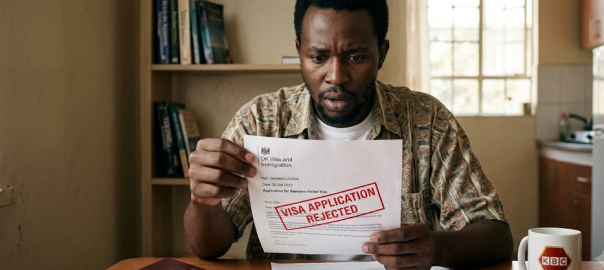
For citizens of the Global South—particularly Africa—domestic stability rarely translates into travel freedom. Instead, they face severe visa restrictions and escalating rejection rates.
- Schengen Visa Biases: Between 2015 and 2024, Schengen visa rejection rates for African applicants climbed from 18.6% to 26.6%. In 2022, African applicants faced a 30% rejection rate (one in three applications denied), which is ten times higher than the denial rate for US citizens.
- Top High-Rejection Nations: In 2023, Comoros led global rejections at a staggering 61.3%, followed by Guinea-Bissau (51%), Pakistan (49.6%), Ghana (47.5%), and Mali (46.1%). Even highly qualified elites are routinely rejected.
- The Overstay Pretext and Political Lever: European consulates officially cite “reasonable doubts about the intention to return”. However, researchers argue that visa rejections are actively weaponized as political leverage to pressure African nations into accepting returns of irregular migrants.
- An Economic Extraction Mechanism: Visas function as a highly lucrative revenue channel for wealthy states. In 2023, the EU generated EUR 56.3 million in non-refundable fees from rejected African applications. Combined, the UK and Schengen states collected €130 million from rejected applications in 2023, representing a direct transfer of wealth from low-income applicants to the border systems of the Global North.
6. The Rise of Investment Migration as Sovereign Risk Management
As borders harden and domestic politics fracture, Domicile Portfolio Management has evolved into a mainstream strategy for wealth preservation and personal security.
- The US Client Boom: US citizens have now become the largest client market globally for Residence and Citizenship by Investment (RCBI) programs, looking to secure a “Plan B” amid intense domestic political polarization.
- Global Leaders: Malta retains the top spot on the Global Citizenship Program Index for the 11th consecutive year due to its rigorous, compliance-driven citizenship by merit framework. Greece leads the Global Residence Program Index, with Italy, Switzerland, and the UAE tied for 2nd.
- Caribbean Versatility: Caribbean investment passports (led by St. Kitts and Nevis at ~155 destinations) offer access to within 40 destinations of top-tier hegemons, transforming mobility for citizens holding restricted Global South documents.
The Great Mobility Pivot: 5 Surprising Takeaways from the 20th Anniversary Passport Rankings
To hold a passport from Singapore is to carry a master key to the global commons; to hold one from Afghanistan is to possess a document that functions more as a tether than a tool of travel. As we mark the twentieth anniversary of the Henley Passport Index, the data exposes a jagged geography of privilege. What was once a simple travel document has evolved into a sophisticated “sovereign risk mitigation instrument”—a high-stakes reflection of a nation’s diplomatic capital and international trust.The chasm is widening. While global mobility has theoretically expanded over the last two decades, the gap between the “mobile elite” and the geopolitically isolated has reached a record high. Today, a Singaporean citizen can access 192 destinations visa-free, while an Afghan citizen is effectively grounded, reaching only 22. This 170-destination disparity is not merely a logistical inconvenience; it is a profound indicator of where power resides in a fragmenting world.
1. The Peace Paradox: Mobility as a Weaponized Diplomatic Tool
We are living through a striking intellectual paradox. According to the Global Peace Index, the world has become steadily less stable for 12 consecutive years, with state-based conflicts at their highest levels since 1945. Yet, in this same period, average visa-free access has nearly doubled, rising from 58 destinations in 2006 to 108 today.This suggests that travel freedom has been decoupled from domestic tranquility. Mobility is no longer a passive reward for a peaceful home life; it is an earned asset, forged through strategic, active diplomacy. As Dr. Christian H. Kaelin, chairman of Henley & Partners, observes:”The consolidation we’re seeing at the top underscores that access is earned—and must be maintained—through active and strategic diplomacy. Nations that proactively negotiate visa waivers and nurture reciprocal agreements continue to rise, while the opposite applies to those that are less engaged in such efforts.”
2. The Fall of the Atlantic Giants: Superpowers in Retrenchment
For much of the last decade, the United States and the United Kingdom were the undisputed titans of the index. In 2014, the US held the top spot; the UK followed suit in 2015. However, the 2026 rankings document a sobering erosion of their standing. The UK has slipped to 6th place, while the US has fallen to 10th—now on the precipice of exiting the top tier for the first time in history.The most stinging metric for American soft power is that the US is now tied with Iceland—a nation of 370,000 people. This decline is rooted in a “reciprocity deficit.” While Americans enjoy high outbound freedom (180 destinations), the US remains remarkably closed to the world, ranking a lowly 78th on the Openness Index. It permits only 46 nationalities visa-free entry. Contrast this with China, which has surged in openness to 75 nationalities. This inward-looking posture is driving a surge in “investment migration,” as wealthy Americans lead the global demand for alternative citizenship to hedge against their own passport’s declining leverage.
3. The UAE’s Meteoric Ascent: The Blueprint for Mobility Superpowers
If the West is in retreat, the United Arab Emirates is in a state of unprecedented expansion. The UAE is the standout riser of the twenty-year analysis, gaining 153 destinations—the largest gain in the index’s history.This was no accident of geography, but a masterclass in post-oil economic diversification. By positioning itself as a global crossroads for trade and tourism through a proactive program of reciprocal visa-waiver agreements, the UAE has transformed its booklet from a regional document into a global powerhouse. In 2006, an Emirati passport accessed only 35 destinations; today, it stands on the world’s podium at joint 2nd with 188 destinations.
4. The “Visa Jackpot”: The Extractive Economy of Rejection
While the “mobility elite” glide through biometric gates, the Global South faces a sophisticated gatekeeping apparatus. Data regarding African visa applications reveals what Professor Mehari Taddele Maru identifies as “conditional racial discrimination”—a system that is as much about extractive economics as it is about security.The figures are startling: one in three African applications (30%) is rejected, compared to a 17.5% global average. This system has become a lucrative revenue stream for the European Union, which generated EUR 56.3 million in 2023 alone from rejected African applications. These non-refundable fees mean that some of the world’s poorest populations are essentially subsidizing the border management of the wealthiest. As Prof. Maru notes:”This policy architecture… normalizes inequitable access to travel and undermines the credibility of the EU’s partnership narrative. It functions as a sophisticated gatekeeping apparatus that restricts access from the Global South—particularly Africa.”This isn’t just a matter of missed holidays; it represents missed boardrooms, silent lecture halls, and the systematic exclusion of African talent from global networks.
5. Geopolitical Outliers: When Diplomacy Defies the Odds
While internal stability generally predicts passport strength, several nations punch remarkably above their weight by leveraging strategic alliances and historical capital. Conversely, some peaceful nations remain isolated due to non-reciprocal diplomatic postures.| Country | Peace Rank | Passport Rank | Deviation | Geopolitical Context || —— | —— | —— | —— | —— || Israel | 159th | 18th | +70 | High historical/strategic capital || Ukraine | 160th | 31st | +58 | Rapid EU integration despite war || Bhutan | 16th | 88th | -65 | Peaceful but diplomatically isolationist || Vietnam | 41st | 87th | -52 | High internal peace, low reciprocity || Bolivia | N/A | 58th | N/A | The only nation to record a net access loss |
Notably, Bolivia stands as the only nation in the world to record an absolute net loss in visa-free access over the twenty-year period, highlighting the cost of diplomatic drift.
Conclusion: The New Multipolar Reality
The twentieth anniversary of the Henley Passport Index signals a definitive shift from a Western-led order to a multipolar mobility landscape. The rise of Asian and Middle Eastern “mobility superpowers” like Singapore and the UAE has rewritten the rules of soft power.In an era where your passport is a tool for managing sovereign risk, nationality has become a dynamic asset—or a looming liability. We are moving toward a world where your global access is no longer a static birthright, but a reflection of your state’s diplomatic agility. In a world where geopolitical capital is the new currency, one must ask: how much is your signature worth at a foreign border?