
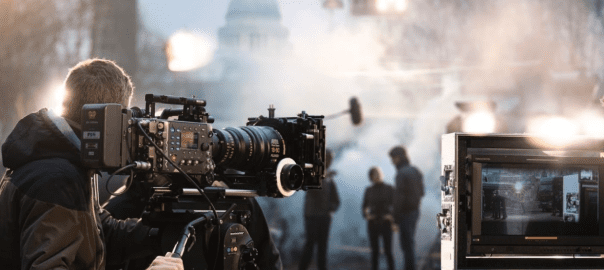
The AI Film Production Operating System
Automating Independent Cinema: How Real-Time Collaborative Operating Systems Compress Production Timelines by 50%
Sun Aug 30 2026 /Mpelembe Media/ —The emergence of digital filmmaking operating systems in 2026 represents a paradigm shift where traditional, fragmented production pipelines are replaced by a unified, AI-driven software stack. Rather than relying on expensive contractor day-rates and physical gear rentals, indie filmmakers utilize a centralized stack of twelve high-leverage software engines to execute everything from pre-visualization to post-production. This modern framework compresses mid-budget pre-production timelines from 16–20 weeks down to 8–11 weeks, drastically reducing administrative overhead and crew holding fees. In the NeoMovie software ecosystem, this transformation is driven by a specialized 12-tool software stack, consisting of Claude and ChatGPT for script analysis and brainstorming, Filmustage for screenplay breakdowns, Midjourney and Canva for anamorphic keyframe pre-visualization, Luma AI for smartphone-based 3D location scouting, Runway and Luma Dream Machine for b-roll generation, Suno and Udio for scoring, ElevenLabs for voice cloning, DaVinci Resolve for editing and rotoscoping, Topaz Video AI for 4K upscaling, Descript for text-based editing, and OpusClip for trailer marketing. By deploying these twelve software engines at a consolidated cost of $185 to $210 per month, an independent filmmaker can avoid more than $54,200 in traditional contractor costs across pre-production, filming, post-production, and marketing phases. On-set operations benefit enormously from this workflow efficiency, which has been shown to reduce average scene turnaround times from 3.5 days to just 1.1 days.
At the core of this automated environment is a real-time database spine that synchronizes creative and logistical data, ensuring that any modification made to a script, schedule, or budget propagates across the entire project file in under 300 milliseconds, eliminating version-control errors and manual data replication. This unified project architecture is managed by a virtual crew of specialized, parallel-running AI agents—including Marlowe for script breakdowns, Sable for financial forecasting, Cass for set operations and day-order optimization, Indra for casting, and Vee for script and continuity supervision—all coordinated under the conversational, natural-language control of DollyAI. This automated production office generates an executive scorecard by 6:00 AM each morning to monitor KPIs like schedule slippage, budget burn rates, crew reliability, and on-set safety incidents in real time. Planners use a predictive AI Overtime Predictor to evaluate today’s call sheets against yesterday’s actuals, flagging union turnaround violations and suggesting day-order optimizations to minimize set moves and keep shooting velocity high. If delays or active blockers are logged via on-set script supervisor diaries, the system dynamically calculates the logistical feasibility of pivoting to backup boneyard scenes to preserve resources.
To resolve the major filmmaking challenge of visual identity and stylistic drift across shots, the generative pipeline enforces strict asset containment before video rendering begins. This is achieved by locking high-resolution, multi-angle character sheets, uploading bulk reference frames to analyze style bibles, and implementing a unified creative treatment lock within persistent agent context. In 2026, director-led generative platforms like InVideo Agent transition the workflow from manual prompting to creative directing, utilizing specialized sub-agents to manage costumes and cinematography while routing shots to models like Recraft for casting portraits, Nano Banana 2 for character sheets, and Seedance 2.0 for reference-to-video scene continuity. This structured pipeline permits documented short films to wrap in 2 to 5 days on budgets of $315 to $750 per finished minute. Post-production audio pipelines use ElevenLabs to clone cast members’ voices and lip-sync dialogue changes, while Suno AI generates temp scores matching emotional metadata and visual pacing. Finally, raw generative video is upscaled using Topaz Video AI, followed by a finishing pass of color grading and simulated film grain to blend artifacts and establish organic, cinematic textures.
Creative script development and post-production audience sentiment analysis are enhanced by Natural Language Processing (NLP) pipelines that provide quantitative insights. In pre-production, specialized algorithms such as Callaia evaluate screenplays in under 30 seconds to extract character emotional curves, analyze pacing, and calculate a dialogue authenticity score. During post-production and test screenings, deep learning architectures such as CNNs and RNNs parse multilingual audience comments and social media reactions against massive benchmark review datasets to predict commercial viability. This entire creative lifecycle is monitored across four distinct handoffs—development, pre-production, shooting, and post-production—on an interactive visual Gantt chart. Gantt charts establish clear task dependencies, monitor pre-production milestone spines, and dynamically recalculate timelines to ensure on-time festival delivery. When picture wraps, the integrated database spine automatically assembles a complete Electronic Press Kit (EPK) of promotional stills and loglines alongside a secure, financier-ready wrap-package archive.
The Death of Development Hell: How AI-Driven “Crew Agents” are Turning Months into Seconds
1. Introduction: The Tipping Point of the Silver Screen
For decades, the film industry has treated “development hell” as an inescapable tax on the creative soul. Filmmakers today find themselves drowning in drafts, anchored by broken, disconnected “2022 workflows” that rely on manual synchronization across isolated data silos. In this legacy model, pre-production planning for a mid-budget project typically consumes 16 to 20 weeks.We have reached a definitive tipping point. The industry is transitioning from labor-intensive manual cycles to a synchronized AI-driven era. By moving from a “fragmented chain of documents” to a unified database spine, we are seeing pre-production compressed into an 8 to 11-week window. In this modern landscape, project-wide updates no longer take a week of meetings; they take 0.3 milliseconds.
2. Takeaway 1: From “Prompting” to “Directing” AI Agents
The most fundamental shift in modern filmmaking is the move away from isolated, trial-and-error “prompt engineering” toward directing a specialized “crew” of AI agents. Rather than treating AI as a chatbot, professionals are now deploying dedicated sub-agents with specific on-set roles: Marlowe (Script), Sable (Budget), Cass (1AD), and Vee (Continuity).This transition creates a massive advantage for veterans. Years of on-set experience—understanding shot logic, coverage, and blocking—transfer directly to these tools. You aren’t writing code; you are briefing a context-holding crew.”One agent that reads your treatment once and holds every directive across every shot, every scene. No re-prompting. No drift.”By using a single Creative Producer agent to ingest the screenplay, filmmakers ensure that the AI holds the vision. The skill of “directing” intent is now infinitely more valuable than the technicality of knowing which keywords a model prefers.
3. Takeaway 2: The End of “Identity Drift” via Character Sheets
A recurring failure in early AI video was “identity drift,” where characters shifted appearance between shots. Professionals have moved past complex LoRA fine-tuning in favor of “multi-angle reference grids”—front, side, profile, and back views—and the “Style-Lock Engine.”This engine maintains a consistent visual “hand”—whether clean line, greyscale tone, or full color—across an entire storyboard by “scoring” every generated frame against the original reference. If the engine detects the look is falling off-model, it automatically triggers a redraw. This allows for “surgical inpainting,” where only a specific region of a frame is corrected to match the locked character sheet. This solves the counter-intuitive problem where higher visual quality once led to lower consistency, enabling professional-grade continuity without technical overhead.
4. Takeaway 3: The 0.3-Millisecond Production Office
The “legacy stack” of filmmaking is a graveyard of subscriptions. Managing eight or more separate logins—Final Draft for writing, StudioBinder for scheduling, and Movie Magic for budgeting—means a single script change requires days of manual labor to update every department.Modern workflows replace this fragmentation with a “Cross-App Spine.” In an integrated suite like StoryboardCanvas, a modification to a scene’s location or character roster propagates through the breakdown, schedule, and budget in under 0.3ms.
| Feature | The Fragmented Legacy Stack (Final Draft, Movie Magic, StudioBinder) | The Synchronized AI Spine (StoryboardCanvas) |
|---|---|---|
| Efficiency | Weeks of manual breakdown and sync labor. | Script breakdown and data propagation in 0.3ms. |
| Version Control | 8+ logins; high risk of “isolated silos.” | Single source of truth; all apps update instantly. |
| Cost | Estimated £4,541 ($6,168) per year. | Estimated £288 ($391) per year. |
By eliminating this administrative friction, production teams reclaim 60–80% of their timeline, allowing the budget to be spent on what actually appears on-screen.
5. Takeaway 4: Script Analysis with Emotional Intelligence
Natural Language Processing (NLP) is replacing subjective script coverage with data-driven precision. Tools like Callaia can perform deep character analysis and emotional arc mapping in 15–30 seconds. For market viability, StoryFit delivers comprehensive audience prediction and genre classification in 45–60 seconds, boasting an 87% correlation with actual box office performance.These models evaluate “Dialogue Authenticity Scores” by assessing linguistic patterns and character voice consistency against successful film datasets.”AI has become the fastest co-writer in the room, transforming how scripts are analyzed, storyboards are generated, and audience fit is predicted.”
6. Takeaway 5: Real-Time Financial Orchestration and “Burn Rates”
For the modern strategist, financial visibility must be captured dynamically. AI-driven suites now provide an “8-tile morning scorecard” delivered by 6:00 AM, calculating the “Budget Exhaust Point”—the exact date spending is projected to cross the budget line.To maintain precision, the strategist monitors two critical formulas:
- Shooting Velocity ( $V_s$ ): $V_s = \frac{\sum p_i}{D_{spent}}$ (The volume of eighth-pages completed relative to production days).
- Budget Burn Rate ( $B_r$ ): $B_r = \frac{C_{actual} + C_{committed}}{T_{elapsed}}$ (The ledger of historical spend and committed vendor obligations over time).This system is bolstered by an AI Overtime Predictor that scores call sheets against “SAG-AFTRA turnaround rules” and “IATSE union overtime weightings.” By pulling from the previous day’s Daily Production Report (DPR), “Hot Costs” are calculated automatically, flagging schedule risks before they become fatal “production debt.”
7. Takeaway 6: The “Frankenstein Shot” and the Reality of Iteration
Professional AI filmmaking follows a “Maker-Checker” discipline. The AI acts as the “Maker,” producing coverage, while the human acts as the “Checker,” mining those generations for the best performance. A professional-grade shot is rarely the result of a single generation; it is often a “Frankenstein Shot”—a composite stitched from the strongest seconds of multiple takes.Documented productions average three generations per usable shot. In high-end work, over 40% of final shots are “Frankenstein” composites. Treating every generation as a “coverage pass” rather than a final result is the secret to a professional edge; a 15-second clip might only yield 5 seconds of cinematic gold, but those seconds are what sell the reality.
8. Conclusion: The Collaborative Future
The transition to AI-driven workflows does not signal the replacement of human creativity, but the arrival of a high-speed “execution layer.” The future of film lies in collaborative partnerships where a director leads a specialized crew of AI agents to handle the administrative and logistical heavy lifting. As these tools democratize the ability to produce studio-quality work on indie budgets, we must ask: Will this lead to a new “Golden Age” of independent cinema, or simply a faster version of the current industry? For the filmmaker ready to trade their spreadsheets for a camera, the answer is already appearing on the monitor.