
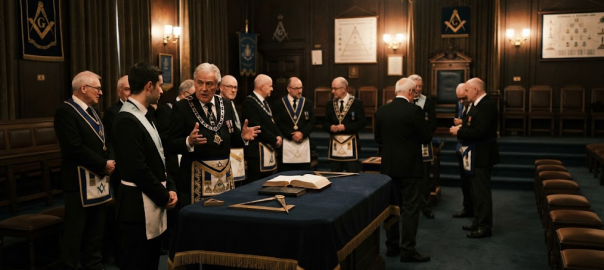
Jurisdictional Sovereignty and Institutional Governance in Freemasonry
Freemasonry operates through a supreme, decentralized network of autonomous regional governing bodies known as Grand Lodges, each holding sovereign administrative, legislative, and judicial jurisdiction over its constituent local lodges. Local lodges function under the constitutional mandates, statutory codes, and bylaws established by their overarching Grand Lodge, which define standards for ritual conduct, administrative reporting, officer duties, and internal discipline. Internal governance balances executive authority—exercised locally by the Worshipful Master and regionally by District Deputy Grand Masters and the Grand Master—with formal administrative and judicial mechanisms. This structural arrangement mandates that all Masonic proceedings strictly adhere to established organizational law and ancient landmarks.
Candidate Recruitment and the Spectrum of “2B1 ASK1” Policies
Traditional Masonic jurisprudence dictates that candidates must seek admission entirely of their own “free will and accord,” uninfluenced by improper solicitation, mercenary motives, or external pressure. This principle is historically summarized by the motto “2B1 ASK1” (“To Be One, Ask One”), which requires a prospective member to initiate contact by approaching an active Freemason. However, contemporary Grand Lodges exhibit significant jurisdictional divergence regarding member recruitment. Jurisdictions such as California and Missouri enforce strict non-solicitation codes that penalize members for proactively inviting non-members to petition. In contrast, bodies like the United Grand Lodge of England (UGLE) and the Grand Lodge of Minnesota allow a single, neutrally worded informational inquiry, while jurisdictions like Utah, Pennsylvania, Michigan, and Texas permit selective invitations provided no coercion or badgering occurs. When non-members experience unwanted recruitment pressure, executive lodge leadership or regional District Deputy Grand Masters possess executive authority to intervene, enforce decorum, or prefer charges of un-Masonic conduct against offending members.
Administrative Exit Mechanisms: Demits, Default Suspensions, and Voluntary Resignations
When initiated members choose to dissolve their membership, their standing within the fraternity depends on the specific administrative pathway utilized. The standard method for an honorable exit is applying for a demit (or certificate of withdrawal), which requires submitting a written notice of resignation while free of financial indebtedness and un-Masonic charges. A granted demit severs operational obligations while preserving the individual’s status as a Mason in good standing who has retired from active participation, allowing for future re-affiliation or transfer. Conversely, members who disengage passively by allowing their annual dues to lapse are subjected to administrative suspension for Non-Payment of Dues (NPD). An NPD suspension places the member as “not in good standing,” forfeiting fraternal privileges and requiring the payment of back-dues and formal lodge approval prior to reinstatement. In cases where a member wishes to exit amidst active disciplinary proceedings, standard demits are barred; however, specific protocols—such as executing a formal Voluntary Resignation (e.g., UGLE Form VR 1) and surrendering Grand Lodge credentials—immediately terminate Masonic status and extinguish internal disciplinary jurisdiction.
Civil Law Intersections, Due Process, and Judicial Review of Private Associations
Beyond internal fraternal rules, the legal relationship between members, Masonic lodges, and the civilian public is governed by private association law, non-profit statutory frameworks, and civil legal protections. Civil non-profit statutes establish an absolute legal right for members to resign from voluntary associations upon delivering written notice. Should recruitment friction or post-exit disputes cross into unlawful harassment or intimidation, fraternal status provides no legal immunity, and affected individuals can issue formal cease-and-desist letters or seek civil protective orders. When internal membership disputes over suspension or expulsion lead to civil litigation, courts adhere to the doctrine of exhaustion of internal remedies, according substantial deference to private association tribunals. Nevertheless, civil courts will intervene and invalidate internal disciplinary decisions if the organization fails to adhere to its own constitution, violates basic principles of natural justice and due process—such as providing notice of charges and a fair hearing—or acts in bad faith or with malice, particularly where substantial property, personal, or vocational rights are impaired.
Navigating an exit from a tight-knit fraternal or high-demand association often involves re-establishing personal boundaries and coping with temporary social isolation, anxiety, or a disruption in one’s social network. For individuals seeking support completely independent of lodge structures, several external avenues exist:
- Professional Secular Counseling and Mental Health Therapy: Engaging with licensed secular counselors or mental health professionals provides objective, confidential guidance. Professional therapy helps individuals process emotional distress, re-establish personal autonomy, manage anxiety, and navigate community or family tension stemming from disaffiliation.
- Independent Peer Communities and Ex-Member Networks: External, non-fraternal support groups, secular peer communities, and specialized online forums offer safe, non-judgmental environments. These platforms allow former members to share experiences, discuss the socio-psychological dynamics of leaving exclusive groups, and build new social connections without organizational pressure.
- Autonomous Personal Growth and Self-Directed Exploration: Studies show that former members experiencing disaffiliation often prefer to avoid immediately joining new structured organizations. Instead, many successfully reconstruct well-being and meaning through self-directed personal growth—such as attending educational lectures, participating in retreats, and exploring literature on psychology, philosophy, and mindfulness.
- Civil Legal Protections for Boundary Enforcement: If anxiety or distress is exacerbated by persistent, unwanted post-exit contact or organizational pressure, civilian legal protections are available. Because private voluntary associations enjoy no special legal immunity under civilian harassment statutes, issuing a formal cease-and-desist letter or seeking civil protective orders establishes clear legal boundaries and proves non-consent.
Part 1: Structured Checklist for Personal Boundary Transitions
- Formalize Your Exit in Writing: Ensure your resignation or request for withdrawal is clearly documented in writing to the appropriate secretary or organizational officer. Under civil non-profit standards and organizational bylaws, delivering written notice establishes a definitive legal date of departure and terminates institutional obligations.
- Establish Clear Communication Boundaries: Communicate directly and firmly that you have disengaged and do not wish to receive recruitment inquiries, follow-up calls, or retention visits. Under organizational codes, continuing persistent contact after an individual has declined or exited violates fraternal decorum and solicitation rules.
- Utilize Civilian Legal Protections if Pressure Persists: If post-exit contact crosses into unwanted pressure, harassment, or boundary violations, issuing a formal cease-and-desist letter establishes a clear, non-consensual paper trail. Private voluntary associations enjoy no special legal immunity from civilian harassment statutes, local civil protection orders, or trespass laws.
- Protect Your Emotional Space and Autonomy: Recognize that you are under no legal or moral obligation to explain or defend your decision to leave. Maintaining firm boundaries helps prevent internal guilt or pressure from hindering your transition.
Part 2: Strategies for Rebuilding Independent Social Networks
- Acknowledge and Normalize the Social Rupture: Research on group disaffiliation shows that leaving a tight-knit voluntary association frequently results in a sudden loss or narrowing of existing social ties, which can temporarily increase feelings of isolation or anxiety. Recognizing that this social rupture is a common structural byproduct of leaving—rather than a personal failure—helps reduce self-blame.
- Focus on Autonomous, Self-Directed Growth: Studies indicate that former members often experience anxiety or hesitancy (“group resistance”) when considering joining new structured organizations due to past constraints on their personal autonomy. Engaging in self-directed activities—such as independent study, attending public lectures, participating in retreats, or exploring literature on psychology and philosophy—allows you to pursue personal development at your own pace without organizational pressure.
- Build Low-Pressure, Interest-Based Connections: Rather than seeking an immediate direct replacement for a high-demand fraternal structure, gradually re-establish social ties through informal, interest-based civic or recreational groups. Focus on developing individual friendships grounded in shared personal hobbies rather than formal institutional loyalties.
- Engage Professional Secular Counseling: Working with a licensed secular counselor or mental health professional offers confidential, objective support for navigating community tension, processing emotional distress, and rebuilding confidence in personal autonomy after disaffiliation.
Inside the World of Exclusive Societies: 5 Surprising Truths About How Private Clubs and Freemasonry Actually Work
1. Introduction: The Enigma of the Exclusive Club
In an era defined by digital hyper-connectivity, radical transparency, and public self-exposure, private membership spaces are experiencing a remarkable cultural renaissance. From ultra-exclusive urban sanctuaries like Soho House and Annabel’s to historic golf associations and centuries-old fraternal orders, the human desire to retreat into curated, closed communities remains undiminished. Modern observers often view these spaces through a lens of mystique, assuming their longevity relies on shrouded secrets, political intrigue, or modern commercial exclusivity. The reality, however, is far more subtle and structurally counter-intuitive.
Freemasonry stands as the world’s oldest fraternal organization, with documented historical roots tracing back to operational stonemason manuscripts such as the Regis Poem of 1390. Yet the organizational, legal, and operational frameworks that govern Masonic lodges continue to offer a profound blueprint for contemporary private members’ clubs. Rather than adapting to contemporary trends of open recruitment and fluid boundaries, these private societies operate on timeless, highly regulated governance structures designed to preserve institutional stability, enforce civility, and protect the sanctuary of private association.
By examining the organizational mechanics of historic fraternities alongside modern private membership venues, a distinct architecture of private governance emerges. Here are five surprising takeaways detailing how these exclusive institutions handle recruitment, enforce internal neutrality, and navigate the boundary between private autonomy and public law.
2. Takeaway 1: You Can Never Be Recruited—You Have to Ask (“2B1 ASK1”)
In today’s consumer-driven culture, commercial enterprises and private networks rely heavily on targeted marketing, membership drives, elite sponsorships, and aggressive recruitment funnels to convert interest into revenue. Commercial exclusivity sells access. Traditional fraternal orders, however, operate on a diametrically opposed philosophy. Despite experiencing a secular decline in overall numbers across modern decades, Freemasonry strictly forbids its members from soliciting, recruiting, or pressuring non-members to join.
This anti-solicitation model is captured in the fraternal motto “2B1 ASK1” (“To Be One, Ask One”). Where commercial clubs market themselves to prospective patrons, fraternal anti-solicitation demands unprompted personal seeker-ship. The underlying institutional logic dictates that because membership requires an absolute, permanent commitment to live by specific moral obligations, an individual must seek entry entirely of his own “free will and accord,” unfettered by commercial pressure, undue solicitation, or expectations of secular financial gain. A Mason is permitted to speak openly about what Freemasonry does and why he values it, but the initial request for a petition must originate wholly from the candidate.
“For hundreds of years, Masons have been traditionally obligated not to ask others to join the fraternity… Joining Masonry is making a permanent life commitment to live in certain ways… No one should be ‘talked into’ making such a decision.”
Once a candidate independently initiates contact and submits a formal petition, a meticulous vetting process begins. The Master of the lodge appoints an investigating committee to visit the applicant and his family, evaluate his character, answer questions, and report back to the lodge prior to a secret ballot. If accepted, the candidate must systematically progress through three distinct symbolic degrees—Entered Apprentice, Fellow Craft, and Master Mason—a arduous journey requiring personal dedication, study, and moral reflection before attaining full membership rights.
3. Takeaway 2: The Sanctuary of Neutrality (Strict Bans on Politics and Religion)
In an increasingly polarized cultural landscape where public and corporate spaces frequently turn into battlegrounds for ideological conflict, traditional fraternal governance enforces an absolute prohibition on divisive speech. Under the Constitutions of the United Grand Lodge of England (UGLE)—the governing body of the Craft—all discussions regarding political or theological matters are strictly banned inside the lodge room.
This strict governance rule transforms the lodge into a sanctuary of social neutrality. By stripping away the primary catalysts of civil discord, the fraternity creates an environment where men of wildly divergent political convictions, religious creeds, and social standings can gather in genuine fellowship. Removing ideological debates has allowed the fraternity to preserve its institutional continuity across centuries of political upheaval, international conflict, and social realignments.
“While English Freemasonry thus inculcates in each of its members the duties of loyalty and citizenship, it reserves to the individual the right to hold his own opinion with regard to public affairs. But neither in any Lodge, nor at any time in his capacity as a Freemason, is he permitted to discuss or to advance his views on theological or political questions.”
This institutional aloofness was formally underscored in Aims and Relationships of the Craft , a joint declaration issued by the Grand Lodges of England, Ireland, and Scotland. Under these principles, the fraternity refuses to express opinions on domestic or foreign state policy, nor will it align itself with political movements or international associations that comment on rival theories of government. Fraternal leaders recognized that if the institution ever took a political or theological stance—no matter how humanitarian it appeared—it would inevitably sow seeds of internal discord, trigger factionalism, and lead to institutional disintegration.
4. Takeaway 3: Judges Reluctantly Intervene (Courts Hate Sitting on Social Expulsions)
Modern private members’ clubs—ranging from corporate social spaces like Soho House, Annabel’s, and The Groucho Club to historic golf associations—rely on strict internal rules to protect their brand, environment, and member privacy. Banning photography, enforcing dress codes, prohibiting social media exposure, and penalizing conduct deemed detrimental to the club are common mechanisms used to curate atmosphere. When a member breaches these behavioral boundaries, governing committees hold sweeping power to suspend or terminate membership.
When expelled members challenge these decisions in civil court, they run into a formidable legal doctrine: judicial non-intervention. Courts have long maintained a deep reluctance to review internal social discipline, viewing club expulsions as matters of subjective opinion and private governance rather than contract disputes suited for judicial resolution.
“The rules of a social club usually empower the committee to expel a member who, in their opinion, has been guilty of conduct detrimental to the club, and this is a matter of opinion and nothing else. The courts have no wish to sit on appeal from their decisions on such a matter any more than from the decisions of a family conference.”
This principle was reaffirmed in Mok v Fitzmaurice House Ltd t/a the Lansdowne Club 2024 , where the High Court upheld a private club’s decision to expel a member after the club followed its internal disciplinary framework. However, a critical legal distinction dictates when courts will step in:
- Proprietary Clubs: In commercially owned private venues (such as the Lansdowne Club, Soho House, or Annabel’s), assets and ownership belong to a commercial proprietor. Expelled members hold no underlying ownership stake in the venue’s property. Consequently, even if a breach occurs, courts will rarely order reinstatement—preferring monetary damages to avoid legally forcing hostile private parties back together.
- Unincorporated Associations: In traditional member-owned clubs (such as Sunningdale Golf Club), members hold a joint beneficial interest in the club’s collective assets or equity. Thus, as demonstrated in Cawood v Sedgwick and others (Sunningdale Golf Club) 2019 , when an unincorporated club fails to follow its own written rules or basic procedural fairness, the courts will step in to protect the member’s underlying proprietary interest and order full legal reinstatement.
5. Takeaway 4: The Unyielding Baseline Qualifications
Although private membership societies bring together individuals across broad socioeconomic spectra—counting Kings, Presidents, Corporate CEOs, and next-door neighbors among their ranks—entry into traditional fraternities is guarded by unyielding, non-negotiable baseline requirements. Acceptance is not dictated by financial wealth or social stardom, but by core moral and philosophical prerequisites established in Masonic constitutions:
- Age & Gender: Candidates must be male, at least 18 years of age (and no longer in full-time secondary education or training), and satisfy the historic foundational requirement of being a “free man” (UGLE Rule 157 and Candidate Declaration Rule 162).
- Spiritual Belief: An essential, non-negotiable belief in a Supreme Being / God, upon whose Volume of the Sacred Law the candidate takes his binding obligations.
- Character: High moral standing, reputable character, and a sound reputation in civil society, verified by three existing members willing to vouch for the candidate.
- Motive: Complete freedom from mercenary motives, financial expectations, or personal profit, paired with a genuine desire to serve the community and acquire knowledge.
These rigid baseline requirements exist because the fraternity’s entire educational framework operates on moral allegory. Without a foundational commitment to personal character and a belief in a Supreme Being to impart sanctity to moral pledges, the structural symbolism of the institution becomes functionally valueless.
6. Takeaway 5: “Natural Justice” Protects Members Even in Secret Spaces
Despite enjoying broad autonomy in managing their internal affairs, private social clubs and historic fraternities do not operate entirely outside public law. When a governing board moves to discipline, suspend, or expel a member, it remains bound by the common law principles of “Natural Justice” and procedural fairness.
To satisfy the requirements of Natural Justice, a club must ensure that an accused member is given clear, formal notice of the specific charges against them, granted a fair opportunity to present a defense, and judged by an unbiased committee acting in good faith according to written procedures. Overly vague, arbitrary, or broad termination clauses in membership contracts can also be struck down as unfair terms under statutory instruments such as the Consumer Rights Act 2015.
Furthermore, private membership spaces remain subject to public anti-discrimination statutes, such as the Equality Act 2010. While statutory exemptions explicitly allow single-sex clubs and fraternities to restrict membership by gender, private organizations are strictly prohibited from discriminating against prospective or existing members based on other legally protected characteristics, including age, race, or disability.
7. Conclusion: The Lasting Power of Regulated Connection
The enduring appeal of historic fraternal orders and modern private members’ clubs lies in their capacity to offer something increasingly scarce in contemporary society: structured, predictable, and rule-bound human connection. In periods marked by cultural flux and institutional distrust, individuals naturally seek out intentional spaces that operate on absolute structural clarity, clear ethical boundaries, and shared expectations of decorum.
By balancing strict internal discipline with legal standards of procedural fairness, these organizations prove that enduring exclusivity is less about elitist secrecy and far more about preserving institutional integrity. Ultimately, the modern resurgence of private clubs highlights a deeply entrenched reality of human sociology: “the British are obsessed with socialising in a very regulated way.”
In an era where public life grows increasingly unvetted, volatile, and polarized, could the strict governance and quiet discipline of the private sanctuary be the ultimate refuge for modern civil society?