Tag Archives: Data science

29Jan/26

Mpelembe Insights AI Article Analyzer: Intelligence for Web Content

Jan. 29, 2026 /Mpelembe Media/ — The Mpelembe Insights AI Article Analyzer is a specialized digital utility designed to process and interpret online information efficiently. This platform allows users to input various web-based stories or internal Mpelembe Network news to receive immediate automated summaries. Beyond simple condensation, the tool evaluates the emotional tone of a piece by providing sentiment scores to the reader. It further assists in information retention by highlighting essential takeaways and core concepts from the text. This resource functions as a streamlined analytical hub for individuals looking to grasp the significance of complex articles quickly. By transforming lengthy content into concise data points, it serves as a modern solution for rapid media consumption and comprehension. Continue reading

29Jan/26

Sovereignty, AI, and the Struggle for Control in Modern Enterprise Networks

Jan. 29, 2026 /Mpelembe Media/ — This research by Arelion highlights that a vast majority of enterprise leaders experience significant anxiety over protecting sensitive information across complex third-party networks. Organizations face mounting hurdles involving encryption management, artificial intelligence risks, and the intricacies of data sovereignty. Ultimately, these sources emphasize that while security investments are increasing, many businesses still struggle to maintain regulatory compliance and total visibility over their digital infrastructure. Continue reading

26Jan/26

The “Locked In” Era: Why Silicon Valley Founders are Trading Intimacy for Innovation

Jan. 26, 2026 /Mpelembe Media/ — There is a growing cultural trend where young tech entrepreneurs are intentionally choosing celibacy to maximize their professional output. By adopting a monastic lifestyle, these founders prioritize product development and company growth over romantic relationships or dating. Being “locked in” to their work requires removing the distractions of personal intimacy to remain competitive in Silicon Valley. Ultimately, this movement reflects a radical shift in work-life balance where emotional fulfillment is sacrificed for technological innovation. Continue reading

24Jan/26

Proactive Protection: Leveraging AI to Combat Synthetic Identity Fraud

Jan. 24, 2026 /Mpelembe Media/ —  Equifax has launched a sophisticated fraud detection tool designed to combat the rising threat of synthetic identity theft, which involves merging real and fake data to deceive lenders. By utilizing artificial intelligence and machine learning, this new system identifies complex patterns and behavioral cues that traditional security measures often overlook. The technology aims to provide real-time risk assessment during account creation and ongoing portfolio monitoring to prevent substantial financial losses. These efforts are part of a broader shift toward proactive security in the financial sector, helping institutions build trust while mitigating the costs associated with fabricated credentials. Related news highlights also emphasize the increasing role of advanced automation and global technological trends in modern business environments. Continue reading

08Jan/26

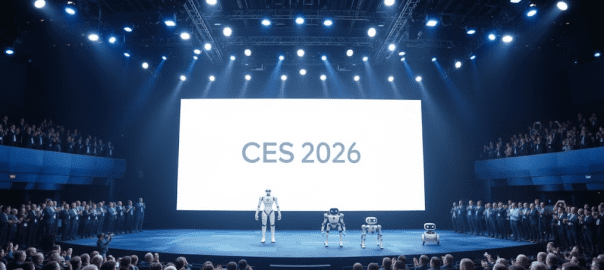
CES 2026: From Silicon to Soul — The Dawn of Physical AI and Robotic Companions Redefines the Future of Tech

January 8, 2026 /Mpelembe Media/ – The 2026 Consumer Electronics Show (CES) concluded as a landmark event, signaling a pivotal shift from AI as a mere feature to AI as fundamental infrastructure. This year’s show was dominated by the emergence of “Physical AI,” where generative intelligence transcends digital screens, manifesting in advanced humanoids, smart materials, and a new generation of immersive displays. Continue reading

31Dec/25

Beyond Automation: AI as the Operating System of Human Civilisation

Dec. 31, 2025 /Mpelembe Media/ — As of 2025, the global economy is projected to reach approximately $115 trillion, even as it faces a staggering $338 trillion in total debt. Within this landscape, artificial intelligence has emerged as the foundational infrastructure of a Fifth Industrial Revolution, with the AI economy expected to contribute over $15.7 trillion to global GDP by 2030. This technological shift is characterized by the rise of AI sovereignty, where control over data and models defines geopolitical power. While automation and AI agents enhance productivity and business valuations, they also present significant risks regarding cybersecurity and the potential erosion of human identity. Ultimately, society faces a critical choice between using these tools to foster human dignity or allowing them to create a future defined by algorithmic surveillance and control. Continue reading

30Dec/25

The AI Displacement Dilemma: Nearly Half of Workplace Skills Face Obsolescence by 2025

Dec. 29, 2025 /Mpelembe Media/ — This edX and Workplace Intelligence report examines how artificial intelligence is fundamentally transforming the modern professional landscape. The findings reveal a significant skill gap, as executives anticipate that nearly half of current workforce capabilities will be obsolete by 2025. While leadership believes many roles—including executive positions—could be automated, entry-level staff are particularly vulnerable to displacement. Despite a strong desire among staff to gain AI proficiency, many organisations currently lack the robust training and development frameworks necessary to support this transition. Ultimately, the research suggests that companies must prioritise internal upskilling to retain talent and remain competitive in an increasingly automated economy. Continue reading

28Dec/25

AI Has Altered Entry-Level Technology Hiring

Dec. 25, 2025 /Mpelembe Media/ — Recent graduates from Stanford’s computer science programme are finding it increasingly difficult to secure employment as artificial intelligence transforms the tech industry. Research indicates a significant reduction in entry-level hiring, as companies now prefer using automated tools alongside a small number of experienced developers instead of larger teams of junior staff. This shift has led many students to extend their education in hopes of gaining a competitive edge while waiting for a more favourable market. Beyond workforce displacement, the rise of AI presents environmental challenges due to the immense electricity and water required to power massive data centres. To adapt, experts suggest that universities update their curricula and students focus on complex system design and oversight skills that automation cannot yet replicate. Industry advocates also call for government intervention through retraining programmes to support workers affected by these rapid technological changes. Continue reading

18Dec/25

AI’s Future in Filmmaking: Creativity and Ethics

Artificial intelligence (AI) is transforming global filmmaking by redefining creative roles, accelerating technological adoption, and introducing complex ethical challenges, as debated by industry leaders at the Short Shorts Film Festival & Asia (SSFF & ASIA) international conference. The conference explored how artificial intelligence is changing cinema, noting a significant increase in AI-related film submissions to the festival between 2024 and 2025. Key discussions centred on viewing AI as a creative partner rather than just a technical tool, addressing concerns about ethics and copyright, and sharing an overall optimistic outlook that AI will expand human creativity in filmmaking.  Continue reading

03Dec/25

Google is relying on its own chips for its AI system Gemini. Here’s why that’s a seismic change for the industry

Alaa Mohasseb, University of Portsmouth

For many years, the US company Nvidia shaped the foundations of modern artificial intelligence. Its graphics processing units (GPUs) are a specialised type of computer chip originally designed to handle the processing demands of graphics and animation. But they’re also great for the repetitive calculations required by AI systems.

Continue reading