Tag Archives: Electric vehicle

31Oct/25

France’s Wireless Charging Highway Revolutionizes Electric Mobility

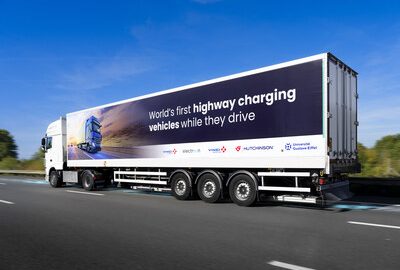
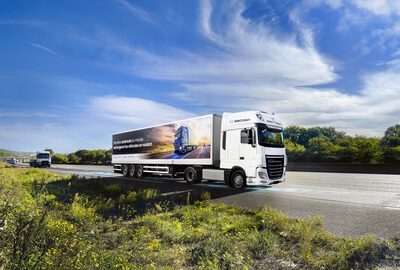
Electreon reaches a significant milestone in electric vehicle technology, announcing the successful launch of the world’s first highway stretch that wirelessly charges vehicles in motion near Paris, France. This achievement, part of the “Charge As You Drive” project led by VINCI Autoroutes, confirms that Electreon’s technology can provide dynamic charging at highway speeds for various vehicles, including heavy-duty trucks. Independent testing verified the system’s high-power transfer capabilities, proving it can provide twice the power needed for a fully loaded truck, positioning this as a scalable model to support France’s Electric Road System roadmap for decarbonising freight and logistics. Continue reading

26Oct/25

Dynamic Wireless Charging Motorway Results

A consortium, including VINCI Autoroutes and Electreon, is testing an induction charging system that allows various electric vehicles, including heavy-duty trucks, to recharge directly while driving under real traffic conditions. Tests have confirmed the system can safely deliver high power, validating the potential for this Electric Road System (ERS) to significantly accelerate the decarbonisation of road freight by reducing battery size, costs, and reliance on raw materials. Continue reading

17Apr/24

UK the Most Suited Market in Europe for Electric Vehicles Despite Current Pessimism, New Geotab® Report Finds

Geotab Inc. (“Geotab”), a global market leader in connected transportation solutions, has found that two-thirds of vehicles (cars and vans) operated by private and public sector organisations in the UK are ready to go electric — contrary to increasing industry and media pessimism around electric vehicle (EV) adoption. Continue reading

02Oct/23

FORTUNE Announces the 2023 ‘Change the World’ List

FORTUNE’s 2023 Change the World list is being led this year by a group of companies that are leading the EV revolution – converting cars and trucks from internal combustion to electricity – in one of the world’s most important net-zero missions. The four companies leading the push to convert the world’s most car-happy nation to electric vehicles, all in the spot are: Tesla, General Motors, South Korea’s SK On which develops batteries for EV cars, and ChargePoint, operators of a network of 240,000 charging locations across the U.S.. Continue reading

01Sep/23

HYZON MOTORS SUCCESSFULLY COMPLETES FIRST CUSTOMER DEMO OF LIQUID HYDROGEN FUEL CELL ELECTRIC TRUCK

Hyzon Motors Inc. (Hyzon) (NASDAQ: HYZN), a high-power hydrogen fuel cell technology developer and global supplier of zero-emission heavy-duty fuel cell electric vehicles, Performance Food Group, Inc. (PFG) (NYSE: PFGC), one of the largest food and foodservice distribution companies in North America, and Chart Industries, Inc. (Chart) (NYSE: GTLS), a leading global manufacturer of highly engineered equipment servicing multiple applications in the clean energy and industrial gas market, today announced successful completion of Hyzon’s first commercial run with a liquid hydrogen fuel cell electric vehicle (LH2 FCEV). Continue reading

28Oct/22

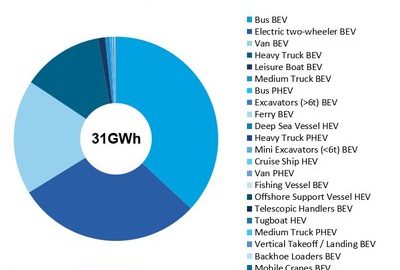
30 Giga-Watt Hours of Electric Vehicle Markets Beyond Cars, Reports IDTechEx

Electric vehicle markets are growing globally – in total IDTechEx’s latest master electric vehicle report “Electric Vehicles: Land, Sea & Air 2022-2042” finds 35.7 million electric vehicles (EV) were sold in 2021 and predicts this will rise to over 74 million by 2030. Continue reading

27Jun/22

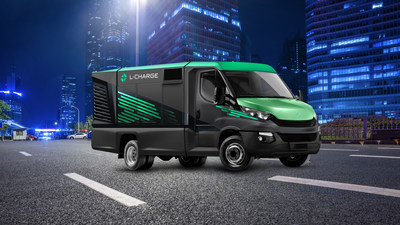
L-Charge plans to accelerate the deployment of EV Charging Infrastructure in Europe

While Norway, the Netherlands and Germany are leading the race on electrification and infrastructure provision with a planned ratio of 3 EVs per public charge point, many European countries are lagging behind. In contrast, there are currently 22 EVs per public charge point in Ireland, and 27.2 EVs per public charge point in the UK. Increasing the number of grid-tied chargers is often a difficult, lengthy and cost onerous process because of grid constraints and aging infrastructure. Continue reading