

Tag Archives: Neural network

18Feb/26

The Fluid Future: A Learner’s Guide to Adaptive and Liquid AI Architectures

The Fluid Future: A Learner’s Guide to Adaptive and Liquid AI Architectures

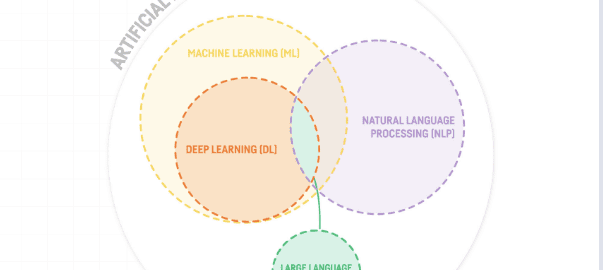
Feb 17, 2026 /Mpelembe media/ — By 2026, the artificial intelligence landscape is undergoing a fundamental paradigm shift from static, monolithic models (which are “smart but stuck”) to Continuous Intelligence systems that learn adaptively in real-time. This transition is driven by the need to mitigate the high cost of retraining, prevent “model drift,” and enable AI to function in dynamic environments like edge computing and healthcare.
However, this shift requires a complete reinvention of AI architecture—moving away from Transformers toward Liquid Foundation Models (LFMs) and Neuromorphic Computing—and introduces severe new security risks, particularly data poisoning, where adversarial inputs can corrupt continuously learning systems over time
Continue reading

20Apr/23

What Large Language Models (or LLMs) are, how they are developed, and how they work.

April 19, 2023 /Technology/ — A large language model (LLM) is a type of artificial intelligence (AI) that is trained on a massive amount of text data. This data can be anything from books and articles to social media posts and code. LLMs are able to learn the statistical relationships between words and phrases, which allows them to generate text, translate languages, write different kinds of creative content, and answer your questions in an informative way. LLMs can be used for a variety of tasks, including: Continue reading

03Apr/23

AI will soon become impossible for humans to comprehend – the story of neural networks tells us why

David Beer, University of York

In 1956, during a year-long trip to London and in his early 20s, the mathematician and theoretical biologist Jack D. Cowan visited Wilfred Taylor and his strange new “learning machine”. On his arrival he was baffled by the “huge bank of apparatus” that confronted him. Cowan could only stand by and watch “the machine doing its thing”. The thing it appeared to be doing was performing an “associative memory scheme” – it seemed to be able to learn how to find connections and retrieve data.

Continue reading