
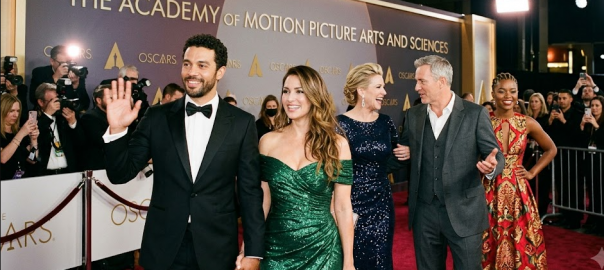
The Architecture of Cinematic Stewardship: A Governance Analysis of the Academy
Thu, July 30 2026 /Mpelembe Media/ — The Academy of Motion Picture Arts and Sciences functions as the world’s premier professional honorary organization dedicated to the advancement and celebration of filmmaking. Far beyond a simple voting body for the annual Oscars, the Academy relies on a complex, carefully calibrated governance structure to manage a global membership of over 11,000 film industry professionals. Following sweeping bylaws amendments in early 2026, this structure has been modernized to prioritize representation equity and leadership continuity, ensuring the institution is equipped to navigate the shifting landscapes of global entertainment.
The Board of Governors At the core of the Academy’s legislative framework is the Board of Governors, which serves as the primary oversight and strategic decision-making authority for the organization. The Board is responsible for corporate management, approving the annual budget presented by the CEO, and establishing overarching policies concerning governance, membership, and awards. Currently composed of 61 members, the board preserves the institution’s financial health and ensures the fulfillment of its core cultural mission.
Analyzed structurally, the Board of Governors acts as the ultimate legislative anchor of the Academy. By concentrating executive decision-making within a democratically elected group of industry veterans, this body is specifically designed to prevent any single studio coalition, corporate interest group, or specific creative craft from dominating the organization’s strategic agenda.
The Craft Branches and Branch-Elected Governors To build the Board of Governors, the Academy membership is divided into 19 distinct branches, representing specialized crafts ranging from Actors and Directors to Visual Effects and Casting Directors. Under the historic 2026 structural reforms, each of these 19 branches is guaranteed exactly three branch-elected governors, rectifying past imbalances where specialized technical fields were underrepresented. Governors typically serve up to two consecutive three-year terms before a mandatory hiatus is enforced.
The analysis of this branch-based structure reveals a profound institutional commitment to creative equity. By granting technical disciplines, such as Animation and Production and Technology, the exact same voting power as the historically dominant Actors and Producers branches, the Academy’s legislative decisions accurately mirror the collaborative, multi-disciplinary reality of modern global cinema.
Governors-at-Large Complementing the branch-elected representatives are three Governors-at-Large, who are nominated by the Academy President and elected by the board. Currently serving in these roles are Haifaa al-Mansour, Effie T. Brown, and Annie Chang.
In analyzing this role, the Governor-at-Large position functions as a vital strategic mechanism. It allows executive leadership to proactively inject diverse, international perspectives and highly specific industry expertise into the boardroom that might not organically emerge from standard branch election cycles.
The President Presiding over the Board of Governors is the Academy President, a role currently held by veteran producer Lynette Howell Taylor. The President serves as the public face and chief executive representative of the board. Crucially, a 2026 bylaws amendment decoupled the presidential tenure from regular branch term limits, allowing the sitting president to serve as an ex officio governor for up to four consecutive one-year terms.
The analysis of the presidential role under these new rules highlights a strategic shift toward administrative stability. The ex officio provision ensures that highly effective leaders are not forced out of office prematurely due to arbitrary branch term limits, securing steady leadership during periods of industry volatility and crucial institutional milestones, such as the upcoming 2027 centennial.
Officers of the Board Alongside the President, the Board elects several Officers annually, including Vice Presidents, a Secretary, and a Treasurer, who are limited to a maximum of four consecutive years in any one office. These officers chair critical internal groups, such as the Membership, Awards, Finance, Equity and Inclusion, and Governance committees.
An analysis of the Officer roles demonstrates a highly structured delegation of power. By distributing high-level administrative tasks among trusted board members, the Academy creates a reliable succession plan and ensures that complex operational areas are managed by dedicated industry experts with direct craft experience.
The Chief Executive Officer (CEO) While the Board sets the vision, the execution falls to the Chief Executive Officer, a position currently held by Bill Kramer. The CEO oversees a staff of more than 700 employees across Los Angeles, New York, and London, directing the day-to-day business of the Academy. This includes the expansion of global membership, the administration of the Oscars broadcast, and revenue diversification campaigns like Academy100.
The analysis of the CEO role reveals it as the essential operational bridge of the institution. The CEO translates the Board’s high-level creative and strategic policies into daily, logistical reality, aligning all arms of the organization to foster a unified institutional purpose while navigating the massive logistical apparatus of the global film industry.
The Academy Foundation Finally, the Academy Foundation oversees all educational, cultural, and preservation activities, including the Academy Museum of Motion Pictures, the Margaret Herrick Library, and the Academy Film Archive. It is governed by a separate board of 12 trustees—currently presided over by casting director Kim Taylor-Coleman—who must also be acting members of the Academy Board of Governors.
Analyzed functionally, the Foundation Board acts as the guardian of cinematic heritage. This specific leadership structure ensures the preservation of global film history, cementing the Academy’s role as a permanent educational and cultural institution rather than merely an awards-dispensing body.
More Than a Golden Statue: 5 Surprising Realities Behind the Academy’s New Leadership
Every spring, the global gaze gravitates toward a few hours of meticulously curated glamour: the high-wattage red carpet, the couture silhouettes, and the distribution of the industry’s most coveted intellectual property—the Oscar. Yet, for the average cinephile, the “engine room” of this spectacle remains an abstraction. The Academy of Motion Picture Arts and Sciences (AMPAS) is frequently dismissed as a mere host for an annual gala, rather than a 99-year-old institution with a byzantine governing infrastructure that dictates the very mechanics of Hollywood.Our collective preoccupation with nominees often obscures the bureaucratic architects who calibrate the industry’s standards. As the Academy initiates its 2026–2027 term, it is navigating an operational pivot from an elite, silent-era club to a global, digital-first authority. Understanding how this institution is reinventing itself requires looking past the statuette and into the boardroom, where a fundamental demographic and strategic recalibration is currently underway.
The “Company Union” Genesis
The Academy’s contemporary prestige as a global honorary body belies its counter-intuitive and utilitarian origins. Founded in May 1927, the organization was the brainchild of MGM titan Louis B. Mayer, whose primary objective was industrial stability rather than artistic celebration. Mayer intended to establish what was essentially a “company union”—a closed-loop elite body designed to mediate labor disputes and sanitize the industry’s public image without the interference of outside guilds.This institutional pedigree was almost derailed during the Great Depression. The Academy suffered a catastrophic loss of credibility among its rank-and-file members when it aligned with major studios to advocate for voluntary wage reductions. This betrayal of the labor force forced the organization to distance itself from management negotiations, eventually evolving into the honorary and archival steward we recognize today.”The initial concerns of the group had to do with labor.”
Governance by Production: The Howell Taylor Pivot
The election of Lynette Howell Taylor as the 39th President signals a strategic shift toward “hands-on” leadership. Howell Taylor, a veteran producer with more than 25 credits including the critically acclaimed A Star Is Born , represents a departure from the ceremonial figureheads of the past. Her appointment is a calculated response to recent institutional friction, specifically the controversies surrounding the 94th Oscars telecast where category cuts led to high-profile resignations from craft legends like sound engineer Tom Fleischman.By elevating a leader who produced the 92nd Oscars ceremony, the Academy is prioritizing a president who understands the logistical rigors of the telecast. Howell Taylor’s experience is viewed as essential for healing the rift between the Board of Governors and the various craft branches, ensuring that the televised broadcast honors the technical artistry of the medium while remaining viable for a modern, digital audience.“Lynette has been a vital part of the Academy Board of Governors for many years, most recently revitalizing our awards work as chair of the board’s Awards Committee,” stated CEO Bill Kramer.
Demographic Recalibration: From 2012 to A2020
The composition of the room where eligibility and membership standards are determined has undergone a radical metamorphosis. To appreciate the current baseline for the 2026–2027 term, one must look at the institutional vacuum that existed in 2012, when Academy membership was 94% white and 77% male. The subsequent #OscarsSoWhite criticism served as the catalyst for the A2020 initiative, a rigorous strategic plan to double the representation of women and underrepresented communities.As the new term begins, the 55-member Board of Governors has reached a significant tipping point: 55% women and 31% from underrepresented communities. This is no longer a symbolic gesture; it is a permanent structural change. These governors now hold the voting power to define the very parameters of cinematic achievement for a more diverse, global membership that has expanded to over 11,000 professionals.
Decentralizing the Inner Circle
The Academy is increasingly utilizing its “Governor-at-Large” positions as a mechanism for international outreach, effectively decentralizing power away from traditional Hollywood silos. In the current administration, the Board has appointed three specific Governors-at-Large: Haifaa al-Mansour (a pioneering figure in Middle Eastern filmmaking), Effie T. Brown, and Annie Chang.While branch-specific governors—such as the influential creative voice Guillermo del Toro, who represents the Directors Branch—advocate for their respective crafts, the at-large governors are tasked with a broader mandate of global industry engagement. This distinction allows the Academy to integrate perspectives from emerging film markets and technological frontiers directly into its core strategic vision, acknowledging that the future of cinema is a decentralized, international conversation.
The Institutional Pedigree of the 52-Million-Item Archive
Beyond the annual broadcast, the Academy has successfully diversified its business model to become the world’s leading cultural landlord for cinematic history. The organization’s footprint now spans several sophisticated facilities, including the Pickford Center for Motion Picture Study in Hollywood and the Fairbanks Center for Motion Picture Study in Beverly Hills, home to the Margaret Herrick Library.This archival infrastructure manages a staggering 52 million items, a collection bolstered by high-profile acquisitions like Quentin Tarantino’s handwritten script for Pulp Fiction . Through subsidiaries like the Vine Street Archive Foundation and the Academy Museum of Motion Pictures, the institution has transitioned from a one-night awards body to a year-round leader in conservation and exhibition. This evolution ensures the Academy’s relevance as an essential pillar of the industry, independent of Nielsen ratings or box office trends.
The Future of the Frame
As the 2026–2027 term unfolds, the Academy’s mission is focused on a long-term adaptation to a globalized industry. The internal shifts—prioritizing technical production expertise, global representation, and massive archival stewardship—suggest an organization that is finally moving from a reactive to a proactive stance in the cultural landscape.As these new governors set the policies that will govern the next decade of filmmaking, we must consider the ripple effect on the art form itself: how will this fundamental shift in governance eventually change the types of stories that are granted the industry’s highest pedigree in the years to come?