
Global Markets Rally as U.S. Halts Operation Epic Fury for Islamabad Negotiations
April 8, 2026 /Mpelembe Media/ — The 2026 war in the Middle East has reached a critical diplomatic turning point following a provisional two-week ceasefire between the United States and Iran, agreed upon on April 7, 2026. The truce, brokered through the mediation of Pakistani officials, was reached less than two hours before President Donald Trump’s deadline to launch devastating strikes against Iranian power plants and bridges. Prior to the agreement, Trump had escalated his rhetoric to unprecedented levels, warning that “a whole civilization will die” if Iran did not reopen the vital Strait of Hormuz to global shipping.
Under the terms of the temporary ceasefire, Iran agreed to allow safe passage through the Strait of Hormuz, though it stipulated this transit would be subject to the coordination of its armed forces and “technical limitations”. In return, the U.S. halted its bombing campaign, paving the way for peace negotiations in Islamabad based on Iran’s 10-point proposal, which Trump publicly accepted as a “workable basis” for a definitive peace agreement. This sweeping 10-point plan demands the lifting of all U.S. sanctions, the complete withdrawal of American combat forces from the region, and formal recognition of Iran’s right to enrich uranium.
Despite the de-escalation between Washington and Tehran, the conflict in Lebanon continues to violently intensify. Israeli Prime Minister Benjamin Netanyahu explicitly clarified that the ceasefire does not apply to Lebanon. Israel is currently conducting a massive ground invasion aimed at establishing a permanent security zone up to the Litani River. Israeli officials have openly stated their intention to demolish Lebanese border villages using the same model applied to Gaza, an operation that has already displaced over 1.2 million Lebanese civilians and triggered a catastrophic humanitarian emergency.
The wider war has severely impacted the global economy, sending oil prices soaring up to $114 a barrel before plummeting by double-digits following the ceasefire announcement. As peace talks loom, the region remains highly volatile, with both American and Iranian forces maintaining high readiness and warning that any error will be met with full military force.
42 Days of “Epic Fury”: The 5 Most Surprising Realities of the 2026 Iran War
1. Introduction: The Saturday Morning That Changed the Map
On Friday, February 27, 2026, the diplomatic corridors of Muscat, Oman, hummed with the rare electricity of a genuine breakthrough. Foreign Minister Badr Al-Busaidi spoke of a historic de-escalation in the “active and serious” nuclear negotiations between Washington and Tehran. By dawn on Saturday, February 28, that optimism was vaporized.The launch of Operation “Epic Fury” transformed the geopolitical map in a 42-day paroxysm of violence. While the White House marketed the conflict as a surgical removal of a “menacing” nuclear threat, the reality on the ground—and in the global markets—was far messier. This was not the short, decisive “liberation” some had promised. Instead, a conflict of just over one month triggered the largest global energy disruption since the 1970s and forced a fundamental rethinking of Western military and economic hegemony. For the strategist, the war provided five startling lessons in the limits of high-tech power and the resilience of dynastic authoritarianism.
2. The Negotiation Ambush: Diplomacy as a Tactical Distraction
The Muscat betrayal will likely be studied in war colleges for decades as the death knell of Omani-style backchannel mediation. The US-Israeli strikes commenced precisely when Al-Busaidi believed an agreement was “within reach.” The Iranian proposal was substantial: an offer to suspend uranium enrichment for several years in exchange for a guaranteed supply of nuclear fuel. However, the talks collapsed not because of a lack of technical common ground, but because of a profound deficit of trust; Tehran did not believe the US would actually deliver the fuel, and Washington viewed the offer as a stall tactic.US Middle East envoy Steve Witkoff later attempted to frame the strike as a necessity, claiming Iranian negotiators were “boasting” about their capacity to assemble 11 nuclear devices. Yet, internal diplomatic assessments suggest the US may have intentionally misrepresented the enrichment suspension offer to provide a casus belli for an Israeli-led strike that the Trump administration felt was inevitable.”The strikes occurred once again during negotiations… undermining active and serious negotiations.” — Badr Al-Busaidi, Omani Foreign Minister.Analysis/Reflection: Using active negotiations as a tactical screen for a decapitation strike has permanently eroded the utility of neutral third-party mediators. By prioritizing “tactical surprise” over diplomatic resolution, the U.S. and Israel have signaled that backchannels are now just another theater of information warfare.
3. The Yuan Toll: A Geopolitical Pivot in the Strait of Hormuz
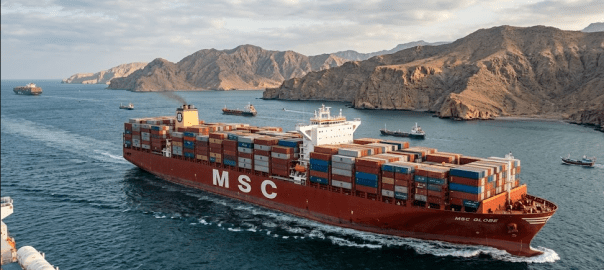
Perhaps the most cynical—and strategically brilliant—Iranian response was the weaponization of the Strait of Hormuz. Despite massive air campaigns intended to keep the waterway open, Tehran established a “toll booth” regime that effectively institutionalized the “petroyuan.” For the first time, Iran began collecting passage fees exclusively in Chinese Yuan for all oil shipments transiting the chokepoint.The stakes could not have been higher: 20% of global LNG and 50% of global urea and sulfur exports pass through this route. By demanding Yuan, Iran did more than just secure a revenue stream; it created a structural bypass of the SWIFT system. The UNDP estimates the cost of this disruption to Arab countries at a staggering $120 billion to $194 billion.Analysis/Reflection: The “Yuan Toll” represents a definitive blow to U.S. dollar hegemony. By leveraging its geography to force a shift in reserve currency usage during an active conflict, Iran demonstrated how a regional power can accelerate the transition to a multipolar financial reality, essentially forcing its neighbors to fund its survival in Chinese currency.
4. The High-Tech Fumble: When “Surgical” Precision Met Reality
Operation Epic Fury was designed as a showcase of Western technological superiority, yet it was marred by glaring failures. The conflict saw the first-ever combat downing of a US A-10 “Warthog” and a humiliating “friendly fire” incident where a Kuwaiti F/A-18 pilot shot down three US F-15E Strike Eagles. Even the US Navy’s crown jewel, the USS Gerald R. Ford , was forced to retreat to Crete for repairs after a fire broke out on March 12—an incident the Navy insisted was a non-combat “laundry fire,” though it effectively sidelined the world’s largest carrier during the war’s peak.The human and cultural cost further eroded the narrative of “surgical” precision. On April 2, a state-of-the-art US Precision Strike Missile (PrSM) collapsed the Karaj B1 bridge, killing families celebrating Sizdah Be-dar . This followed the destruction of the Minab girls’ school and damage to UNESCO sites like the Golestan Palace.Most telling was the branding. Israel’s codename, “Roaring Lion,” was a cynical appeal to pre-revolutionary Iranian monarchists and the Jewish “Lion of Judah.” Yet, by April 1, the rhetoric shifted. Trump’s “Make Iran Great Again” (MIGA) promises to protesters were replaced by a threat to bring Iran “back to the Stone Ages.””The attacks on Iran will escalate… to bring them back to the Stone Ages, where they belong.” — White House statement, April 1, 2026.Analysis/Reflection: The gap between the “surgical” marketing and the reality of PrSM strikes on bridges and schoolhouses highlights the inherent “friction” of modern war. High-tech weaponry does not eliminate civilian cost; it merely provides a more expensive means of inflicting it.
5. The New Guard: From Khamenei to Khamenei
On February 28, the primary objective of “Epic Fury” was achieved: a decapitation strike assassinated Ali Khamenei at his compound. This was followed on March 17 by the assassination of Ali Larijani , the secretary of the Supreme National Security Council. While the latter’s death sparked acute anxiety among Iranian officials that the entire Republic would be toppled, the regime proved remarkably durable.The expected collapse into pro-Western democracy never occurred. Instead, an Interim Leadership Council consisting of Pezeshkian, Mohseni-Eje’i, and Alireza Arafi stabilized the state. By March 8, the transition was formalized with the election of Mojtaba Khamenei as Supreme Leader.Analysis/Reflection: The U.S. sought regime change but achieved regime solidification. By killing the elder Khamenei and Larijani, the strikes removed the old guard only to clear the path for a more hardline, dynastic leadership. Mojtaba’s ascent suggests that the war merely burned away the pragmatists, leaving a more determined, insular adversary in power.
6. The Islamabad Accord: A Fragile Pakistani Peace
The ceasefire reached on April 7, 2026, was not a product of Western diplomacy or UN intervention. It was brokered by Pakistan’s Shehbaz Sharif and Asim Munir. This mediation was born of necessity: Pakistan was bound by its Strategic Mutual Defence Agreement with Saudi Arabia, which views an attack on one as an attack on both. Islamabad was forced to balance this obligation with the reality of its shared border with Iran.The resulting “Islamabad Accord” is a 10-point framework that remains incredibly fragile. It does little to address the wider human catastrophe, including the 1.2 million Lebanese—one-fifth of the population—displaced as the conflict expanded.Analysis/Reflection: Pakistan’s role as the primary mediator signals a tectonic shift in regional influence. When a nuclear-armed neighbor and a Saudi-aligned power is required to broker peace, it confirms that the “rules-based system” of the 20th century has been superseded by regional mutual-defense pacts.
7. Conclusion: A Two-Week Window into the Future
As of mid-April 2026, the world exists in a precarious “cessation of hostilities.” The Strait of Hormuz is reopening, but the trust that once underpinned global energy and diplomacy remains in ashes.The 42 days of “Epic Fury” leave us with the philosophical bookend provided by Luis Moreno Ocampo: the realization that the international community has moved from a “rules-based system” to a “rule of the man.” In this new era, military might is used to bypass negotiations, and symbols of the past are used to justify the destruction of the future. The question for the next decade is whether the Islamabad Accord is a genuine bridge to peace, or merely a 14-day pause before the final storm.