
Beyond the Point of No Return: Why Advanced Liver Damage Is No Longer Considered Irreversible
Tue, July 28 2026 /Mpelembe Media/ — These sources provide a comprehensive look at the long-term physiological damage caused by excessive alcohol consumption and the pathways toward physical recovery. They specifically highlight how chronic drinking disrupts blood sugar regulation, potentially leading to a reversible form of diabetes by damaging insulin-producing cells. Additional focus is placed on gut health, detailing how alcohol causes microbiome instability and inflammatory conditions like leaky gut syndrome. The texts also examine the severe impact on the pancreas and other vital organs, leading to chronic diseases and increased cancer risks. Ultimately, the authors emphasize that sobriety, combined with professional medical treatment and nutritional support, can restore systemic balance and improve mental well-being.
Executive Summary of Systemic Physiological Recovery Following Alcohol Cessation
Sustained abstinence from alcohol initiates a profound, multi-organ healing trajectory, challenging the traditional medical dogma that advanced alcohol-induced damage is entirely irreversible.
1. Neurological Rebound and Neuroplasticity
- Cortical Thickness Restoration: Chronic heavy drinking causes notable thinning of the cerebral cortex, the area responsible for high-order executive functions. Upon cessation, cortical thickness begins to rebuild rapidly in the first month and continues over 7.3 months, at which point brain structure becomes comparable to those without alcohol use disorder (AUD).
- Factors Hindering Recovery: This neuroplastic recovery is significantly compromised by smoking and vascular conditions like hypertension, hyperlipidemia, and type 2 diabetes, which restrict the cerebral blood flow required to nourish regenerating tissue.
- Cognitive and Reward Systems: Electroencephalogram (EEG) analyses show that during early abstinence, individuals in recovery exhibit an unusually early and strong compensatory brain signal in centro-frontal regions when processing rewards and punishments. This heightened sensitivity gradually normalizes over years of sobriety to resemble healthy baselines.
- The Wernicke-Korsakoff Lifeline: In severe thiamine (vitamin B1) deficiency, the acute neurological emergency Wernicke’s Encephalopathy presents with a classic triad of confusion, ataxia (coordination loss), and ophthalmoplegia (abnormal eye movements)—though this complete triad only appears in 16.5% of patients. Left untreated, it progresses to Korsakoff Syndrome, characterized by permanent, irreversible amnesia, severe short-term memory deficits, and confabulation. Immediate parenteral (intravenous/intramuscular) thiamine is mandatory, as chronic alcohol use severely impairs intestinal absorption, making oral thiamine ineffective during the acute phase.
2. Hepatic Recompensation in Advanced Cirrhosis
- Challenging the Irreversibility Dogma: Traditionally, decompensated liver cirrhosis (marked by ascites, encephalopathy, or variceal bleeding) was considered a point of no return. Under the modern Baveno VII criteria, clinicians now recognize the clinical endpoint of “hepatic recompensation”—the complete resolution of these severe complications alongside a restoration of liver function.
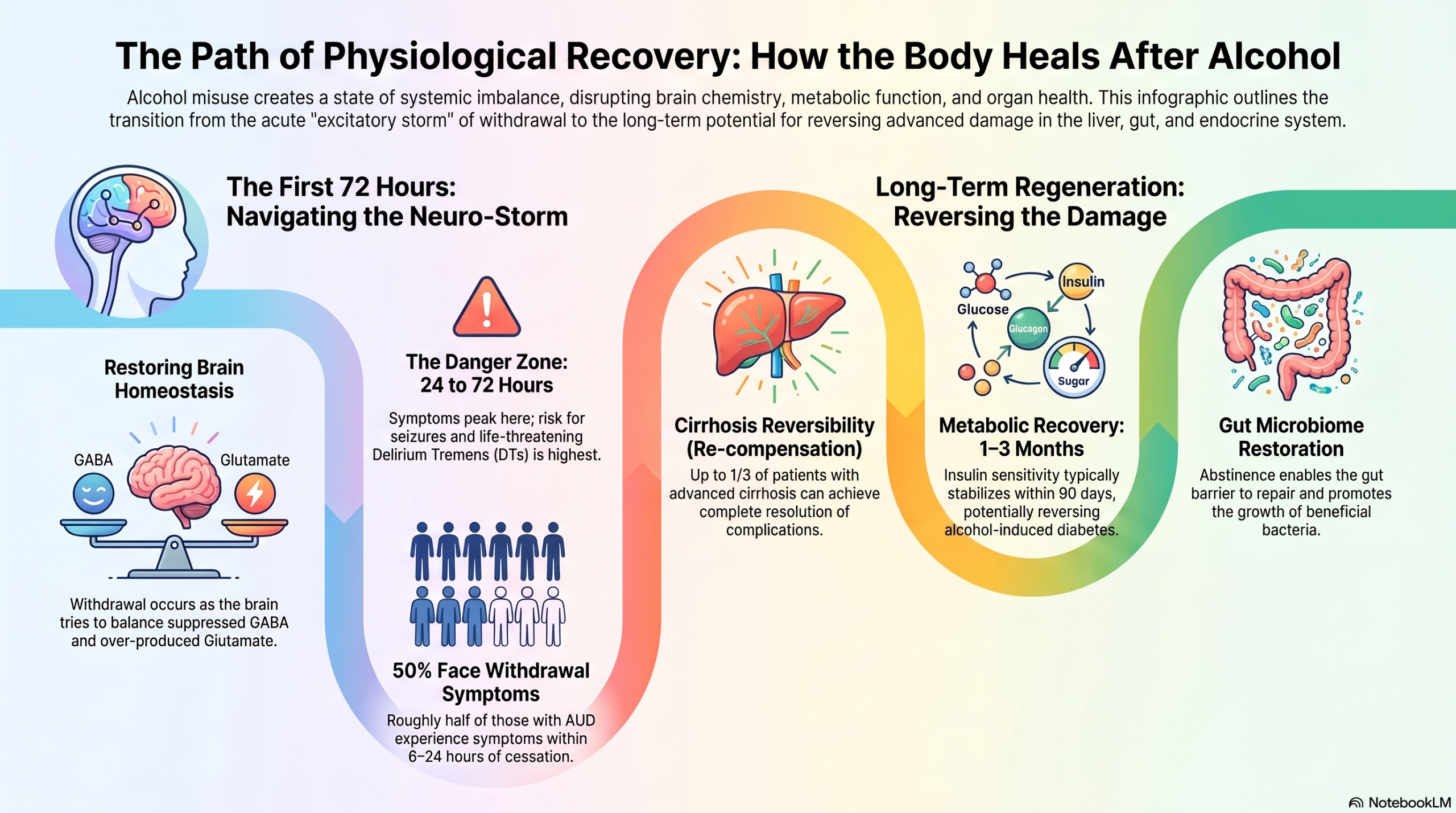
- The Power of Abstinence: A landmark multicenter study tracking 633 patients with decompensated cirrhosis revealed that approximately one-third (31.1% to 33.8%) achieved complete hepatic recompensation within five years of sustained abstinence.
- Early Intervention: Stopping drinking within one month of the first decompensation event more than doubled the chances of achieving recompensation.
- Survival Advantage: Recompensation delivers a dramatic prognosis improvement: recompensated patients who maintained abstinence experienced a negligible residual risk of liver-related death or hepatocellular carcinoma (liver cancer).
3. Reversing Insulin Resistance and Pancreatic Dysfunction
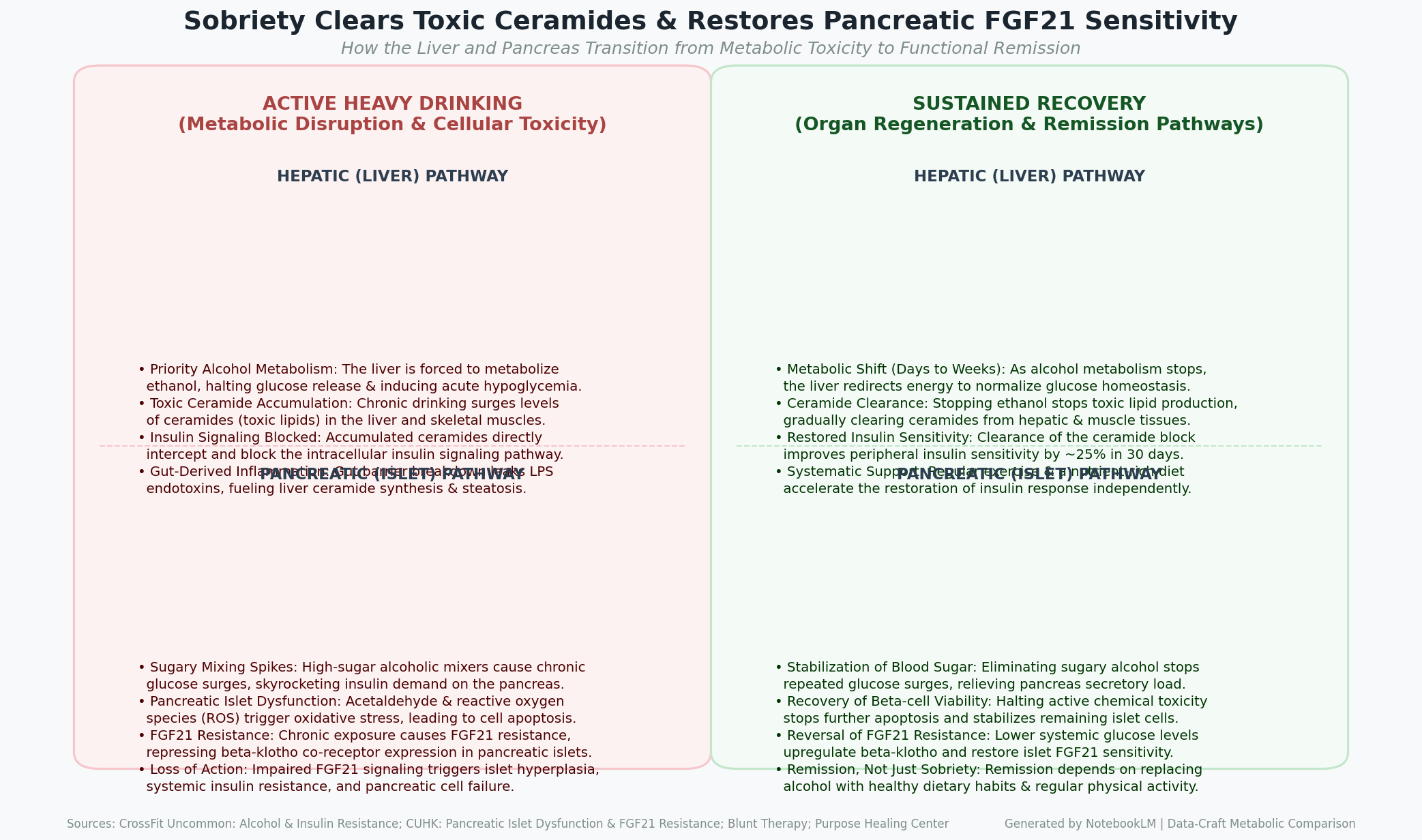
- The Ceramide Pathway: Chronic alcohol misuse induces type 2 diabetes by promoting insulin resistance and pancreatic $\beta$-cell dysfunction. A primary culprit is the accumulation of ceramides (toxic lipids) in the liver, muscle, brain, and heart, which directly block insulin signaling. Alcohol further accelerates this by disrupting the gut barrier, allowing bacterial toxins (LPS) to enter the bloodstream and trigger ceramide-producing systemic inflammation.
- Why Quitting is Necessary, but Not Sufficient: While stopping alcohol halts active pancreatic toxicity, abstinence alone is rarely sufficient to reverse diabetes. Reversing insulin resistance requires a comprehensive lifestyle overhaul, including regular physical activity (which improves insulin sensitivity independent of weight loss) and a nutrient-dense, low-refined-sugar diet.
4. Gastrointestinal and Skeletal Reconstruction
- Gut Permeability Repair: Acetaldehyde and reactive oxygen species (ROS) from alcohol degrade tight junctions (such as occludin and claudins) in the gut lining, resulting in a leaky gut, malabsorption of crucial nutrients (magnesium, zinc, B vitamins), and systemic inflammation. Sobriety allows the physical gut barrier to repair and promotes microbiome rebalancing, marked by a distinct increase in beneficial bacteria like Lactobacillus and Bifidobacterium.
- Bone Density Rebound: Heavy drinking suppresses osteoblasts (bone-forming cells) and impairs vitamin D and calcium metabolism. Long-term abstinence, combined with nutrition and targeted exercise, allows bone mineral density to significantly increase, gradually reversing osteopenia and reducing overall fracture risk.
The Biology of a Comeback: 5 Surprising Truths About How Your Body Resets After Alcohol
Alcohol is deeply woven into the social fabric of our lives. According to the National Institute on Alcohol Abuse and Alcoholism (NIAAA), over 75% of individuals aged 12 and older have reported lifetime alcohol consumption. While most of us are familiar with the immediate misery of a hangover, we often overlook the profound neurological and metabolic shifts that occur when alcohol—a potent central nervous system depressant—is removed.Recent clinical research reveals that recovery is not simply a matter of “drying out.” It is a complex, multi-system biological recalibration. Understanding the invisible architecture of this reset helps move beyond the simple curiosity of sobriety and toward impactful takeaways that can save lives and restore health.
1. The “Kindling” Effect: Why Your Brain Gets More Sensitive Over Time
One of the most significant findings in addiction science is the phenomenon of “kindling” or sensitization. This refers to the observation that successive episodes of alcohol withdrawal tend to increase in severity, specifically regarding the brain’s epileptic potential.This occurs because of a neuroadaptive tug-of-war between two primary neurotransmitters: GABA and Glutamate.
- GABA is the brain’s primary inhibitory signal, providing a sedating effect. Alcohol stimulates GABA, which is why it feels relaxing.
- Glutamate is the brain’s primary excitatory signal.To maintain homeostasis (balance) against chronic alcohol use, the brain downregulates its own GABA production and upregulates Glutamate. When alcohol is suddenly removed, the brain is left with a massive overrepresentation of Glutamate and a deficit of GABA. This creates an autonomic hyperactive state that makes “DIY” quitting dangerous for chronic users, as it significantly lowers the seizure threshold.As detailed in the StatPearls clinical review regarding the pathophysiology of withdrawal:”When a patient who chronically drinks alcohol stops drinking or reduces how much they are drinking, the GABA signal is suddenly diminished, resulting in an overrepresentation of glutamate. This excess glutamate causes the autonomic hyperactive state seen in alcohol withdrawal syndrome.”
2. Your Gut is Your “Second Brain”—And It Makes 95% of Your Serotonin
While the liver often steals the spotlight in discussions of alcohol, the gastrointestinal tract is a silent powerhouse for mental health. A staggering 95% of the body’s serotonin—the neurotransmitter responsible for regulating mood, sleep, and anxiety—is produced in the gut.Chronic alcohol use triggers “dysbiosis,” an imbalance where the gut microbiome’s ecosystem is thrown into chaos. This frequently leads to “Leaky Gut Syndrome,” where the protective mucus layer of the intestines erodes. This erosion allows bacteria and toxins like lipopolysaccharides to “leak” into the bloodstream, triggering systemic inflammation. This inflammation travels to the brain (neuroinflammation), directly contributing to the depression and anxiety frequently experienced in early sobriety.Restoring gut health through probiotics, fiber, and targeted nutrition is a hidden key to emotional stability. By healing the gut, you aren’t just improving digestion; you are repairing the factory that supplies your brain’s “happiness” chemicals.
3. When the Pancreas “Digests Itself”: The High Stakes of Two Drinks a Day
The digestive assault continues into the body’s metabolic engine. The pancreas is responsible for releasing digestive enzymes and hormones like insulin. Normally, these enzymes remain inactive until they reach the small intestine. However, alcohol metabolism causes these enzymes to activate prematurely while they are still inside the pancreas.This causes the organ to effectively begin “digesting” itself, leading to pancreatitis—a painful and potentially fatal inflammation. Research from the American Addiction Centers indicates a surprisingly low threshold for this risk: consuming just two drinks daily can significantly increase the likelihood of developing pancreatitis.Crucially, while the liver’s metabolic issues may be reversible, the destruction of $\beta$ -cells (the insulin producers) in the pancreas can be permanent. Severe damage to these cells can lead directly to the onset of Type 2 diabetes, even if other lifestyle factors are managed.
4. The Metabolic Priority: Why the Liver Puts Blood Sugar on the Back Burner
The liver operates on a strict set of priorities. When alcohol is present, the liver views it as a toxin that must be neutralized immediately. Consequently, it prioritizes alcohol metabolism over its other vital task: maintaining stable blood sugar levels.This “priority shift” explains why individuals often experience drastic drops in blood sugar (hypoglycemia) when drinking on an empty stomach. However, the body possesses a remarkable capacity for repair. When alcohol is removed, the liver can divert its energy back to glucose metabolism. In many cases, this allowing the liver to reverse alcohol-induced insulin resistance within a matter of days to weeks.This metabolic “priority shift” is one of the fastest systems to show improvement once the toxic burden of alcohol is removed, allowing for more stable energy levels and better hormonal balance.
5. The Hidden Timeline: Recovery Lasts Longer (and Goes Deeper) Than You Think
A common myth suggests that “detox” is over once the initial shakes subside. In reality, the biological timeline of recovery involves several critical milestones:
- 24 to 48 Hours: This is the window of highest risk for withdrawal seizures, as the brain’s Glutamate levels reach a dangerous peak.
- 24 to 72 Hours: Most withdrawal symptoms peak and begin to resolve for mild to moderate cases.
- 3 to 8 Days: The window for “Delirium Tremens” (DTs), a life-threatening state of confusion, rapid heart rate, and high blood pressure.
- 6 Months to 1 Year: The timeframe often required for deep healing of the gut lining and full restoration of insulin sensitivity.Because of the potential for life-threatening complications, medical supervision is critical. As noted in the StatPearls clinical review:”Alcohol withdrawal delirium… is the most severe manifestation of alcohol withdrawal syndrome… while only approximately 3% to 5% of patients will progress to this, this condition may prove fatal.”
Conclusion: Beyond the Bottle
The human body possesses a remarkable capacity for “recompensation”—the process of returning to a stable, functional state after chronic damage. From the restoration of the gut microbiome to the stabilization of blood sugar and the rebalancing of brain chemistry, the journey of sobriety is a masterpiece of biological repair.Understanding that recovery is a deep, internal cellular reset changes the perspective on the journey. It is no longer just about what you are giving up, but about what your body is finally being allowed to rebuild. How might viewing your recovery through the lens of biological repair change your approach to long-term health?