
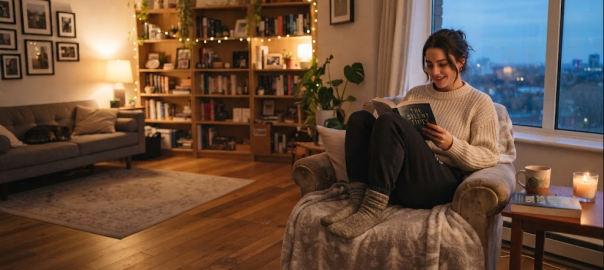
The Luxury of Doing Nothing: Redefining Success Through Peace, Boundaries, and Rest
In a hyper-connected world that constantly celebrates activity, socializing, and external validation, modern freedom and true luxury are being redefined around quietness, solitude, and intentional disconnection. Simple acts like staying at home, enjoying favorite snacks, and setting firm personal boundaries allow individuals to protect their peace and step away from relentless external noise. This mindset drives the shift from FOMO (the fear of missing out) to JOMO (the joy of missing out), where establishing screen boundaries and engaging in analog activities helps reclaim time, lower stress, and foster creativity and mental clarity.
This pursuit of tranquility also extends into quiet travel and nature sanctuaries, where travelers swap dense, activity-packed itineraries for natural soundscapes like ocean waves, rustling leaves, and birdsong. Research demonstrates that exposure to these natural acoustics activates the parasympathetic nervous system, lowering cortisol levels and restoring mental fatigue. Across broader lifestyle trends, understated restraint and completely unscheduled time—free from calendar obligations or public performance—have emerged as premier status symbols. Ultimately, whether through a peaceful evening spent on the sofa or an unhurried retreat in nature, modern well-being prioritizes internal calm over constant availability and productivity.
The Radical Luxury of Doing Absolutely Nothing: Why Peace and Solitude Are the Ultimate Freedom
Introduction: The Noise of Modern Expectations
In an era dominated by performative availability, our daily lives are relentlessly scripted by the demands of constant connectivity and social visibility. We are subtly nudged to broadcast our experiences, optimize our downtime, and continually validate our worth through external approval. Yet beneath this ambient digital noise lies a quiet, counter-cultural truth: true freedom is not found in the relentless pursuit of being seen, but in the choice to retreat into sanctuary and enjoy your own uncurated company.
Redefining What “Luxury” Really Means
For generations, luxury was measured by opulence—designer labels, exclusive reservations, and high-status consumption. Today, a subtle cultural shift is redefining wealth not by what we accumulate, but by what we are privileged enough to tune out. True luxury has become the rare freedom to step away from the collective noise and inhabit a space untouched by external demands.This ethos has resonated wildly across digital platforms, frequently circulating as a viral meme where an image of actor Tom Hardy is paired with a statement that cuts straight to the heart of modern burnout:”Some people don’t understand that sitting in your own house alone in peace, eating snacks and minding your business is priceless.” — Tom HardyThere is a brilliant, disarming magic in this sentiment. By juxtaposing the rugged, high-status Hollywood image of Hardy with the remarkably unpretentious act of eating snacks quietly at home, the message playfully dismantles our culture’s obsession with curated perfection. It elevates a simple, unglamorous moment into the ultimate flex: having nothing to prove, no status to perform, and no audience to satisfy.
Pushing Back Against the Pressure of Constant Availability
Society conditions us to view stillness with suspicion, often equating solitude with isolation and downtime with a lack of ambition. In this climate, the act of “minding your business” serves as a profound antidote to contemporary comparison culture. It represents a deliberate refusal to participate in the endless highlight reels, outrage cycles, and performative presence that dominate modern life.Establishing firm boundaries against the pressure of hyper-availability yields profound psychological dividends:
- Liberation from external validation: Stepping off the social treadmill breaks the fragile loop of seeking public approval for private life.
- Dismantling hyper-productivity: It honors rest as a fundamental human need rather than a reward that must be earned through ceaseless activity.
- Reclaiming sacred autonomy: It reestablishes the home not as a backdrop for content, but as a genuine sanctuary where peace remains undisturbed.
The Nuance of Solitude—Recharging vs. Isolation
Of course, solitude exists on a delicate spectrum. Online discourse around Hardy’s quote frequently highlights a necessary nuance: the distinct line between restorative quiet and counterproductive retreat.
- Solitude as sanctuary: When chosen intentionally, time spent alone acts as a vital crucible for mental restoration, allowing us to shed social masks and process the weight of daily expectations.
- The hazard of isolation: Conversely, when solitude becomes an indefinite refuge or a defense mechanism against vulnerability, it risks souring into loneliness.Navigating this balance requires quiet self-awareness rather than rigid rules. Intentional solitude recharges our internal reserves so we can re-engage with the world meaningfully, whereas isolation detaches us from connection entirely. The luxury lies in knowing the difference and honoring what your spirit genuinely requires.
Conclusion: Protecting Your Peace in a Loud World
In a world that profitably trades on your continuous attention, safeguarding your tranquility is an act of quiet independence. Modern luxury does not require grand gestures or extravagant escapes; often, it is fully realized in the simple comfort of eating your favorite snacks on your own couch, wrapped in absolute peace.As you navigate the persistent clamor of daily life, take a moment to reflect: How do you define your own personal peace, and are you granting yourself the freedom to enjoy it?