
The “Muzungu Chola Boy” Who Led a Nation: 5 Impactful Lessons from Guy Scott’s Zambian Adventure
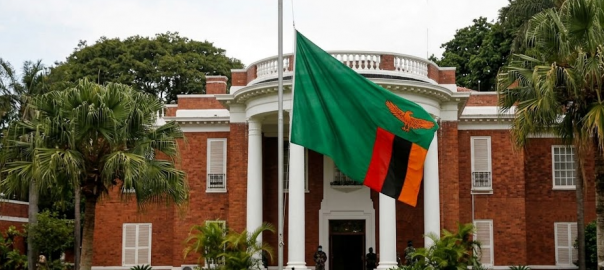
In the visual history of post-colonial African leadership, one image remains stubbornly, delightfully out of place: a white, Cambridge-educated economist standing at the right hand of Michael Sata, the populist firebrand known as the “King Cobra.” With the passing of Dr. Guy Lindsay Scott in July 2026 at the age of 82, following a dignified battle with Parkinson’s disease, Zambia has lowered its flags to mourn a man who was neither a colonial relic nor a foreign interloper. He was, as many locals termed him with a wink of cultural inclusion, a “black man in white skin.”Scott’s journey from an exporter of high-end strawberries to the acting President of Zambia was more than a biographical curiosity; it was a masterclass in navigating a “cosmopolitan” era where the old lines of race and tribe were blurred by wit and a uniquely Zambian sense of irony.Here are five impactful lessons from the political adventure of Guy Scott.
1. Subverting Global Hierarchies: Shattering the Obama Monopoly
When Michael Sata appointed Guy Scott as Vice President in 2011, the Western diplomatic corps was left clutching their pearls, searching for a technocratic explanation. Was this a sop to white donors? A moderate facade? In reality, it was a classic piece of “Sata-matics”—a strategy that used race as an emblem of state pride and a witty jab at global hierarchies.Sata framed the appointment as a way to one-up the most powerful man in the world, Barack Obama, asserting that Zambia was decades ahead of the West in its post-racial reality.”I just want to destroy Obama’s monopoly as the only black president in the world with a mzungu chola boy white person bag-carrier. And you’ll do.” — Michael SataBy branding Scott his “chola boy,” Sata subverted the colonial narrative. Scott wasn’t the “white master” in the room; he was a comrade who had earned his stripes in the trenches of the “Black North.” The lesson here was clear: in a truly cosmopolitan state, identity is a tool for sovereignty, not a cage for the past.
2. “Don’t Kubeba”: The Art of Electoral Poetry
The Patriotic Front’s (PF) rise to power was fueled by one of the most effective slogans in contemporary African history: Don’t Kubeba (Bemba for “Don’t tell them”).Scott and Sata realized they could never outspend the ruling party’s massive advantages of incumbency—the bags of mealie-meal and cash bribes distributed during campaigns. Instead, they employed “electoral poetry.” They advised the poor to take every bribe offered, fill their bellies with the ruling party’s food, and then secretly vote for the opposition in the privacy of the ballot box.This strategy effectively neutralized state-sponsored patronage. It empowered the marginalized by teaching them that a bag of rice did not buy their soul, turning the incumbent’s own resources into a subsidized campaign for the revolution.
3. The Resolve of the Absurd: The 120:80 “Blessing”
The bond between Sata and Scott was forged in the murky depths of failure. In 2002, with the PF polling at a dismal 3.4%, Sata was thrown into the Kamwala Remand Prison on a non-bailable “car theft” charge—a legal weapon originally forged by President Frederick Chiluba to settle a personal grudge.Scott, himself recovering from triple-bypass surgery, visited Sata in the slammer. The scene was pure theater: Scott brought an automatic blood pressure machine that, upon testing Sata, Scott, and even a “gigantic murderer” bodyguard who brought them hot water for tea, produced the exact same “perfect” score of 120:80 every single time.”The machine is giving us a blessing in the coming battle… Do you ask a mongoose that has come to rescue you, where it came from?” — Michael SataScott knew the machine was broken, but Sata saw an omen. This resolve in the face of absurdity was their secret weapon. It was the same logic that saw Sata eventually acquitted because a witness claimed he was a “Friend of the System”—the very system he was trying to dismantle. They understood that in politics, the only “good” number is one that keeps you in the fight.
4. “Chimbuya”: The Cultural Safety Valve of Teasing Cousinship
How does a white man thrive in an arena where “racist” is a common slur? Scott utilized Chimbuya , the traditional Zambian practice of “teasing cousinship.” This cultural mechanism allows different groups to trade insults that would elsewhere spark conflict, acting as a social glue that permits “rough” truths to be told through humor.
- The Monkey vs. The Rat: Traditionally, the Bemba and Ngoni tribes trade jokes about the Bemba eating monkeys and the Ngoni eating field mice (rats).
- The Barclays Incident: Sata once attacked Scott for being a “racist” during a meeting with a high-powered delegation from Barclays Bank. While the English bankers were mortified and plainly embarrassed, the Zambians in the room understood it as the “teasing cousinship” at work.This safety valve allowed Scott and Sata to communicate with a directness that bypassed the stifling “colonialism nonsense” and reached the heart of the electorate.
5. The Irony of Political Engineering: The Parentage Paradox
The ultimate irony of Scott’s career was the “Parental Birth Clause” (Article 34) of the Zambian Constitution. This law, requiring a candidate’s parents to be Zambian by birth, was engineered by Frederick Chiluba to bar founding father Kenneth Kaunda from office.In a twist of fate, the weapon built to destroy an enemy eventually barred Scott from the permanent presidency in 2014. Despite the legal precedent of Lewanika v. Chiluba (1998)—which ruled that since “Zambian citizenship” didn’t exist before 1964, the clause actually favored those present at independence—Scott chose not to contest it.His summary of the legal landscape was concise: The Supreme Court established that pre-independence residents automatically became citizens, meaning Scott had a valid claim. Yet, in a final act of constitutional stewardship, he stepped aside, proving he was a servant of the law rather than a slave to ambition.
Conclusion: The 89-Day High Wire Act
Following Michael Sata’s death in 2014, Guy Scott performed an 89-day constitutional high-wire act as acting president. Lacking a tribal constituency, he relied entirely on the authority of his office to keep the peace during a fractious transition.He proved that a leader could manage a nation—even one once dismissively called “MMBA” (a Million Miles of Bugger All) by colonial officers—by adhering to the spirit of the law rather than the ghost of identity. As Scott is laid to rest at the Anglican Cathedral of the Holy Cross, one must wonder: was his “cosmopolitan” vision a brief, witty anomaly, or is it a blueprint for an Africa that has finally moved beyond the “purity politics” of the past?