Tag Archives: Low-carbon economy

03Dec/25

The $7 Trillion Green Economy: A CEO Blueprint

Dec. 03, 2025 /Mpelembe Media/ — This report highlights key findings from a joint report by the World Economic Forum (WEF) and the Boston Consulting Group (BCG) regarding the immense growth of the global green economy. The document states that this sector has already surpassed $5 trillion and is projected to reach over $7 trillion by 2030, growing faster than every major sector except technology. This economic resilience is supported by substantial cost declines in essential technologies, which now make climate solutions addressing 55% of global emissions cost-competitive. The report also underscores that China is cementing its role as the global leader in green technology through overwhelming investment, innovation, and production capabilities. To assist corporate leaders, the report concludes by providing a “CEO Guide” that outlines strategies for successful growth, focusing on factors like technology maturity and close regulatory shaping. Continue reading

23Nov/25

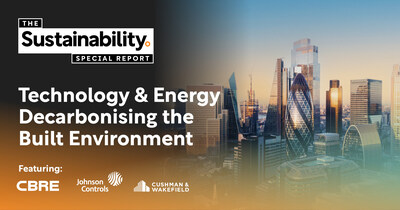
Decarbonising the Built Environment Through Technology and Energy Innovation

A new Special Report by Sustainability Magazine titled ‘Technology & Energy: Decarbonising the Built Environment’, focuses on how global property and real estate leaders are deploying innovative technologies to reduce carbon emissions, since buildings are responsible for a significant percentage of global energy use and carbon emissions. Key companies like Cushman & Wakefield, CBRE, and Johnson Controls are featured for their efforts in leveraging smart systems, electrification, and clean energy to achieve net-zero commitments. The report highlight that smart building technologies are instrumental in reducing energy consumption and underscore the growing market value of green building practices. Continue reading

24Jan/25

Envision’s Net-Zero Industrial Park: A Global Benchmark

Jan. 24, 2025 /Mpelembe Media/ —  The World Economic Forum (WEF) highlights Envision Energy’s Ordos-Envision Net-Zero Industrial Park as a global benchmark for sustainable industrial development. This pioneering project, featured in a WEF white paper, showcases a comprehensive clean energy solution using wind, solar, and hydrogen power, achieving net-zero emissions. Continue reading

19Jun/23

AD NET ZERO MAKES SCIENCE-BASED TARGETS REPORTING MANDATORY FOR SUPPORTERS

Ad Net Zero supporters, global, and at a national level, are now required to set a public science-based net zero target. This can be done through either the Science Based Targets initiative, a commitment to the UN Race to Zero (including via the SME Climate Hub), The Climate Pledge, or other comparable alternatives. Supporters will also now be required to measure and report their progress annually. Targets will need to be created within 12 months if not already in place and Ad Net Zero will provide guidance to help supporters set, measure and report. An analysis of the industry’s path to net zero, based on the Ad Net Zero’s Global Group publicly reported targets, has been published on adnetzero.com, sharing how many of the industry’s biggest organisations are committing to decarbonisation and by what point. Continue reading

18Mar/23

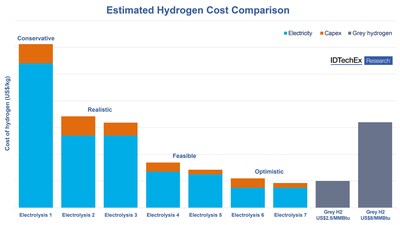
Green Hydrogen: IDTechEx Asks if It Can Be Cost Competitive

The clean hydrogen market is poised for growth, driven by decarbonization efforts and concerns around energy security. A number of ambitious targets and roadmaps are being set out by different governments and regions. Clean hydrogen can refer to a number of routes for producing hydrogen, but the primary among them are green and blue hydrogen. Blue hydrogen refers to hydrogen produced from natural gas or coal but with carbon emissions captured. Green hydrogen refers to the splitting of water via electrolyzers powered by renewable power sources. IDTechEx forecasts that the water electrolyzer market will grow to over US$120B by 2033. Continue reading

17Jan/23

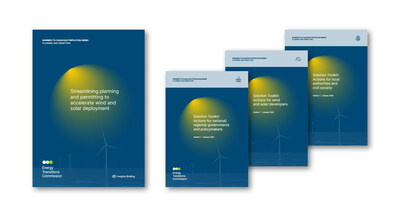
New ETC Insights Briefing

In its latest Insights Briefing, “Streamlining planning and permitting to accelerate wind and solar deployment”, the ETC highlights how governments, civil society and wind and solar developers can take action to reduce unnecessary delays caused by common planning and permitting barriers in renewables deployment whilst maintaining strong environmental, bio-diversity and social safeguards. Continue reading*———

27Oct/22

Drivn: Blockchain Startup Enables Users to Earn an Income While Saving the Planet

Transport accounts for around 33% of global carbon emissions, but 48% of people are not aware of their individual carbon footprint. Drivn, the brainchild of three Danish founders, aims to change the world’s travel behavior towards a more sustainable future. Continue reading

03Oct/22

Three reasons a weak pound is bad news for the environment

Katharina Richter, University of Bristol; Alix Dietzel, University of Bristol, and Alvin Birdi, University of Bristol

The day before new UK chancellor Kwasi Kwarteng’s mini-budget plan for economic growth, a pound would buy you about $1.13. After financial markets rejected the plan, the pound suddenly sunk to around $1.07. Though it has since rallied thanks to major intervention from the Bank of England, the currency remains volatile and far below its value earlier this year.

Continue reading

30Sep/22

‘Dark data’ is killing the planet – we need digital decarbonisation

Tom Jackson, Loughborough University and Ian R. Hodgkinson, Loughborough University

More than half of the digital data firms generate is collected, processed and stored for single-use purposes. Often, it is never re-used. This could be your multiple near-identical images held on Google Photos or iCloud, a business’s outdated spreadsheets that will never be used again, or data from internet of things sensors that have no purpose.

Continue reading

19Sep/22

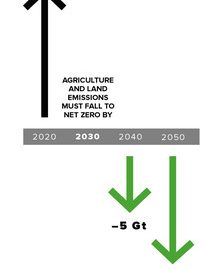
Land Sector Can – and Must – Reach Net Zero Annual Emissions by 2030. Where, What and How Food is Grown is Critical

To avoid catastrophic climate change, the land sector – including agriculture, forestry and natural land protection and restoration – must reach net zero emissions by 2030, according to new research from Conservation International. Continue reading