
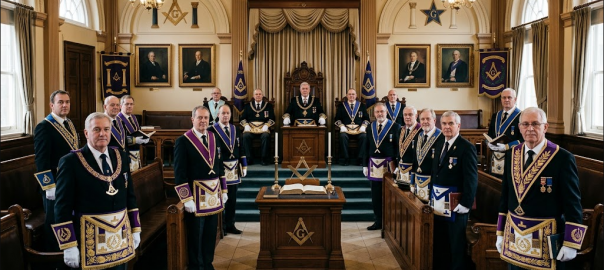
Behind the Closed Door: Evaluating Religious and Political Critiques of the Masonic Family
Sun, Aug 23 2026 /Mpelembe Media/ — The conspiracy literature surrounding global power structures often centers on the theory of elite secret societies and generational dynasties pulling the strings of world events. According to Fritz Springmeier’s Bloodlines of the Illuminati, a hidden cabal consisting of thirteen powerful, generational Satanic lineages secretly rules the world through a multi-layered network of secret societies, including Freemasonry and various occult councils. Proponents of this view argue that these families—including prominent names like the Astors, Rothschilds, Rockefellers, and Collinses—have amassed unchecked financial and political influence through intermarriage and the preservation of secret occult practices. Conspiracist narratives contend that these elite networks are responsible for massive historical manipulations, orchestrating major conflicts like the World Wars, setting up international institutions like the United Nations, and even controlling global illegal industries such as the narcotics trade. To hide their influence, these groups are alleged to operate through front companies, legitimate religious organizations, and systemic media censorship, maintaining a facade of normal civil society. Continue reading