
Decoding the Fauci Diaries: Public Health, Private Doubts, and a Constitutional Crisis
Thu, July 30 2026 /Mpelembe Media/ — The July 2026 Senate Homeland Security and Governmental Affairs Committee hearing culminated in a bitter constitutional standoff, fundamentally driven by the recent public release of Dr. Anthony Fauci’s private, pandemic-era diaries. The 1,141-page document, retrieved from government computer servers by Health and Human Services Secretary Robert F. Kennedy Jr., provided the rhetorical foundation for the explosive congressional session. Released by Committee Chairman Rand Paul just days before the hearing, the journals were utilized to demonstrate a stark contrast between Dr. Fauci’s private thoughts and his definitive public statements regarding the COVID-19 pandemic. Analyzing the contents of these diaries reveals deep institutional fractures concerning scientific transparency, federal record-keeping, and the limits of congressional oversight.
A primary issue analyzed during the hearing was the profound disconnect between Dr. Fauci’s public messaging and his private assessments regarding the origins of the virus. While early public-facing narratives from health officials frequently dismissed the lab-leak theory as a conspiracy, the diaries indicate that Dr. Fauci privately harbored doubts. As highlighted in previous congressional disclosures, his early 2020 entries noted that experts believed genomic manipulation or a deliberate insertion of the virus was possible. Senator Paul utilized these journal entries to argue that what Dr. Fauci communicated to the American people starkly contradicted his own private notes on how the virus emerged. Analytically, this exposes a troubling dynamic in public health leadership: the apparent curation of a unified public narrative at the expense of disclosing the genuine, uncertain realities being debated privately by top scientists.
Beyond scientific debates, the diaries expose Dr. Fauci to severe legal jeopardy, providing a clear analytical explanation for his unprecedented decision to invoke the Fifth Amendment despite receiving a preemptive presidential pardon from Joe Biden. The journals and related uncovered communications reveal instructions to staff to delete official correspondence, which directly contradicts his 14-hour sworn congressional testimony in 2024 where he explicitly denied ever deleting federal records or evading public records laws. This transforms the diaries from a mere historical log into a direct “perjury trap”. By documenting the intentional destruction of government records, the diaries provide potential evidence of criminal obstruction and perjury. Because a presidential pardon cannot cover future acts of perjury committed during the 2026 hearing itself, the diary entries legally cornered Dr. Fauci, forcing him to rely on his right against self-incrimination to avoid further exposure.
Finally, the diaries offer an unfiltered look into the intense politicization of the pandemic response, highlighting Dr. Fauci’s deep frustrations with the Trump administration and his open contempt for congressional oversight. The journals detail his evolving relationship with former President Donald Trump, featuring private vents about the president’s “rambling, crazy” press conferences and documenting personal arguments between the two men. Furthermore, the text captures his reaction to his sudden media celebrity and his disdain for the lawmakers who questioned his policies. This underscores a broader institutional crisis: the diaries depict an embattled public health leader who increasingly viewed legislative oversight as an adversarial nuisance rather than a legitimate constitutional mechanism. This defensive posture ultimately fueled the bitter partisan divide that fractured the nation’s pandemic response and led to the unprecedented procedural breakdown witnessed during the July 2026 Senate showdown.
The Perjury Trap: How 1,100 Pages of Private Contempt and a Biden Pardon Cornered Anthony Fauci
1. The High-Stakes Collision of Truth and Record
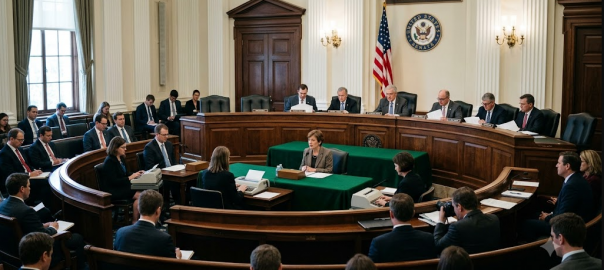
It is July 29, 2026, and the air inside the Senate Homeland Security Committee room is thick with the scent of a political execution. Dr. Anthony Fauci, the octogenarian who became the face of a fractured nation’s pandemic response, sits behind a mahogany table that has become a legal fortress. He is flanked by a phalanx of attorneys, but the real walls closing in are made of paper: 1,100 pages of his own private diaries.For any public servant, the nightmare is no longer just a failed policy; it is the terrifying prospect of a private thought, scrawled in a moment of exhaustion, being transformed into a career-ending subpoena. In this room, the boundary between public service and personal record has vanished. We are witnessing the moment where scientific transparency is devoured by the machinery of criminal prosecution.
2. The Pardon Paradox: A Legal Pincer Move
In January 2025, President Biden issued a preemptive pardon to shield Fauci from “politically motivated prosecutions” for conduct between 2014 and 2024. Ironically, this act of mercy served as the foundation for Senator Rand Paul’s perjury trap in 2026.Because the pardon covers past acts, Fauci can no longer invoke the Fifth Amendment to avoid testifying about those years; he cannot legally incriminate himself for crimes that no longer exist. However, the pardon does not cover his 2026 testimony itself.If his answers under oath today deviate an inch from the “Dear Diary” entries sitting on Rand Paul’s desk, he faces a fresh charge of perjury. This is the legal pincer move: the pardon forces him to speak, while the diaries wait to catch him in a lie.”The hearing carries stakes beyond typical congressional oversight: any false statements Fauci makes under oath would fall outside the scope of President Joseph Biden’s pardon, potentially opening him to new prosecution. This creates a high-stakes scenario where Fauci’s testimony itself becomes a legal minefield.” — Legis1 Editorial
3. The “Dear Diary” Dissonance: Private Contempt vs. Public Courtesy
The journals reveal a man living two lives: the measured, courteous scientist on television and the searingly frustrated observer in private. While he maintained a poker face during “painfully rambling” White House briefings, his diary painted President Donald Trump as a “true embarrassment” and an “obnoxious adolescent.”The friction peaked at an Operation Warp Speed event in May 2020. Trump reportedly pulled Fauci aside to growl, “Tony, you are losing me trillions of f***ing dollars,” before pivoting to a bizarrely intimate, “you and I are OK.”Fauci’s notes capture a surreal psychological toll. He describes a “bulletproof vest reality” where he is simultaneously fascinated by Brad Pitt playing him on Saturday Night Live and deeply unsettled by his “unimagined fame.” He marveled at bobbleheads and murals while he and his family faced credible death threats that necessitated a permanent security detail.
4. The 2025 Digital Purge: An Assault on Medical Data
Following Executive Order 14168, the Trump administration launched what legal scholar Sharona Hoffman identifies as an unprecedented assault on data integrity. Over 8,000 federal webpages were scrubbed, removing vital resources under the guise of purging “gender ideology.”The removals extended far beyond ideological battles, impacting clinicians and low-income patients who rely on the CDC as a terminal of truth. The following datasets and resources were among those vanished:
- HIV/AIDS Infrastructure: National surveillance reports, datasets, and the primary HIV index page.
- Vulnerable Populations: Suicide risk data and safe school initiatives for LGBTQ youth.
- Maternal Health: The “Safer Food Choices for Pregnant People” guide.
- Policy Tools: The Social Vulnerability Index and AtlasPlus, used to track infectious disease trends.Hoffman argues these purges potentially violate the First Amendment and the Administrative Procedure Act. Many restored pages, forced back online by the Doctors for America court case, now carry “tendentious statements” explicitly rejecting the data as “disconnected from immutable biological reality.”
5. The Lab Leak Narrative: Private Uncertainty vs. Public Certainty
The 2026 hearing’s most explosive moments centered on the origins of COVID-19. Senator Paul used the diaries to argue that Fauci engaged in a “level of dishonesty” by publicly dismissing the lab leak theory as “implausible” while privately entertaining it.In January 2020, Fauci’s diary noted a conference call where experts warned that “deliberate insertion was possible” and that the market was likely an “amplifier,” not the source. While scientists characterized these entries as a normal part of the scientific process, the political optics were devastating.”I had always said that the very highly likelihood is that the virus originated naturally… However… given the amount of speculation about the possibility of a lab leak I have been saying that no one is 100% certain of the origin including me.” — Anthony Fauci, May 26, 2021
6. The Fifth Amendment Showdown: A Visual of Retribution
The climax of the hearing was cinematic in its hostility. As Fauci began to invoke his Fifth Amendment rights for the first of 15 times, the room devolved into a shouting match.When Fauci’s attorney, David Schertler, attempted to speak, Senator Paul snapped, “Sit quietly and don’t say another word.” Moments later, Paul ordered security to forcibly remove Schertler from the room.The visual of a veteran lawyer being escorted out by a security guard underscored Fauci’s characterization of the hearing as a “pathological course of retribution.” He refused to answer questions ranging from gain-of-function research on monkeypox to alleged coordination with the CIA.”Any reasonable person who has followed his unhinged obsession with me would readily come to the same conclusion… the sole reason he is calling me before this committee is to get me to say something… that could vindicate his repeated public pledges that I end up, in his words, ‘behind bars.'” — Anthony Fauci, July 29, 2026
7. Conclusion: The Erosion of Medical Truth
The 2026 Senate showdown signals a terrifying shift in the relationship between science and the state. When a career spanning seven presidencies concludes with a Fifth Amendment standoff, the ultimate casualty is not a person, but the integrity of public health itself.The use of personal reflections as prosecutorial weapons and the systematic purging of clinical data suggest a future where experts will choose silence over service. If our leaders continue to treat the pursuit of medical truth as a criminal conspiracy, we must ask ourselves a haunting question. In an era where a scientist’s diary is a legal minefield, who will be left to lead us through the next crisis?