
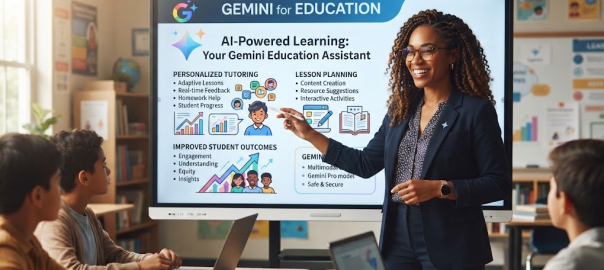
Reclaiming the Purpose of Schooling: Why AI Can Automate Information Processing but Never Replace Human Mentorship
Wed Oct. 21, 2026 /Mpelembe Media/ — The rapid adoption of artificial intelligence in compulsory and higher education has transformed instructional delivery through adaptive learning systems, automated assessment tools, and virtual tutoring platforms. These algorithmic engines excel at administrative automation, personalized pacing, and instant feedback on rule-based tasks. However, defining schooling merely as downloading information or completing standardized tasks risks outsourcing genuine cognitive development to automated tools. Grounding educational practice in foundational philosophy demonstrates that true schooling extends far beyond static data retrieval; it is fundamentally an endeavor of human formation, moral character, civic responsibility, and emotional maturity.
While generative algorithms display technical fluency and high-speed pattern recognition, they fundamentally lack real-world comprehension, ethical intentionality, and social consciousness. Global policy frameworks from the OECD and UNESCO emphasize that core transformative competencies—specifically creating new value, reconciling tensions and dilemmas, and taking personal responsibility—are uniquely human capacities that AI cannot replicate. As artificial intelligence automates routine informational processing, the educational mandate must shift toward cultivating higher-order critical inquiry, creative agency, and ethical decision-making.
The irreplaceable necessity of the human element is deeply rooted in philosophical traditions, notably Nel Noddings’ care ethics and John Dewey’s progressive pragmatism. Noddings demonstrates that moral growth occurs through authentic relational care, empathetic validation, and sustained teacher-student connections rather than abstract virtue drills or rigid academic competition. Similarly, Dewey asserts that character is forged through democratic participation, social experience, and collaborative problem-solving within real-world communities. Because algorithms cannot extend genuine care or embody practical wisdom (phronesis), human educators remain indispensable mentors for shaping student values and personal purpose.
To prevent cognitive surrender and technological overreliance, international governance frameworks establish clear regulatory boundaries, including strict data privacy safeguards, enforceable age thresholds, and mandatory pedagogical validation before classroom adoption. Crucially, educational institutions must protect the formative struggle of learning, ensuring technology does not bypass the cognitive friction necessary for deep analytical reasoning. Schools must modernize assessment architectures by adopting agency-centric, process-oriented evaluations—such as Socratic oral defenses, visible thinking logs, and authentic community projects—that make student reasoning visible and keep human judgment at the center of education.
The Future of Learning: 5 Counter-Intuitive Insights on How AI and Ancient Philosophy Are Rewriting Education
Introduction
Modern educators are navigating an unprecedented systemic crisis. Overwhelmed by burdensome non-teaching responsibilities—ranging from endless data entry and performance logging to routine administrative paperwork—teachers across the globe are battling severe burnout and rising turnover rates. Simultaneously, the pervasive surge of artificial intelligence in classrooms has sparked intense anxiety, raising fears of automated cheating, algorithmic bias, and the erosion of human connection in instruction.
This chaotic convergence forces a fundamental question: Can cutting-edge AI actually help us return to the deepest humanistic roots of education, or will it strip the human element away entirely?
Far from dehumanizing the classroom, the thoughtful integration of artificial intelligence offers a surprising path backward toward classic, time-tested pedagogical ideals. By synthesizing empirical edtech research with centuries of educational philosophy, we can distill five counter-intuitive insights that demonstrate how advanced technology and ancient wisdom are combining to rewrite the future of learning.
Takeaway 1: The “Traditional” Teaching Plot Twist (Direct Instruction Works)
In recent decades, progressive educational trends have largely sidelined direct instruction—the structured, teacher-led lecture model—in favor of purely discovery-based frameworks. However, empirical research reveals a compelling plot twist. A landmark study by Schwerdt & Wuppermann (2011) evaluated lecture-style instruction using matched student-teacher data to control for unobserved student traits. Their rigorous analysis revealed that traditional lecture-style teaching is associated with significantly higher student achievement , directly challenging the notion that direct instruction is obsolete.
Rather than discarding classical frameworks, modern pedagogy thrives when it fuses structured content delivery with active learning. As Wright & Moore (2020) demonstrated in their comparative analysis of educational philosophies, while traditional models establish essential foundational structure, modern learner-centered approaches excel at cultivating higher-order creative thinking. An optimal educational paradigm does not abandon direct instruction; it architecturally blends structured knowledge transmission with interactive inquiry.
- Traditional Strengths: Delivers robust foundational knowledge, establishes clear instructional sequencing, and fosters intellectual discipline.
- Modern Strengths: Promotes student agency, drives creative problem-solving, and cultivates collaborative critical inquiry.
Takeaway 2: Socrates in the Machine (AI Tutors Don’t Give Answers—They Ask Questions)
A primary fear surrounding generative AI in education is that automated systems will perpetuate what philosopher Paulo Freire (1921–1997) famously condemned in Pedagogy of the Oppressed as the “banking model” of education —a passive paradigm where knowledge is mechanically deposited into receptive minds. Critics worry that AI will simply hand students finished answers, encouraging intellectual passivity. In practice, modern adaptive learning systems and intelligent tutoring systems (ITS) are doing the exact opposite: resurrecting the classical dialogic method pioneered by Socrates (470–399 BCE) .
Rather than acting as passive answer-engines, conversational AI platforms actively engage learners in step-by-step reasoning. Systems like Khanmigo (powered by GPT-4) are engineered to prompt rather than provide solutions, responding to stuck learners with scaffolding queries like “What’s the first step?” Similarly, Carnegie Learning’s MATHia leverages cognitive science and adaptive algorithms to deliver human-like tutoring, driving student performance gains of up to 1.5 letter grades. By replacing passive knowledge reception with dynamic, iterative questioning, these interactive tools operationalize Carl Rogers’ person-centered philosophy, fostering intellectual humility, self-directed autonomy, and true critical consciousness ( conscientização ).
By resurrecting Socratic dialogic inquiry, modern tutoring systems shift learning away from passive rote consumption, challenging students to interrogate assumptions, articulate their reasoning, and discover foundational truths for themselves.
Takeaway 3: The 70% Time Shift (Automating Bureaucracy to Restore Human Empathy)
According to global data from the OECD , teachers currently spend up to 50% of their working time on grading and administrative paperwork . This bureaucratic burden drains the cognitive and emotional energy required for deep instructional design, individual mentoring, and authentic relationship-building.
Automated evaluation tools are turning the tide on teacher exhaustion. For example, the AI-assisted platform Gradescope reduces total grading time by 70% by deploying computer vision and natural language processing to group similar responses for rapid batch evaluation. Reclaiming this massive chunk of time transforms the daily reality of teaching. By delegating routine evaluation to software, educators recover the vital mental bandwidth needed to establish Carl Rogers’ “person-centered” emotional safety in the classroom and cultivate Paulo Freire’s vision of authentic, empathetic dialogue.
- What AI Handles:
-
- Batch grading objective assessments and structured handwritten mathematics.
- Automating attendance tracking, data entry, and routine administrative logs.
- Generating instant diagnostic feedback and dynamic practice quizzes.
- What Humans Must Retain:
- Personalized mentorship, socio-emotional safety, and moral guidance.
- Subjective evaluation of nuanced human expressions, such as creative art and poetry (where 90% of teachers agree AI cannot judge originality ).
- Cultivating deep, real-world community connections and mutual dialogue.
Takeaway 4: Predictive Care (Catching At-Risk Students Before They Fall Behind)
Historically, school interventions have functioned reactively—identifying academic distress only after a student has failed an exam or dropped out entirely. Unlike real-time adaptive tutors that guide immediate problem-solving, predictive analytics tools analyze systemic institutional data to transform educational administration from reactive punishment into proactive care.
Real-world implementations highlight the equity-building power of predictive analytics. In Brazil, the São Paulo State Education Department deployed an AI early warning system across public schools to combat dropout rates by analyzing early warning indicators. Similarly, predictive analytics platforms like Civitas Learning evaluate complex behavioral and academic patterns to identify at-risk students with 85% accuracy . By converting raw administrative data into early equity interventions, educational leaders can deploy targeted resources to vulnerable students long before they fall behind, bridging achievement gaps as envisioned by critical pedagogy.
- Data Points Analyzed by AI:
-
- Subtle shifts in attendance records and digital learning platform engagement.
- Historical performance trajectories and sudden academic score declines.
- Socioeconomic indicators and systemic demographic risk profiles.
- Human Outcomes Achieved:
- Proactive deployment of human counseling and academic intervention resources.
- Measurable increases in student retention and course completion rates.
- Systemic narrowing of historical achievement gaps among marginalized populations.
Takeaway 5: The Golden Rule of EdTech (“AI Won’t Replace Teachers…”)
Despite its rapid advancement, artificial intelligence possesses severe technical and human limitations. Generative AI tools remain vulnerable to hallucination errors—exemplified by ChatGPT’s documented 15% error rate in mathematics . Furthermore, natural language processing models frequently exhibit algorithmic and dialect biases, such as misgrading African American Vernacular English (AAVE). Most fundamentally, algorithms lack emotional intelligence, moral intuition, and authentic human empathy.
Because technology cannot model moral character—what Aristotle (384–322 BCE) articulated in Nicomachean Ethics as the habituation of virtue and ethical citizenship—AI must remain an assistant rather than a substitute. Softwares can accelerate pattern recognition and scale practice routines, but inspiring a human mind requires a human soul.
“AI won’t replace teachers—but teachers using AI will replace those who don’t.”
While software can automate administrative tasks and personalize skill drills, the core responsibilities of teaching—empathy, ethical character formation, critical consciousness, and inspirational mentorship—remain exclusively human domains.
Conclusion
The ultimate value of artificial intelligence in education lies not in replacing human teachers, but in liberating them. By automating routine administrative burdens, organizing data for proactive care, and providing scalable adaptive practice, intelligent technology frees educators to focus on what they do best: building authentic relationships, sparking critical curiosity, and advancing social equity.
As we bridge ancient philosophical wisdom with emerging edtech tools, we reveal an educational paradigm that is both technologically advanced and deeply humanistic. The future of learning is not a sterile classroom managed by algorithms, but a vibrant, student-centered sanctuary where human mentorship is amplified by intelligent machinery.
As AI takes over routine tutoring and administrative tasks in our schools, what uniquely human quality should educators prioritize above all else?