
Executive Spatial and Jurisdictional Tactics
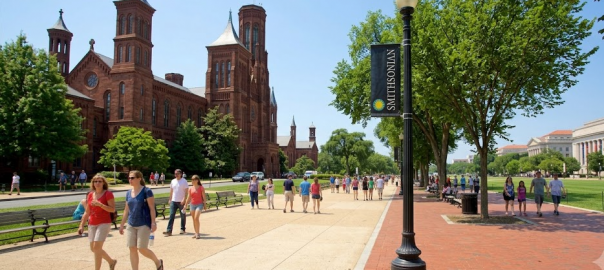
Fri, July 24 2026 /Mpelembe Media/ — On July 24, 2026, President Trump signed Executive Order 14415, titled “Restoring Trust in the Smithsonian Institution”. Because the Smithsonian is an independent trust governed by a Board of Regents rather than an executive branch agency, the president lacks the direct authority to fire its leadership or unilaterally alter internal displays. To bypass this structural autonomy, the administration’s strategy targets the surrounding plazas, walkways, and sidewalks outside the National Museum of American History (NMAH), which fall under the jurisdiction of the National Park Service. The executive order directs federal officials to install temporary warning signs along these approaches.
The Ideological Blueprint
The order serves to publicize the findings of a 162-page report released on July 4, 2026, by the White House Domestic Policy Council, titled Saving America’s Story: How Ideological Capture at the Smithsonian Institution’s National Museum of American History Erases Our Heritage. The report accuses the NMAH of “ideological capture,” “extreme political activism,” and promoting Marxist-influenced curatorial frameworks. The council even recommended posting warnings at every entrance notifying visitors that the exhibits “were prepared by people who don’t want you to love your country”.
Specific Curatorial Targets
The White House report and subsequent congressional oversight targeted several prominent exhibits:
- Many Voices, One Nation: Criticized for displaying a handmade monarch butterfly wing prop from a 2018 DACA march, which critics argue validates unlawful immigration and open borders.
- ***Girlhood (It’s Complicated)***: Criticized for featuring a 13-year-old child’s diary entry discussing gender identity and puberty.
- Entertainment Nation: Condemned for showcasing pop-culture artifacts deemed sexually suggestive near family-oriented spaces, including a sadomasochistic crotch harness, drag queen memorabilia, and a self-published feminist magazine discussing female sexuality.
- Land Acknowledgments & Education: Condemned Native American land acknowledgments and classroom programs like “History Time” and partnerships with the Southern Poverty Law Center as being part of an “anti-white agenda”.
Partisan Clash in Congress
During highly charged hearings held on July 21–22, 2026, by the House Subcommittee on Delivering on Government Efficiency (a branch of DOGE, chaired by Rep. Tim Burchett), Republican lawmakers aggressively questioned NMAH Director Anthea Hartig. Rep. Nancy Mace questioned Hartig on gender identity and RuPaul, Rep. Brandon Gill questioned whether Mickey Mouse was rooted in racism and critiqued the museum’s “Latina power” merchandise, and Rep. Lauren Boebert interrogated her regarding abortion-related displays.
Hartig defended the museum’s scholarly neutrality, explaining that “reframing” history does not mean erasing traditional narratives but rather “adding the evidence, the voices, the objects, that earlier tellings left out, so that more Americans can see themselves reflected in the national story”. Smithsonian Secretary Lonnie Bunch III similarly defended the staff, stating that the report does not fairly characterize the museum and that its work is driven by rigorous, nonpartisan scholarship.
The Resistance and Counter-Campaign
Academic and political defenders quickly mobilized:
- The American Historical Association (AHA) and 36 allied scholarly organizations released joint statements strongly condemning the administration’s actions as politically motivated censorship and overreach that erodes public trust.
- House Democrats, led by Ranking Member Joseph D. Morelle (NY-25), issued a 16-page counter-report titled The White House Campaign to Seize Control of the Smithsonian and Rewrite American History, accusing the White House of trying to control and contort the historical record to serve an authoritarian agenda.
The Broader Crusade Against DEI
This confrontation is not an isolated dispute but rather the cultural extension of a systemic administrative campaign to dismantle Diversity, Equity, and Inclusion (DEI) initiatives throughout the federal government and private sector. This broader push includes:
The March 26, 2026 Executive Order on federal contractors, which mandates False Claims Act materiality for anti-DEI clauses and subjects private-sector DEI activities to economic audits and Department of Justice scrutiny.
Significant civil service staff reductions (such as separating over 420,000 personnel) that have severely curtailed federal capacity to monitor civil rights compliance and analyze racial health disparities
The Battle for the National Attic: 7 Surprising Realities of the New History Wars
Who owns the American past? This question, once the quiet province of academic seminars, has migrated to the front steps of the Smithsonian Institution in a loud, high-stakes semantic skirmish. For nearly two centuries, the Smithsonian has functioned as a “national attic”—a repository of artifacts and a chronicler of the American experience. Today, however, it finds itself at the center of an unprecedented ideological audit, as the White House and professional historians clash over a fundamental rift: Is a museum’s primary role to educate or to celebrate?Museums traditionally rank among the most trusted institutions in American life, often trailing only family and friends in public confidence. Yet, a July 2026 White House Domestic Policy Council report titled Saving America’s Story characterizes the National Museum of American History (NMAH) not as a steward of heritage, but as an engine of “extreme political activism.” The result is a high-stakes friction between an administration demanding a narrative of unalloyed “brightness” and “success” and an institution that views history as a rigorous, evidence-based scholarship of multiple perspectives.
1. The Sidewalk Strategy: If You Can’t Change the Exhibit, Change the Entrance
One of the most striking aspects of this conflict is the precise legal boundary of presidential power. Because the Smithsonian is an “independent trust instrumentality” rather than an executive branch agency, the President lacks the direct authority to fire its leadership or unilaterally redesign its internal displays. To bypass this “immovable object,” the administration has employed a surprising legal workaround: the “sidewalk strategy.”While the President cannot dictate what happens inside the museum walls, the National Park Service (NPS) maintains the public walkways leading to the doors. On July 24, 2026, the President issued an executive order directing the NPS to install temporary warning signs on these sidewalks to perform an “ideological audit” before visitors even enter. The specific language suggested in the White House report pulls no punches, serving as a jarring preamble to the artifacts within:”Warning: the exhibits in this museum were prepared by people who don’t want you to love your country.”
2. The Deep Purge: When DEI Cuts Sweep Up the Tuskegee Airmen
While the administration’s public rhetoric focuses on ending “radical” diversity, equity, and inclusion (DEI) programs, the reach of these mandates has been far more expansive than simple administrative downsizing. In Spring 2025, executive orders intended to terminate discriminatory policies began to seep into the very subjects of history being told.The mandates to purge “improper ideology” have resulted in the removal of materials that many would consider foundational to the American story. According to the House Democrat’s response report led by Ranking Member Joseph Morelle, this “deep purge” has targeted specific historical narratives, including:
- The Tuskegee Airmen: Historical materials documenting the first African American military aviators.
- Japanese-American Internment: Content detailing the forced relocation and incarceration of citizens during World War II.
- The Stonewall National Monument: Historical references were reportedly “scrubbed,” specifically targeting the history of transgender Americans.This reach suggests the policy is not merely about hiring practices but acts as a targeted filter on which Americans are permitted to exist in the federal narrative.
3. The Irony of “Erasure”: Jefferson’s Desk and the Sticker Dispute
A central claim of the Saving America’s Story report is that the NMAH has “erased” America’s Founders. However, a closer look at the report reveals a profound irony: the administration’s grievance is often less about the absence of artifacts and more about the nuances of their presentation.The report concedes that the desk where Thomas Jefferson drafted the Declaration of Independence and George Washington’s uniform are both prominently on display in the In Pursuit of Life, Liberty & Happiness exhibit. The “erasure” cited by the White House actually refers to the fact that these items remain in their original display cases. The administration’s complaint has effectively devolved into a dispute over “sticker size,” with the report lamenting that the museum marked the nation’s 250th anniversary with “small bilingual stickers” on existing cases rather than relocating the objects to new, purely celebratory shrines.
4. The MAGA Hat Paradox
Further undermining the “erasure” claim is a massive irony that the White House report conveniently ignores. While accusing the museum of ignoring “success” and “brightness,” the NMAH collection currently displays a pro-Trump MAGA hat, a Ronald Reagan campaign shirt, and Melania Trump’s inaugural ball gown.The President’s claim that the museum contains “nothing about Success” earned a “Pants on Fire” rating from PolitiFact, which documented extensive exhibits of American achievement. Furthermore, to commemorate the 250th anniversary, Secretary Lonnie Bunch co-curated the American Aspirations exhibit, which specifically highlights the ideals of the Founders. The Smithsonian even opened its iconic Castle building—closed for years for renovations—specifically to host this celebratory programming, directly contradicting the White House’s claims of a lack of commemorative spirit.
5. Physical Erasure: Ballrooms over Bulwarks
In a move that many historians find deeply contradictory, the administration’s mission to “save” history has been accompanied by the physical destruction of it. On October 22, 2025, demolition crews flattened the East Wing of the White House to clear space for a new ballroom funded by private donors.This demolition proceeded without the completion of legally required historical reviews, prompting a court signal of skepticism in January 2026 regarding the administration’s legal standing. The contrast is sharp: while the White House wages a war over sticker placement at the Smithsonian in the name of “heritage,” it has simultaneously oversaw the literal destruction of a historic wing of the nation’s most famous residence to make room for a social venue.
6. The “Independent Trust” Paradox: A President Who Can Only “Urge”
The fundamental tension in this battle lies in the Smithsonian’s unique legal architecture. Created by Congress in 1846 to carry out James Smithson’s bequest for the “increase and diffusion of knowledge,” the institution was designed to be insulated from the whims of any single administration. It is governed by a Board of Regents, where the executive branch holds only one of seventeen seats (the Vice President).Under current law, the President has no standing to dictate curatorial content; the White House report itself conceded the President’s role is largely limited to “urging” the Board to take action. This independence is protected by a series of Checks and Balances :
- Independent Fiduciary Duty: The Board of Regents, including the Chief Justice of the United States and the Vice President, are fiduciaries of the institution, not proxies for the President.
- Legislative Oversight: Three members of the House and three Senators sit on the Board, ensuring the Smithsonian answers to Congress, not the Executive.
- Citizen Governance: Nine citizen members are appointed by a joint resolution of Congress, preventing the President from “stacking” the Board through unilateral appointments.
- Nonpartisan Directives: Smithsonian Directive 603, adopted in 2025, legally mandates that all content be “non-partisan” and “grounded in scholarly knowledge.”
7. Conclusion: The Final Arbiter of Truth
As the United States navigates its 250th anniversary, the conflict over the Smithsonian raises a profound question about the nature of national memory. Should our shared inheritance be a story of “flattery”—a narrative designed to inspire through uncritical celebration—or is it a “complex story involving multiple perspectives,” as Director Anthea Hartig argued during her July 2026 congressional testimony?When a President attempts to act as the final arbiter of historical truth, using the National Park Service to “warn” citizens against their own museums, the line between history and national PR begins to evaporate. The resolution of this “battle for the attic” will determine whether the American story remains a rigorous pursuit of evidence or becomes a static, state-approved vision of a past that never quite was.
Narrative Sovereignty and Cultural Federalism: An Analysis of the Smithsonian Institutional Conflict
1. The Mechanics of Spatial Jurisdiction: Bypassing Curatorial Autonomy
The current administrative offensive against the Smithsonian Institution represents a novel exploitation of peripheral property rights to create a secondary interpretive overlay. By leveraging the physical geography of the National Mall, the Executive Branch seeks to exert influence over an institution specifically designed by statute to be an independent trust instrumentality. This strategy acknowledges a critical legal reality: while the President lacks at-will removal power over the Secretary or the Board of Regents, the administration maintains direct plenary authority over the National Park Service (NPS). By targeting the public walkways and sidewalks adjacent to the National Museum of American History (NMAH), the administration has enacted a de facto amendment to the Smithsonian’s curatorial process without the de jure authority of Congress.
Jurisdictional Conflict: NPS Walkways vs. Smithsonian Interior
Feature,National Park Service (NPS),Smithsonian Institution
Legal Status,Executive Branch Agency (Dept. of Interior),Independent Trust Instrumentality
Primary Authority,Secretary of the Interior / President,Board of Regents / Secretary of the Smithsonian
Spatial Jurisdiction,”Mall walkways, sidewalks, and parks”,Museum interiors and collections
Executive Control,”Direct “”At-Will”” Personnel Control”,Absence of At-Will Removal Power
Legal Standard,Executive Branch Policy / Executive Orders,”James Smithson’s Bequest: “”Increase and Diffusion of Knowledge”””
The July 24, 2026, Executive Order (“Restoring Trust in the Smithsonian Institution”) formalizes this “narrative encirclement.” The directive mandates the installation of “warning signs” and temporary exhibits on NPS-controlled land, framing the visitor experience through the lens of the Domestic Policy Council (DPC) report before the threshold of curatorial independence is even crossed. This spatial maneuver serves as a high-stakes administrative bypass, surrounding the independent museum with an executive-sanctioned narrative “warning” system that the administration cannot legally compel within the museum’s interior. This physical infrastructure intervention marks a pivot from constitutional governance toward a tactical management of national historiography.
2. The Ideological Blueprint: Analysis of “Saving America’s Story”
The foundational document for this administrative maneuver is the Domestic Policy Council’s 162-page report, Saving America’s Story: How Ideological Capture at the Smithsonian Institution’s National Museum of American History Erases Our Heritage . Released on July 4, 2026, the report functions as a “conclusion in search of facts,” characterized by a notable lack of professional rigor. As highlighted in the Morelle Report (Section III, Note 16), the DPC misdated its own directive twice on the cover page (citing 2026 instead of 2025), a lapse that underscores the document’s nature as a political instrument rather than a scholarly review.The DPC report identifies four primary curatorial targets as evidence of “ideological capture”:
- The ‘Many Voices, One Nation’ Exhibit: Specifically critiques the inclusion of DACA (Deferred Action for Childhood Arrivals) butterfly wings as symbols of “political activism.”
- The ‘Girlhood’ Exhibit: Targets the display of “puberty diaries,” which the administration deems symptomatic of a focus on identity politics over national unity.
- ‘Entertainment Nation’: Grievances are centered on pop-culture displays, which the administration claims distract from “serious” scholarship.
- The Alleged Erasure of the Founders: Claims the Smithsonian has marginalized figures such as Alexander Hamilton, Benjamin Franklin, and Thomas Jefferson.The White House’s claims of “erasure” are directly contradicted by the factual contents of the museum’s inventory. The Morelle Report notes that primary artifacts, including the desk Thomas Jefferson used to draft the Declaration of Independence and George Washington’s uniform, remain on prominent display. Furthermore, the report highlights the presence of the Star-Spangled Banner (the 1813 flag) and the “American Aspirations” exhibit , co-curated by Secretary Lonnie Bunch III, which explicitly references the ideals of the Declaration of Independence. The administration’s grievance appears to be a matter of “display-case placement” and “sticker size” rather than actual artifact removal.Most concerning to constitutional scholars is the administration’s demand to affirm the “positive role of Christianity” in the founding. By demanding that the museum cast the arrival of colonists as an effort to “spread the Gospel,” the administration seeks to establish a faith-based federal standard. This directly conflicts with the Establishment Clause and the Smithsonian’s statutory mandate for non-partisan scholarship, codified in the Revised Directive 603 , which requires content to be grounded in scholarly knowledge rather than state-sanctioned ideology.
3. Bureaucratic Alignment and the Systemic Anti-DEI Offensive
The Smithsonian conflict is a high-profile subset of a broader, systemic effort to eliminate “radical and wasteful government DEI programs.” This offensive is anchored in the January 20, 2025, Executive Order (“Ending Radical And Wasteful Government DEI Programs”), which mandates the termination of all “Equity Action Plans” and “Chief Diversity Officer” positions across the federal government.This alignment is enforced through a centralized reporting structure involving the Domestic Policy Council (DPC), the Office of Management and Budget (OMB), and the Office of Personnel Management (OPM). The DPC now monitors “agency progress” through monthly meetings, while OPM ensures that performance reviews reward “individual initiative” and strictly forbid DEI considerations. Within this framework, “Efficiency”—exemplified by the House Subcommittee on Delivering on Government Efficiency (DOGE)—frequently serves as a rhetorical shell for ideological realignment.The systemic nature of this “historical record” purge is evidenced by the high-level dismissals detailed in the Morelle Report:
- Dr. Colleen Shogan (Archivist of the United States): Dismissed in February 2025 via “late-night email without stated cause.”
- Dr. Carla Hayden (Librarian of Congress): Dismissed in May 2025 via a two-sentence staff email.
- Kim Sajet (Director of the National Portrait Gallery): Forced to resign in June 2025 after the President claimed to have terminated her, despite lacking the legal authority to do so.These internal bureaucratic shifts exert extreme fiscal and political pressure on the Smithsonian, necessitating a robust historiographical defense to preserve institutional memory.
4. Historiographical Defense: Institutional Pushback and Governance Precedents
Smithsonian leadership and the broader scholarly community have mounted a defense predicated on the institution’s unique legal status. Secretary Lonnie Bunch III and Director Anthea Hartig have maintained that the museum’s role is the “increase and diffusion of knowledge,” which requires a plurality of perspectives rather than a singular state narrative. In congressional testimony, Hartig effectively “fact-checked” the DPC report, asserting that it does not accurately characterize the museum’s work and that the inclusion of diverse narratives is a matter of scholarly integrity, not activism.Legal and scholarly counter-arguments emphasize several key points:
- Institutional Independence: The American Historical Association (AHA) argues that historical inquiry is neither “criticism nor celebration” but a research-based effort to understand the past. They characterize the administration’s pressure as “federal censorship.”
- Trust Instrumentality Status: The Morelle Report emphasizes that the Smithsonian is an independent trust instrumentality, not an executive agency. Consequently, the President’s authority is limited to “urging” reforms rather than mandating them.
- Fiduciary Breach: The Vice President holds only one-seventeenth of the seats on the Board of Regents. Crucially, the VP serves as a fiduciary , legally bound to the Smithsonian’s trust mission. Using this seat to advance the President’s political agenda represents a clear conflict of interest and a potential breach of fiduciary duty to the Institution.Governance precedents also inform this conflict. The Philadelphia “President’s House Site” lawsuit serves as a recent example where the National Park Service was challenged for the “whitewashing” of slavery in federal historical narratives. These legal battles underscore the long-term stakes for the governance of public history and the preservation of institutional autonomy against executive overreach.
5. Synthesis: The Future of Cultural Federalism
The conflict surrounding the Smithsonian Institution signals a fundamental shift in the American philosophy of cultural governance. By defining “accurate history” as that which is “inspiring and unifying,” the Executive Branch is attempting to transform a research institution into a tool of national narrative management. This transition from pluralistic scholarship to centralized state-sanctioned heritage threatens the very foundation of the “increase and diffusion of knowledge.”The durability of institutional independence faces three critical threats:
- The Vulnerability of Spatial Jurisdiction: The use of NPS peripheral property rights to bypass the Board of Regents establishes that an institution’s legal independence is insufficient if the Executive Branch controls the physical “gateway.” Narrative encirclement can render internal autonomy moot in the eyes of the public.
- The Weaponization of the Power of the Purse: By explicitly linking $1 billion in annual appropriations to the adoption of a “shared national inheritance” narrative, the administration has created a functional dependency. This weaponization of funding threatens to transform trust instrumentalities into de facto executive agencies.
- The Erosion of Institutional Memory: The systemic purge of non-partisan leadership at the National Archives, the Library of Congress, and the Smithsonian suggests a coordinated effort to control the historical record. If the state can dictate the narrative of the past, the value of a “Trust Instrumentality” status is significantly diminished.Ultimately, the Smithsonian conflict serves as a definitive case study in Cultural Federalism. The outcome will determine whether public history in the United States remains an evidence-based pursuit or becomes a centralized function of executive power, where the past is manufactured to suit the political convenience of the present.