
The 2026 Constitutional Standoff: Bypassing Police Barricades with an Electronic Petition
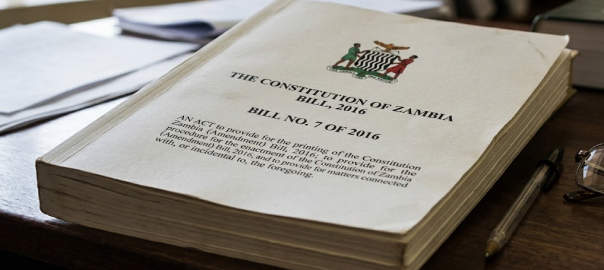
Tue, Aug 25 2026 /Mpelembe Media/ — On August 24, 2026, a major constitutional crisis emerged in Zambia when state authorities physically closed the country’s superior courts—including the Supreme, High, and Constitutional Courts—citing unspecified security concerns. This unilateral administrative shutdown occurred on the final day of the strict seven-day window mandated by Article 105 of the Zambian Constitution to file a presidential petition challenging the August 13, 2026 election results. Incumbent President Hakainde Hichilema had been declared the winner with over 2.9 million votes against challenger Brian Mundubile’s 1.8 million votes. Across Lusaka and multiple provinces, court buildings were cordoned off with police tape and guarded by armed police units, physically blocking the opposition and other litigants from accessing judicial registries to file their challenges before the deadline.
In the midst of this physical blockade and a fragmented political opposition, prominent human rights lawyer and former Law Association of Zambia (LAZ) President Linda Kasonde initiated a creative legal bypass. To circumvent the locked registries and preserve the integrity of the constitutional process, Kasonde executed an emergency digital filing. When technical issues disabled the standard email address of the Constitutional Court registrar, she routed the people’s petition directly to the personal electronic inbox of Chief Justice Mumba Malila. This direct transmission included the formal petition, a verifying affidavit, and a comprehensive list of legal authorities, creating an indisputable digital paper trail that prevented the state from claiming no petition had been filed before the deadline expired.
This unprecedented digital recourse occurred against a backdrop of shrinking civic space and increasing executive control over democratic institutions in Zambia. Observers point to recent developments, such as the suspension of three Constitutional Court judges who had previously ruled against Hichilema, and the abrupt cancellation of the international RightsCon 2026 digital rights summit, as evidence of a broader pattern of administrative restrictions. Kasonde’s digital bypass now forces the Constitutional Court to confront a landmark decision: whether to prioritize substantive justice over strict paper-based procedures under Article 118(2) of the Constitution, which directs the judiciary to avoid procedural technicalities. The outcome of this case will not only shape the future of judicial independence in Zambia but also establish a vital precedent for digital legal advocacy and resistance to political blockades across Southern Africa.
Chronological Timeline and Legal Analysis: The August 2026 Zambian Constitutional Crisis
1. Strategic Introduction: The Intersection of Mandate and Mechanism
The August 2026 constitutional crisis represents a definitive stress test for the supremacy of the Zambian Constitution as established in Article 1(3). This period marks a critical juncture in the nation’s jurisprudential trajectory, moving beyond the “judicial conservatism” and executive-mindedness that characterized the “judicial timidity” of the First and Second Republics. Drawing upon the activism seen in landmark precedents such as Mulundika and George Peter Mwanza , the current crisis serves as a collision between state-orchestrated “procedural blockades” and the constitutional mandate for substantive justice. This document analyzes the central conflict: the Executive’s attempt to utilize physical and administrative “claw-back” mechanisms to render fundamental rights non-justiciable, versus the Judiciary’s duty to ensure that constitutionalism is more than a “rope of sand.” We explore whether the 2026 crisis signals a regression to the Second Republic’s repression or the final realization of a “Fourth Republic” anchored in absolute constitutional supremacy.
2. Phase I: The Electoral Mandate (August 13 – August 16)
The immediate aftermath of a Zambian election is a high-stakes legal window, governed by the stringent Article 105 filing requirements. For a petition to be heard, the procedural threshold must be met within a narrow timeframe, making access to the superior court registries a prerequisite for democratic stability.
- August 13, 2026: General Election held. The primary contest pitted incumbent Hakainde Hichilema against opposition leader Brian Mundubile.
- August 16, 2026: Official declaration by the Electoral Commission. Hichilema is declared the winner with a mandate exceeding 2.9 million votes.Analysis: The “So What?” of the Mandate The significance of this 2.9 million-vote mandate must be viewed through Nicholas Haysom’s theory of “second-class citizenship.” As Haysom argues, citizens require more than mere “access to the ballot box” to be empowered as members of a community. In a nation where poverty often acts as a barrier to civic equality, this mandate represents an attempt by the masses to reject “third-class citizenship.” However, the 2026 crisis demonstrates that without “substantive equality,” the ballot remains a hollow mechanism. The mandate is not merely a tally; it is a claim to the “protection of law” which the state is under both negative and positive obligations to uphold.
3. Phase II: The Fragmentation of the Opposition Alliance (August 23)
| Key Figure | Action Taken | Legal/Strategic Implication |
|---|---|---|
| Nonde Mubanga | Official announcement of alliance withdrawal. | Signaled the collapse of a unified legal challenge, potentially diluting the “collective interest” standing. |
| Ezra Tembo | Public concession and recognition of the Hichilema mandate. | Created a narrative of “substantial compliance,” reinforcing the state’s procedural defense. |
| Brian Mundubile | Decision to seek refuge at the United Nations. | Indicated the perceived exhaustion of domestic legal channels and a shift toward international human rights mechanisms. |
Analysis: Impact on Locus Standi These defections directly impacted the requirements for locus standi . Under the precedent of Nkumbula v The Attorney General , Zambian courts traditionally require an “actual or threatened action” in relation to the petitioner. By fragmenting the alliance, the state sought to isolate challengers, hoping to dismiss individual petitions on the grounds that they lacked the standing to represent a “community interest”—a tactic that would have succeeded but for the emergence of “Social Action Litigation” models.
4. Phase III: The Siege of the Superior Courts (August 24)
The nationwide lockdown of the judiciary on the final day of the Article 105 window represents an “unconstitutional state of affairs” (Estado de Cosas Unconstitucional), a concept synthesized from the Colombian T-025 case.
The Nationwide Lockdown
On August 24, superior courts in Lusaka, Ndola, Chipata, and Livingstone were shuttered. This was a structural failure of the state to provide the administrative means necessary for the “protection of law.”
The Police Blockades
State security forces physically prevented legal counsel from entering court premises. These “physical cordons” functioned as extra-legal claw-back clauses, using force to achieve what the 1964 Constitution’s “detailed claw-back clauses” achieved through text: the suspension of justiciable rights.
The Filing Deadline
As the clock expired on the Article 105 window, the state argued that the failure to file—a failure they physically engineered—resulted in the expiration of the right to petition.Analysis: The Forensic Reality of the Siege Applying the “five factors” from the T-025 model, the 2026 lockdown qualifies as an unconstitutional state of affairs because: (1) the violation of rights was grave and systematic; (2) it resulted in a high volume of frustrated petitioners; (3) the failure was structural; (4) it involved multiple state entities (police and court administration); and (5) it required a coordinated judicial intervention to resolve. This was a clear violation of the state’s negative obligation to abstain from impairing access to justice.
5. The “People’s Petition”: Emergency Electronic Jurisprudence
When the “administrative rules” of the court are weaponized by the executive, the judiciary must “forge new tools” to make rights meaningful for the masses. This is the essence of Social Action Litigation, as seen in the Indian Supreme Court’s People’s Union for Democratic Rights .The Emergency Filing Procedure:
- Systemic Failure: The official Registrar email systems were disabled, a digital extension of the physical blockade.
- Electronic Filing: Linda Kasonde utilized non-traditional electronic channels to file the “People’s Petition,” asserting a “wrong against a community interest.”
- Epistolary Jurisdiction: The petition was delivered directly to Chief Justice Mumba Malila’s personal inbox. This move invoked “epistolary jurisdiction,” where the court treats informal communication as a formal writ to prevent the “cries of the subjects” from being silenced by procedural barriers.Analysis: Pricking the Conscience of the Court Kasonde’s petition relied on the logic in Nkole v Council of the University of Zambia , where the court held that refusing relief would “prick the conscience of the Court” if the best interests of the citizens were not safeguarded. By bypassing the blockade, the petition forced the judiciary to recognize that the “realities of life” for the disenfranchised cannot be ignored in favor of a registrar’s stamp.
6. Legal Analysis: Substantive Justice vs. Procedural Technicalities
The crisis finds its resolution in Article 118(2) of the Constitution, which commands that “justice shall be administered without undue regard to procedural technicalities.”
Comparative Legal Analysis
| The State’s “Procedural Technicality” Argument | The “Substantive Justice” Argument |
|---|---|
| Failure to File in Person: Counsel did not physically present the petition at the registry. | Interlinkage Logic (Mwanza): Just as the Supreme Court in Mwanza interlinked “non-justiciable” food rights with the “justiciable” right to life, the court here must interlink “procedural access” with the “supreme right to a petition.” |
| Expired Window: The Article 105 deadline passed without a formal registrar’s stamp. | Article 118(2) Mandate: The court is constitutionally required to ignore the lack of a stamp when the state itself made the stamp unavailable. |
| Invalid Delivery: Filing via a personal inbox is not a recognized legal procedure. | “New Tools” Doctrine: The court must adopt the Indian model of “forging new tools” to address structural barriers to justice. |
Analysis: The Bedrock of Balance As established in the Minerva Mills case, the constitution is founded on a “bedrock of balance.” This “harmony” between fundamental rights and state authority is an “essential feature” of the basic structure. The George Peter Mwanza precedent is the primary legal weapon here; by recognizing that the right to life entails a “dignified life” (and thus nutritious food), the court established that it can bridge the gap between “non-justiciable” procedural hurdles and “justiciable” constitutional outcomes. The state’s attempt to use its own illegality to trigger a procedural default is a fundamental breach of this harmony.
7. Conclusion: The Constitutional Mirror
The events of August 2026 serve as a “constitutional mirror” (Scott and Macklem). In this mirror, we see whether the Zambian citizen is viewed as a full member of a democracy or as a “second-class citizen” for whom rights are mere aspirations. The “People’s Petition” represents the final rejection of the “judicial timidity” that once defined the Second Republic. By prioritizing substantive justice over the state-engineered technicalities of the siege, the court has the opportunity to realize true constitutional supremacy. The future of the Zambian Bill of Rights depends on the judiciary’s willingness to “prick its own conscience” and ensure that the light of the law is never extinguished by the shadows of a police blockade. The “People’s Petition” is the definitive proof that the Constitution remains the supreme law, above even the most orchestrated executive assault.
Beyond the Ballot: Why Survival is the Ultimate Human Right
In the hallowed halls of constitutional drafting, we often speak of liberty in the abstract—the right to speak, the right to vote, the right to move freely. Yet, for the majority of Zambians, these rights are hollow echoes in an empty stomach. We must confront a painful truth: a Constitution that protects a citizen’s right to cast a ballot but ignores their lack of bread is not a shield; it is a legal fiction.
The Paradox of Poverty and the Law
To understand the Zambian struggle, one must look at the data that shaped our modern constitutional discourse. During the era of the pivotal Mung’omba Report (2006/2007), the statistics were a rolling indictment of our national priorities: 68% of the population lived below the poverty line, and life expectancy had withered to a mere 37.7 years. While these numbers serve as a historical baseline, the structural inequality they represent persists.This brings us to the central, haunting question posed by legal scholar Nicholas Haysom: Can an illiterate or hungry person truly participate in a democracy? In Zambia, the law has traditionally answered this with a cruel distinction. Rights to food, water, and housing are relegated to the “Directive Principles of State Policy”—mere “aspirational” goals that the state may strive for but cannot be forced to provide. They are non-justiciable, meaning the poor cannot sue for their survival. This legal wall is the front line in the battle for human dignity.
The “Empty Stomach” Dilemma: Rights are Indivisible
There is a persistent, elite delusion that civil and political rights can exist independently of socio-economic reality. In truth, rights are indivisible. Freedom of expression is a phantom if a citizen lacks the education to articulate their grievances, and the right to life is a mockery if it does not include the means to sustain it. Hunger does not just weaken the body; it creates a stratified, “second-class” citizenship that disenfranchises the indigent more effectively than any colonial-era decree.As Haysom poignantly observed:”Does a marginalised, rural woman – untrained and unemployed – have anything remotely akin to civic equality to her urban middle-class male compatriot? The question barely needs an answer.”When the law shields the elite’s right to property while deserting the indigent’s right to life, it ceases to be a tool of justice and becomes an instrument of marginalization.
The “Expensive Rights” Myth: Everything Has a Price Tag
Critics frequently argue that socio-economic rights are “positive” rights—expensive gifts that poor nations cannot afford—whereas civil rights are “negative” and “free” because they simply require the state to stay out of a citizen’s way.This is a researcher’s myth. As the landmark case Airey v Ireland proved in the European Court of Human Rights, even the “negative” right to a fair trial requires massive state expenditure: a functioning judiciary, physical courts, trained interpreters, and legal aid for the indigent. All rights require resources. The 2005 Mung’omba Report rightly concluded that poverty is no excuse for a state to avoid its core duties. If a nation can find the capital to maintain a military and a sprawling bureaucracy, it cannot claim bankruptcy when asked to provide the minimum essential requirements for human survival.
The “Reasonableness” Standard: Courts as Accountants of Conscience
A primary fear among the executive branch is that making social rights justiciable will allow “activist” judges to bankrupt the state. However, the legal world has judicially pioneered a middle ground: the “Reasonableness Test,” cemented in the global canon by the South African Constitutional Court in Government of South Africa v. Grootboom .Rather than demanding immediate perfection, this standard reviews the coherence of the state’s action. It asks:
- Prioritization: Does the plan address those in “desperate need” immediately?
- Maximum Available Resources (MAR): Is the state truly utilizing every possible resource, or is it hiding behind a veil of “scarcity”?
- Progressive Realization: Is there a clear, non-discriminatory, and active plan to improve access over time?
- Institutional Accountability: The court does not take over the budget; it simply holds the government’s feet to the fire to ensure their plan is not a “rope of sand.”
Zambia’s Quiet Revolution: From Mwanza to Nkole
Zambia’s judiciary is finally beginning to wake from its long, conservative slumber. In the 2019 landmark Supreme Court ruling George Peter Mwanza and Melvin Beene v Attorney General , two HIV-positive prisoners challenged the state over unhygienic conditions and a lack of nutritious food.The Court took a bold, counter-intuitive step. Even without an explicit “Right to Food” in the Bill of Rights, it interlinked the “Right to Life” with the right to health and nutrition. It redefined the Right to Life as the Right to a Dignified Life . Crucially, the Court didn’t just offer rhetoric; it ordered the state to render a progress report to the sessional judge on the opening day of every criminal session regarding its efforts to humanize these conditions.This fight continues today. In the 2023 case Nkole v Council of the University of Zambia , the High Court confronted the “Remodeling Income Generation” (RIG) initiative—a drive for self-sustainability that led to inhumane overcrowding, with students standing outside lecture halls just to hear a lesson. The court intervened, ruling that the “best interests” of students and their right to education cannot be sacrificed on the altar of revenue.
The “Skinner Saga” and the Fragility of Independence
For these rights to take root, the judiciary must be bold enough to confront what Professor Anyangwe called the “fourth governmental organ”—the Presidency. In Africa, the executive often looms so large it threatens to eclipse the law itself.Zambian history provides a sobering warning in the “Skinner Saga” of 1969. When Chief Justice James Skinner refused to apologize for a judge’s ruling that displeased President Kaunda, ruling-party youth cadets stormed the High Court, stoning staff and shattering windows. This violence ushered in decades of “judicial conservatism.” If we are to enforce socio-economic rights, our judges must have the security of tenure and the moral courage to look the Presidency in the eye and demand accountability.
Conclusion: A New Mirror for the Constitution
A Constitution is the mirror in which a nation sees its reflection. When we look at ours today, do we see the reality of the 68% living in the shadows of the economy, or do we see an “institutional normatization” that assumes everyone is already fed, housed, and healthy? A Constitution that refuses to see the hungry is not a mirror; it is a blindfold . Enshrining socio-economic rights is not about demanding the impossible; it is about ensuring that the state is answerable for how it spends every Ngwee of our collective resources. We must ask ourselves: who do we want to see when we look in that mirror—the voter standing tall, or the person too weak from hunger to even reach the booth?